I gave house music a proper go. Six years of it. I’d write a track in the studio, then jump in the car and drive home to hear whether the mix actually held up. That was the real test. If it survived the commute, it was finished. If it fell apart somewhere on the drive, back to the desk.
So I know what I’m chasing when I get into a car and press play. I also know the familiar disappointment that usually follows.
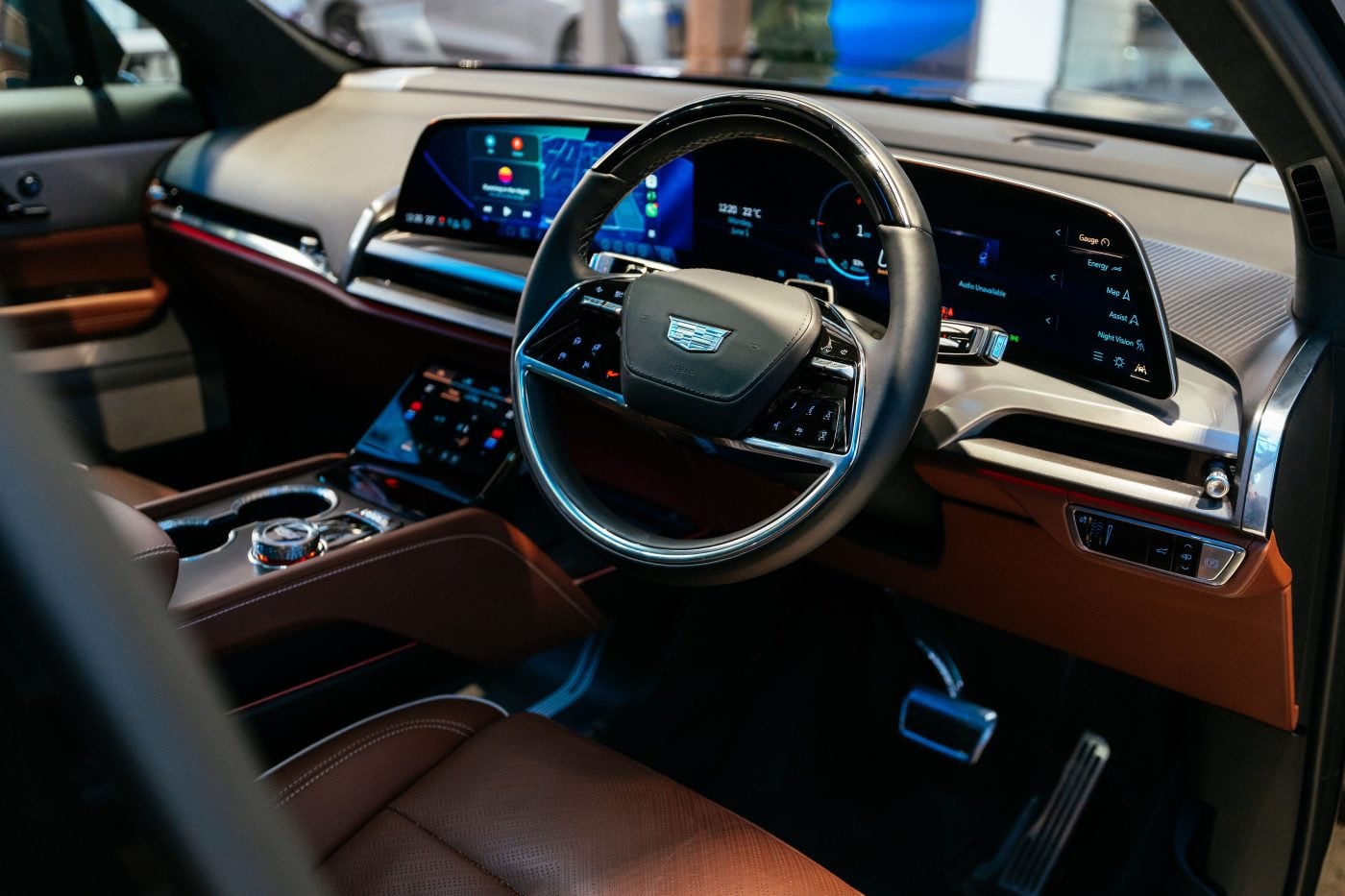
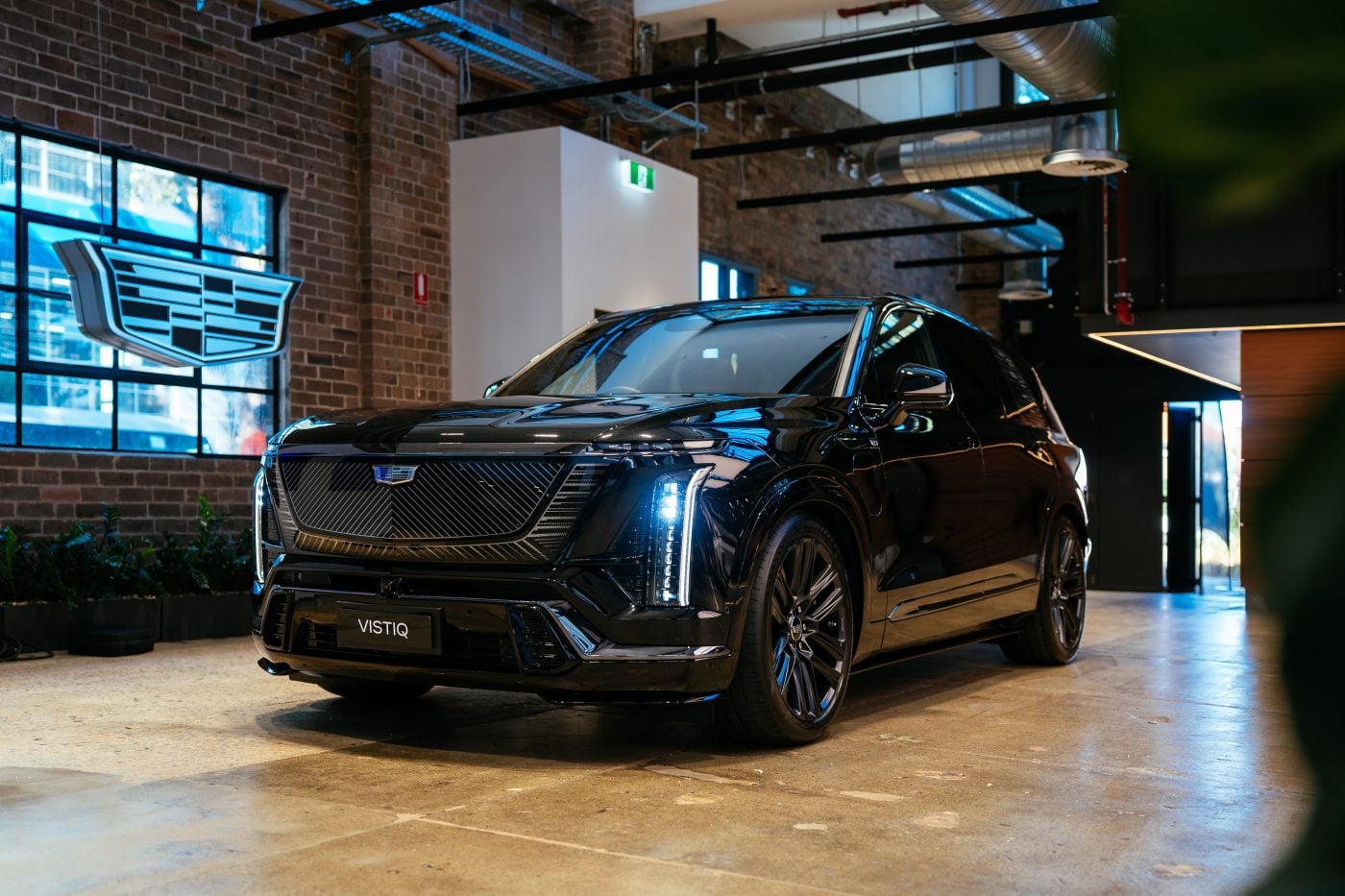
Then I spent four days with the Cadillac VISTIQ in Melbourne.
Hand on heart, I have never heard anything quite like it. I kept nudging the volume up, waiting for the moment something behind a door card would start to buzz and rattle like my 1981 BMW 318, the way every car stereo eventually betrays itself. By the time I was sitting on eight I’d stopped listening to the music and started interrogating the car.
Curated news for men,
delivered to your inbox.
Join the DMARGE newsletter — Be the first to receive the latest news and exclusive stories on style, travel, luxury, cars, and watches. Straight to your inbox.
So when Cadillac flew the two men responsible into Sydney for the Cadillac OPTIQ and VISTIQ media day, I cornered them both and made them explain it to me.
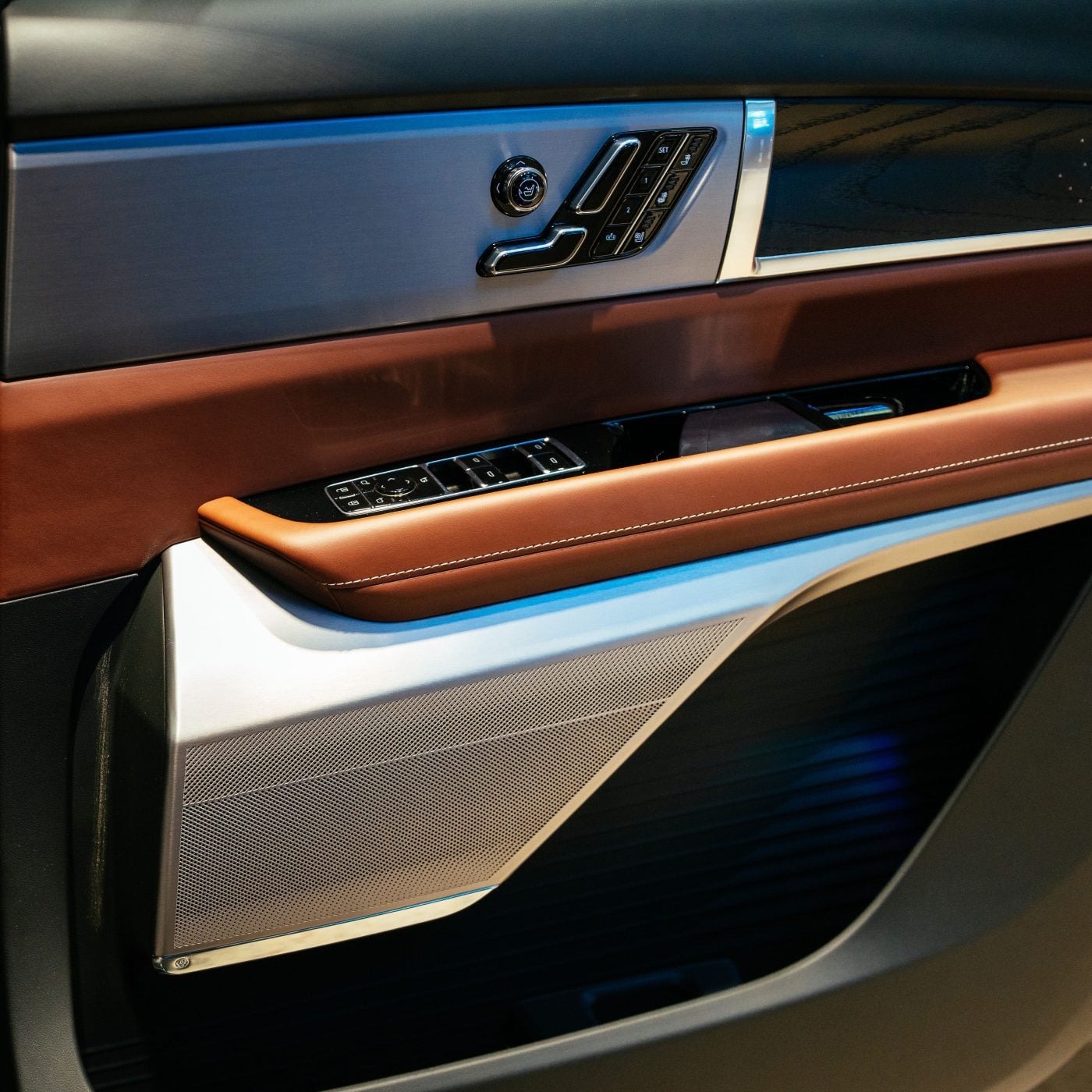
Spencer Scott is the Acoustic Systems Engineering Manager at AKG, the Harman audio brand, based in Warren, Michigan. He didn’t strategise the VISTIQ’s sound from a boardroom. He built it. “From the AKG side, I did directly work on those projects,” he told me. “We were in it from the beginning, where to place the speakers, how to integrate them into the vehicle, all the way through tuning, creating the sound experience they want, and getting sign-off from everyone that it’s the sound we want.”
Dr Mike Mason is Director of Entertainment Technology for the Music Ecosystem at Dolby, where he’s spent over a decade. He sits a little further back from the soldering iron. “I’m more on the technology side, the business technology strategy of Dolby Atmos Music and the entire ecosystem,” he said. “I work from studios all the way through to all of our OEMs.” A little further from the tech, then. “Further, but still the technology and the science behind the sound.”
Spencer puts 23 speakers into a Cadillac. Mike makes sure the thing the artist heard in the studio is the thing that comes out of them.
RELATED: Meet The Luxury SUV Delivering Looks, Comfort & Performance At A Stunning Price
The Cadillac doesn’t it rattle, it hums
Of course, my 1981 BMW 318 inspired the first question so I led with the buzzing because it’s the thing that brakes my brain. Spencer explained.
It starts with where each speaker physically lives. “We make sure when we design it and place it in the vehicle, it’s optimal for the listener,” he said. Then comes the part you never see. “On top of that we add signal processing to correct for the fact the driver isn’t sitting exactly centred in the vehicle. So we correct for that balance, and try to make it enjoyable for the whole cabin.” That’s the job the 23 speakers (19 in the OPTIQ) are actually doing. Not volume. Balance.
The rattle question, though, comes down to something called dynamics control. On most systems, as I’d discovered the hard way over six years, you have to crank the thing to really feel the bass, and somewhere around the top of the dial the whole spectrum goes strange.
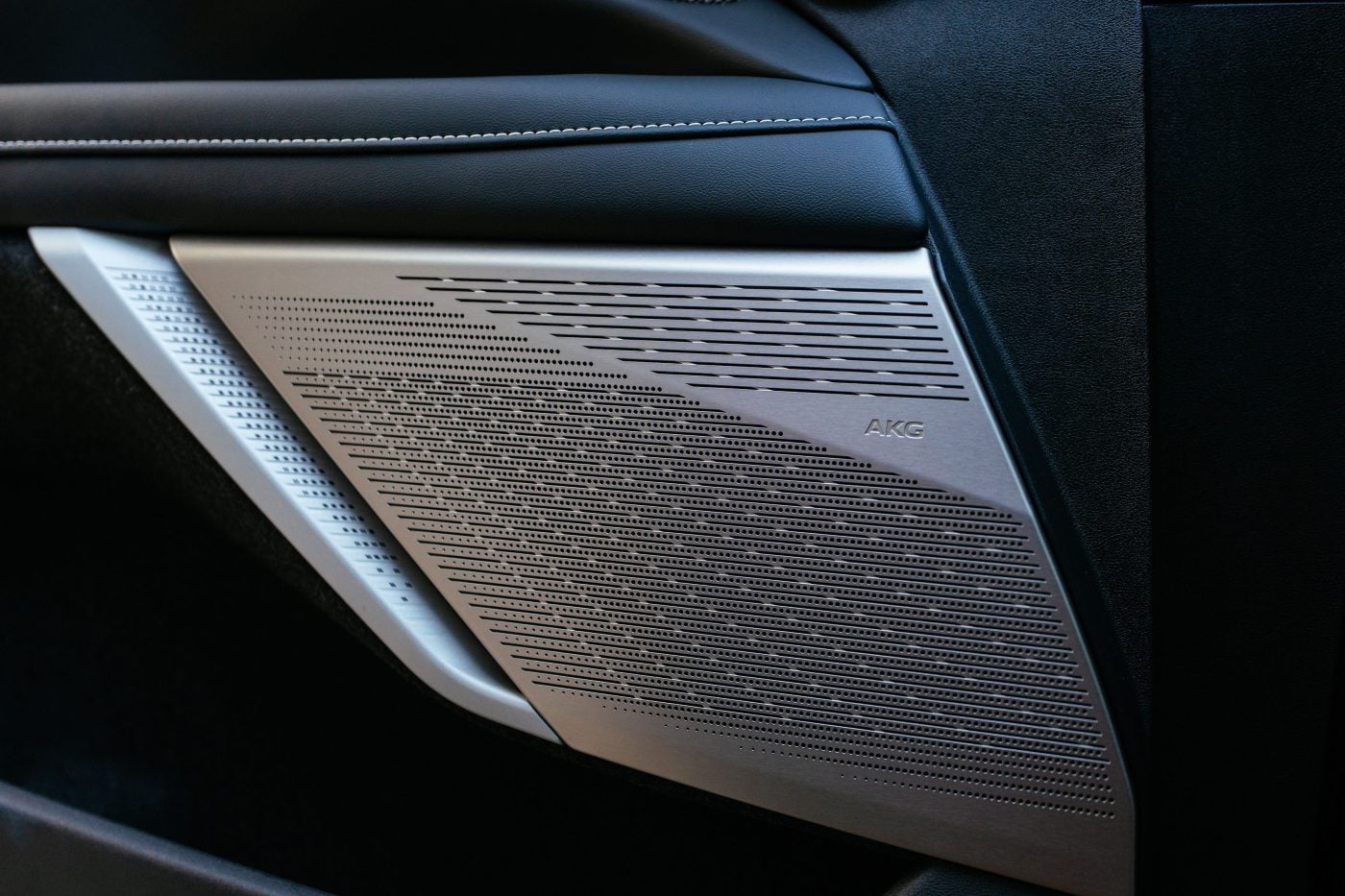
“It’s even throughout the whole volume range,” Spencer explained. “When you’re listening at low volumes and at high volumes, it’s the same spectral response, so you’re not getting this difference of weirdness.” Which is the technically correct term for the thing I’d been clumsily describing as the graph going weird between six and eight. “Usually on traditional older systems you have to turn it up to really feel that bass. In this scenario, you don’t have to.”
Quietly, we had been waiting for the car to fail. It had simply been engineered not to.
RELATED: Cadillac LYRIQ Turns The Road Into A Recording Studio With Warner Music Australia
Dolby Atmos isn’t just the thing that blow people’s clothes off
When someone says Dolby Atmos, we think of the Village cinema, the promo that comes on before the film and physically shoves you back into the seat. we do not think of music. The leap from one to the other is the part I genuinely couldn’t get my head around.
Mike says the underlying engine is the same. The point of difference is what you do with it. “The idea is you want to give a creator the ability to put sounds where they want them,” he said. “From a music point of view, that’s a whole new set of creative tools for artists who were used to a stereo mix. Now you’re not just choosing left or right. You can place anything anywhere.”
What changes is the priority. “In cinema, dialogue is important, narration is important, the big special effects are the showstoppers,” he said. “In music, it’s detail and location and clarity and this naturalness and balance.”
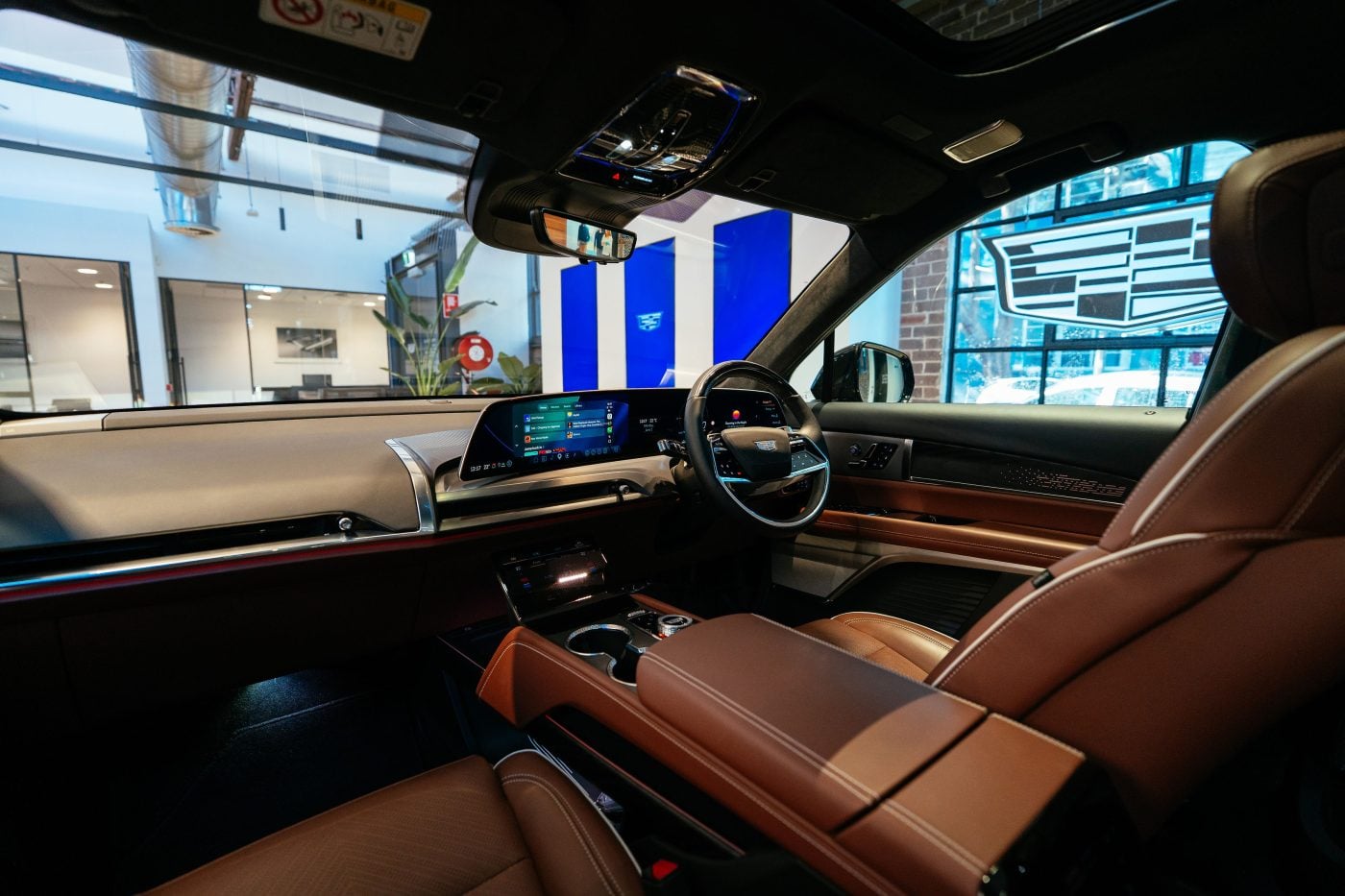
And this is where the car turns out to be the perfect stage. Most people experiencing Atmos music right now are doing it on headphones, off their phone, which is great, but it isn’t speakers. “All Atmos music is mixed speakers-first,” Mike said. “In a car, you get the actual speaker experience.” The thing the mixer signed off on, played back the way they meant it.
Spencer’s job is to honour that intent down to the individual frequency. Not every speaker can produce every sound, so the system quietly adjusts things. “We have bass management that brings the bass to the speakers that can reproduce it, the closest local source,” he said. “If you’re getting a vocal or a bass note in a speaker that can’t produce it, we bring it to where it can, as close as possible.”
A channel, he was at pains to point out, isn’t one speaker. It’s a collection of them, working as one. So when a track has a sound swirling around the cabin, it’s a whole choreographed group of drivers handing the sound off to each other.
Fighting for car space to create perfect harmony
Spencer and AKG are in from the very first proto vehicle, but the tuning that matters happens on the real thing. “We always do a production final tuning with a real vehicle that’s off the line, a saleable vehicle,” he said. “We know anything we do is going to be accurate to how it’s perceived by the end user.” Leather, grilles, materials, all of it. Anything that touches the acoustics, AKG has an opinion on.
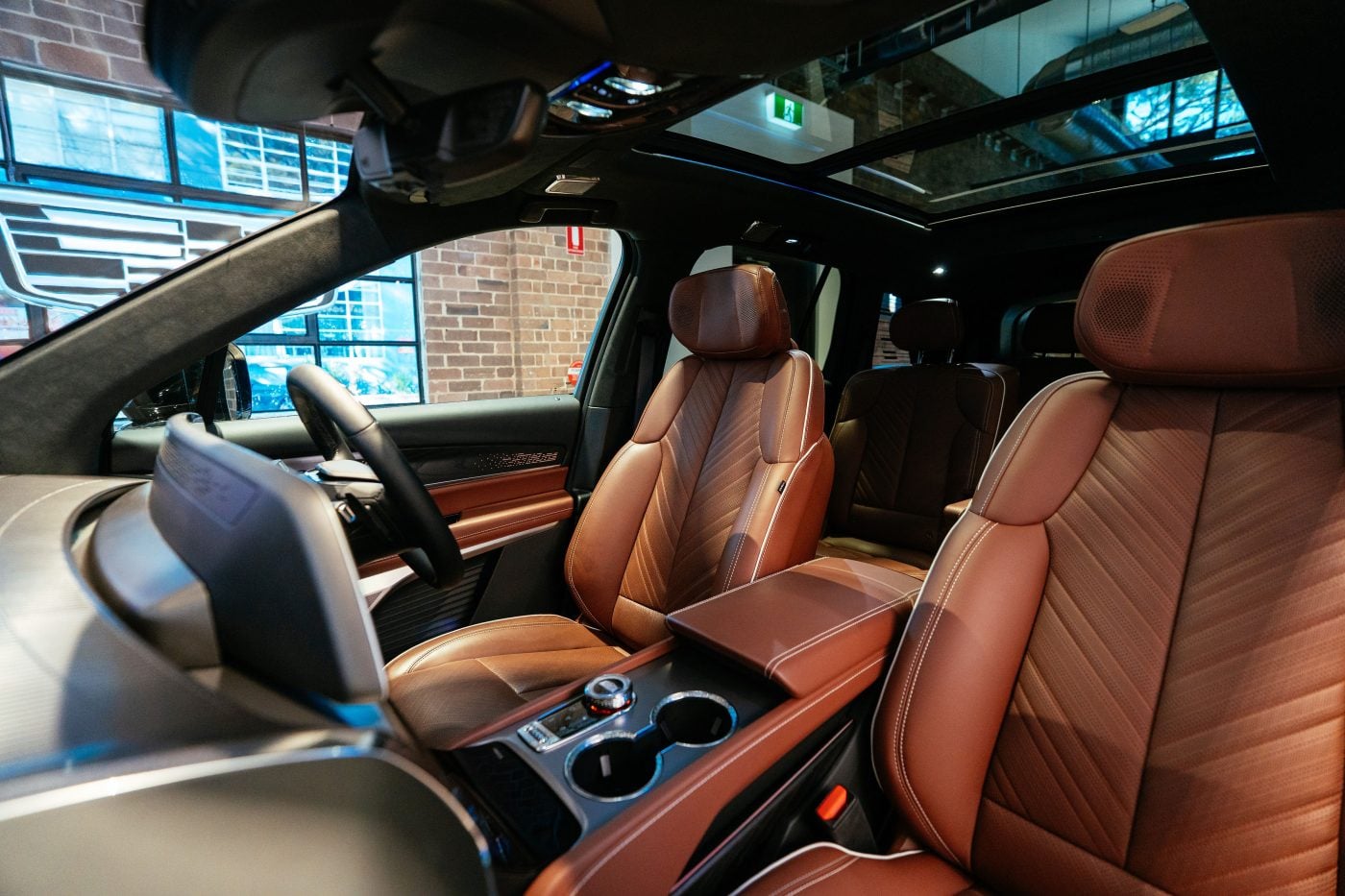
Which means there’s a negotiation. A polite war over car real estate with the engineers who also want that space for, you know, the car. I asked if it was a constructive battle. “Yes, of course,” Spencer said, laughing. “We have specific locations we’d prefer to be.
Brand targets from AKG, requirements on where things need to be, how many speakers we need, and the centre channel. We want full spectrum response, 20 to 20k. We want to provide that full experience.”
The Cadillac VISTIQ sounds like a studio becuase it’s built by people obsessed with studios
I asked Mike the cynical question. Does Cadillac have to pay Dolby for the privilege? “It’s a licensing business,” he said. Not for the badge, for the technology. “Dolby is a company that invents things. This is a format that didn’t exist. We’ve got neuroscientists who understand perception. It’s a true invention, an R&D approach.”
I told him I liked the neuroscience angle, because it’s hot right now. He laughed, because Dolby has quietly been doing it for over sixty years. “You start with understanding how people hear, then use that knowledge to process the audio so it does the thing you want it to do.” Which is? “Gives you the feels you want.”
Every Dolby story, Mike says, begins in a studio with the creators. The tools have spread accordingly. Atmos now lives inside Logic and Pro Tools, with over 1,350 certified studios worldwide on top of every bedroom producer who’s had it switched on in Logic Pro.
The proof, for me, was a detail Spencer dropped almost as an aside. They flew the remixing engineer of a track to Detroit to sit in the car. “He said it was by far the closest representation he’d heard.”
Even as a very average former “music producer,” I know that’s a good thing.
RELATED: Cadillac LYRIQ Proves True Auto Luxury Needs To Hit All The Right Notes
What’s their ‘must play’ track for testing the Cadillac?
I asked them both for the must-listen. Mike, a confessed Pink Floyd man, pointed to the remastered The Wall, and to Rocketman, which he says is used as a starting point for a reason. Solid, safe, audiophile-approved answers.
But I’ll give you mine, because it’s the reason I geeked out so hard I forgot to be professional. I jumped in, pressed play on Running in the Night by FM-84 and Ollie Wride, a synthwave cut I’d never heard before, and I cranked it. Full 80s synth, no expectations, no reference point. The pads came from above, the bass stayed planted, the vocals sat dead centre, and it got me square in the feels.
It’s by some producer most people have never heard of, which is the whole point. As Mike put it, Atmos is quietly minting a new wave of producers breaking away from the stereo names who’ve owned the scene for decades.
If you only play one thing in this car, make it that one. I’ve never been more glad I quit making music, because I’d only have spent another six years chasing what this Cadillac does sitting in a Toorak driveway.

