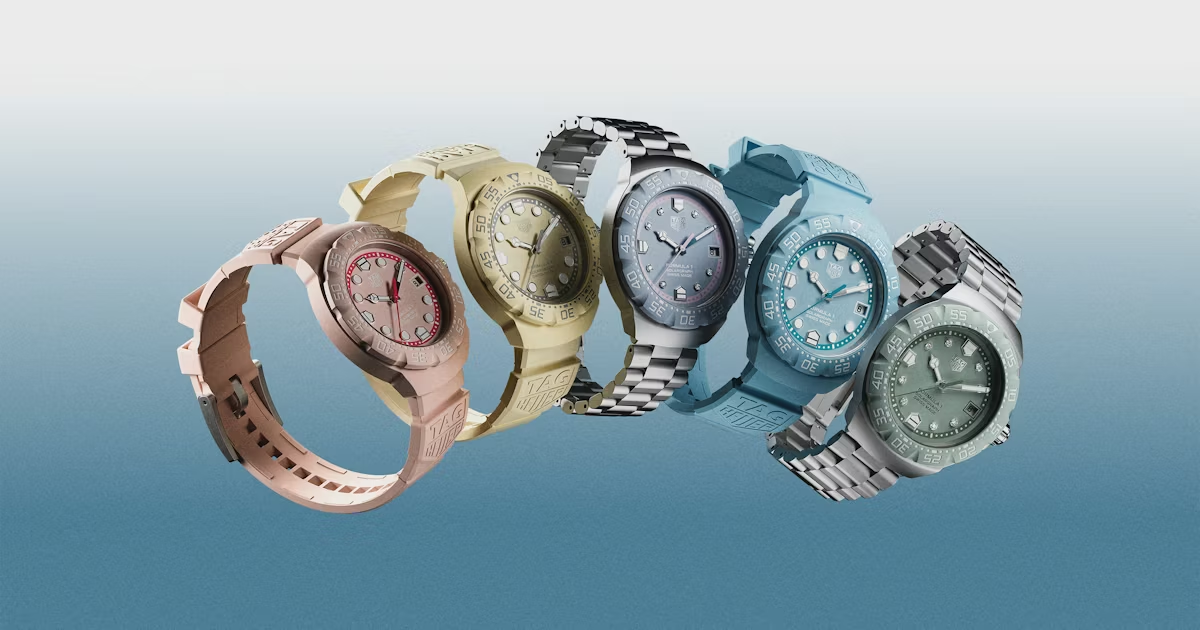
The Formula 1 was the watch that introduced the TAG Heuer name to the world back in 1986, and four decades on, it remains the brand’s most accessible entry point.
For 2026, TAG Heuer has taken the 38mm Solargraph case introduced last year and reworked it in five pastel dials, each with its own production cap and each leaning harder into the colour-first attitude that defined the original quartz-powered Formula 1 watches of the late eighties.
The collection splits into two distinct camps. The first three references sit in TH Polylight cases, the composite material TAG uses to keep the Formula 1 light on the wrist and loud on the dial.
RELATED: TAG Heuer Connected Calibre E5 Review
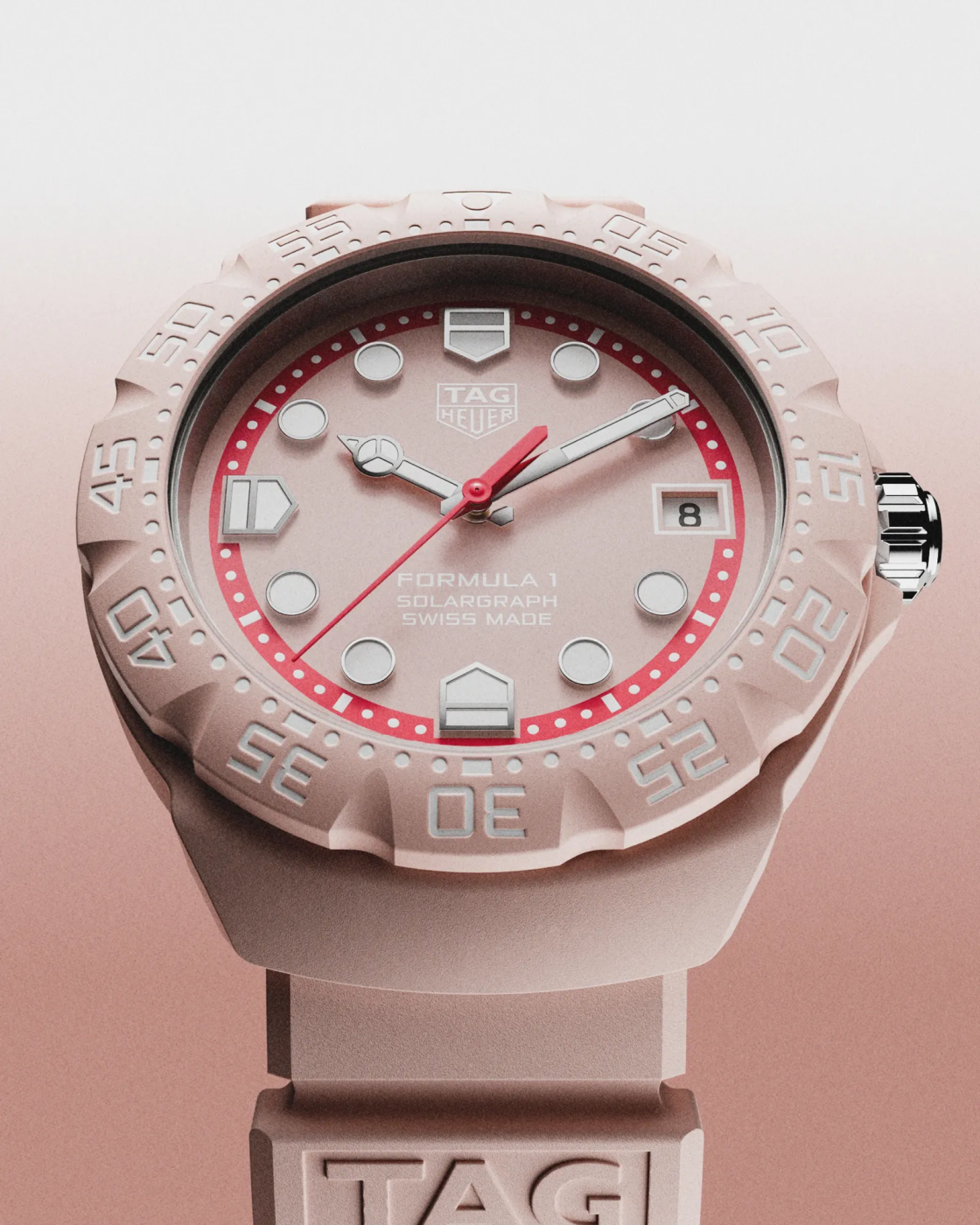
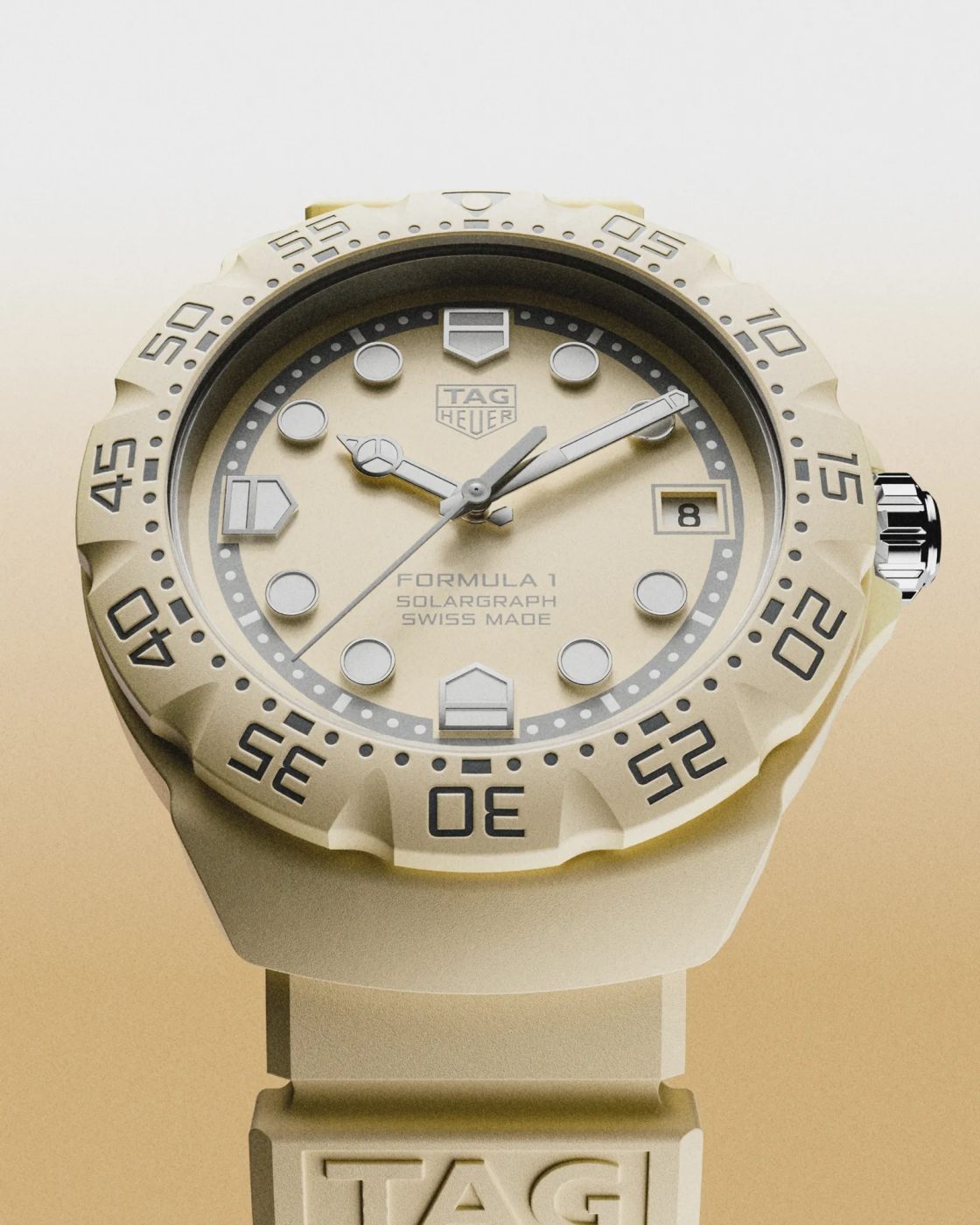
Beige opalin is the most understated of the trio at 3,500 pieces, pastel blue follows at 3,000, and pastel pink is the smallest run of the three at 2,500. Each one runs a monochromatic treatment across the dial, bezel, and strap, which is a commitment to the concept that most brands would dilute with a contrasting subdial or a chrome ring.
The other two references push further upmarket. Pastel green and lavender blue both arrive in sand-blasted steel cases on three-row steel bracelets, with diamond-set indexes replacing the printed markers. The lavender reference adds a pastel pink minuterie for contrast, and it’s the rarest of the collection at just 1,000 pieces.
The green version is capped at 1,500. Calling these diamond-set Formula 1s is unusual territory for TAG, and it signals the brand is willing to let this collection drift toward the jewellery counter rather than keeping it locked into its motorsport lane.
Curated news for men,
delivered to your inbox.
Join the DMARGE newsletter — Be the first to receive the latest news and exclusive stories on style, travel, luxury, cars, and watches. Straight to your inbox.
A Solar Movement That Actually Earns Its Place
The Solargraph calibre is the quiet hero here. Two minutes in direct sunlight gives the watch a full day of power, a complete charge takes under 40 hours of light exposure and delivers ten months of autonomy in darkness, and the accumulator is rated for up to 15 years.
That’s the kind of spec sheet that makes the “is it really a luxury watch if it runs on light” debate feel increasingly outdated.
The Mercedes hour hand, bidirectional bezel, and shield motif at twelve all carry over from the existing Formula 1 Solargraph, which keeps the lineage intact even as the colour palette gets softer.
DMARGE’s Two Seconds
The pastel Formula 1 is a smarter play than it first looks. TAG Heuer has spent the last few years trying to work out what this collection is for now that the F1 partnership itself has moved on, and colour-forward, limited-run capsules aimed at a younger, less traditional buyer is a more honest answer than pretending it’s still 1987.
The diamond-set references are the ones that’ll divide the watch forum crowd, but the beige Polylight version on its own colour-matched strap is the quiet sleeper pick. It’s the one most likely to actually leave the boutique on a wrist rather than a display pillow.
Specifications
| Case size | 38mm |
| Case material | TH Polylight (pastel beige, pink, blue) / Sand-blasted steel (pastel green, lavender blue) |
| Movement | TAG Heuer Solargraph |
| Power reserve | Up to 10 months in darkness, 15-year accumulator lifespan |
| Dial colours | Beige opalin, pastel pink, pastel blue, pastel green, lavender blue |
| Indexes | Printed (Polylight models) / Diamond-set (steel models) |
| Limited edition | 3,500 (beige) / 3,000 (blue) / 2,500 (pink) / 1,500 (green) / 1,000 (lavender) |
| Strap | Matching rubber (Polylight) / Three-row steel bracelet (steel) |

