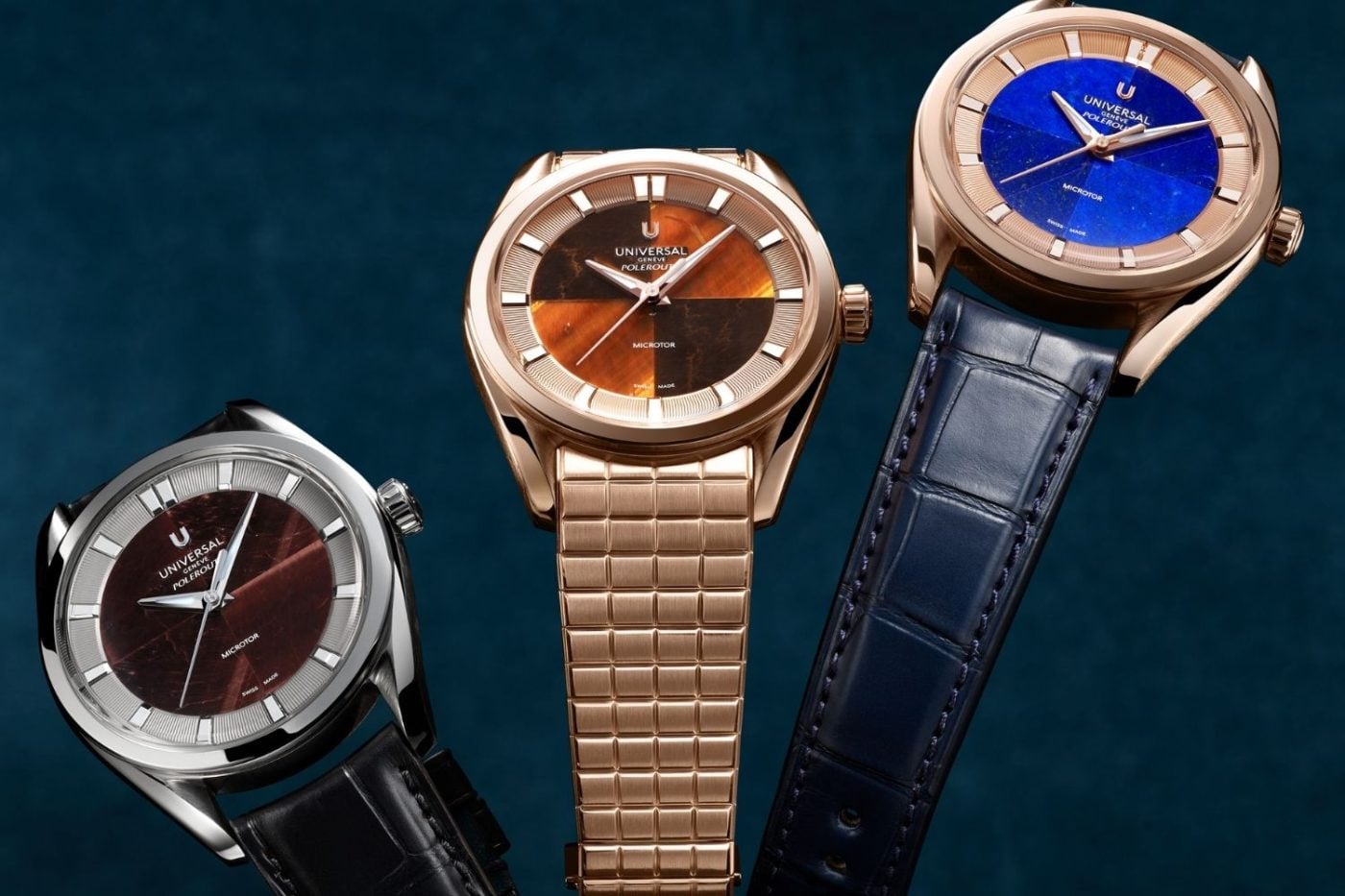
Universal Genève is back. Not in the way brands usually “come back,” with a quiet capsule collection and a polite press release nobody reads.
This is the full return of one of the 20th century’s most important watchmakers, and the timing, right on the eve of Watches and Wonders 2026, is no accident.
The man at the wheel is ‘georgous’ Georges Kern, and his CV reads like a masterclass in making watch brands relevant again.
Born in Düsseldorf in 1965, Kern cut his teeth at Kraft Foods before crossing into watches at TAG Heuer, where he ran marketing and later oversaw the German and Austrian divisions. He joined Richemont in 2000 and helped integrate A. Lange & Söhne, Jaeger-LeCoultre, and IWC into the group. By 2002, at just 36, he was running IWC as the youngest CEO in Richemont’s stable.
Curated news for men,
delivered to your inbox.
Join the DMARGE newsletter — Be the first to receive the latest news and exclusive stories on style, travel, luxury, cars, and watches. Straight to your inbox.
He spent 15 years building that brand into a powerhouse. Then he walked away from the whole thing.
He became CEO and co-shareholder of Breitling in 2017, wanting his own money in the game rather than another corporate role. He doubled the brand’s turnover in six years and dragged it from dusty aviation nostalgia into one of the world’s top nine luxury watch brands.
Now he’s taking on Universal Genève. And this time, the ambition is even bigger.
For anyone who hasn’t fallen down the vintage rabbit hole, Universal Genève coined the title “Le Couturier de la Montre,” the Watch Couturier. The story starts in 1894 in Le Locle, where Numa-Emile Descombes and Ulysse-Georges Perret founded Universal Watch. As the reputation grew, they moved to Geneva, setting up on the Rue du Rhône. But the real transformation came under Raoul Perret, who took over in 1932 and did something no other brand was doing at the time: he established a dedicated design department, putting aesthetics on equal footing with mechanics.
That decision shaped everything that followed. Gérald Genta drew the Polerouter for them. The Compax became one of the most collectible chronographs on the planet. The Cabriolet, with its reversible case, was pure showmanship with substance underneath.
And the people who wore them? Nina Rindt, Eric Clapton, Alain Delon. Not brand ambassadors with contracts and Instagram obligations. Just people with exceptional taste who chose Universal Genève because it was the right watch.
The pricing makes the ambition crystal clear. This isn’t Breitling territory. Universal Genève is landing squarely in Vacheron Constantin and A. Lange & Söhne airspace, which is a bold opening gambit for a brand that’s been dormant.
He’s not relaunching a mid-range brand. He’s building a haute horlogerie house.
The relaunch spans five collections, and every one of them pulls from a different chapter of Universal Genève’s history.
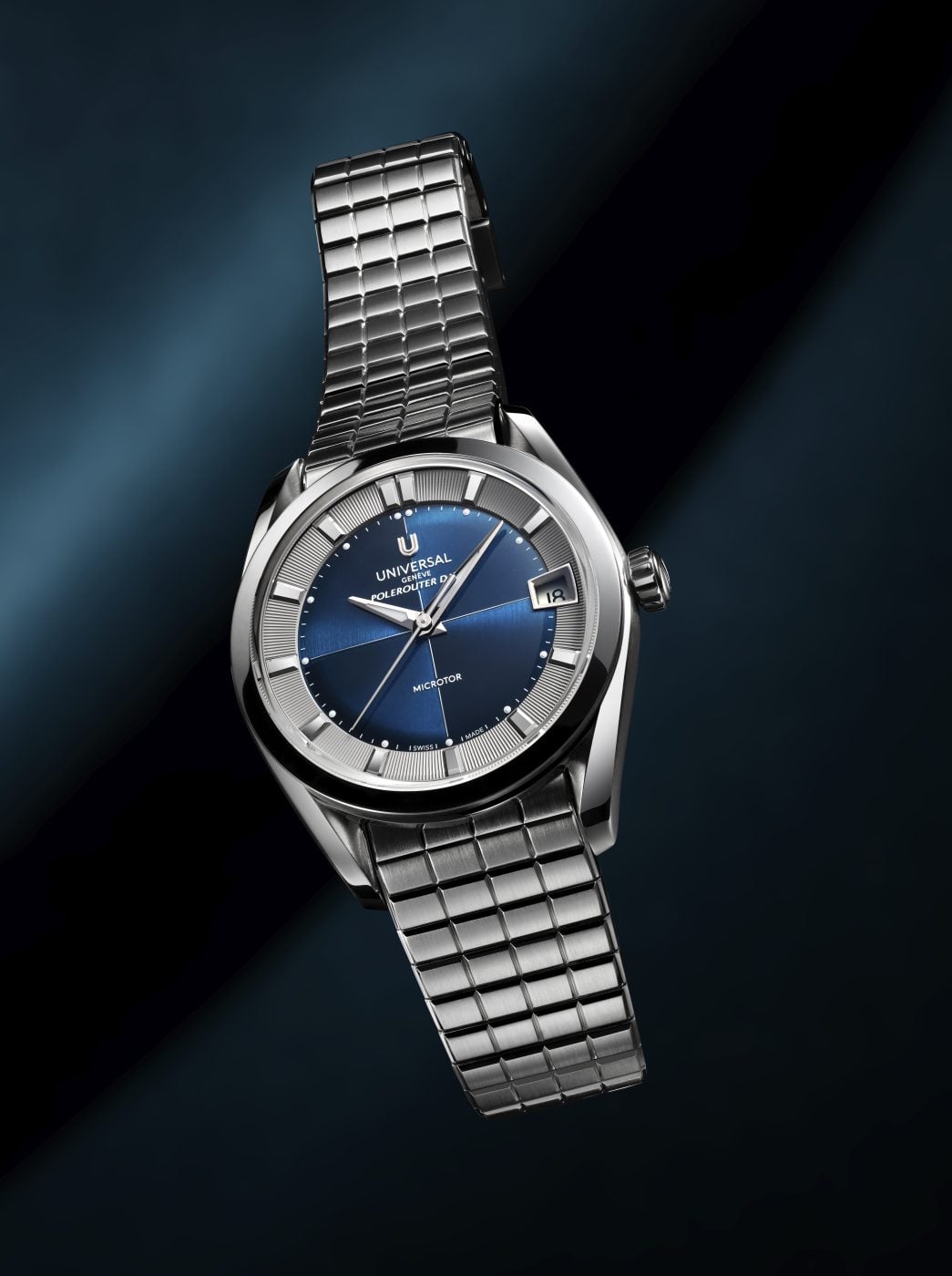
The Polerouter is the headline act. Originally conceived by a young Gérald Genta for a pioneering polar route air flight, it became one of the brand’s most recognisable designs. The new edition keeps the signature outer dial ring, twisted lugs, and crosshair motif, but with what the brand calls “playfully artistic twists” for the modern wearer.
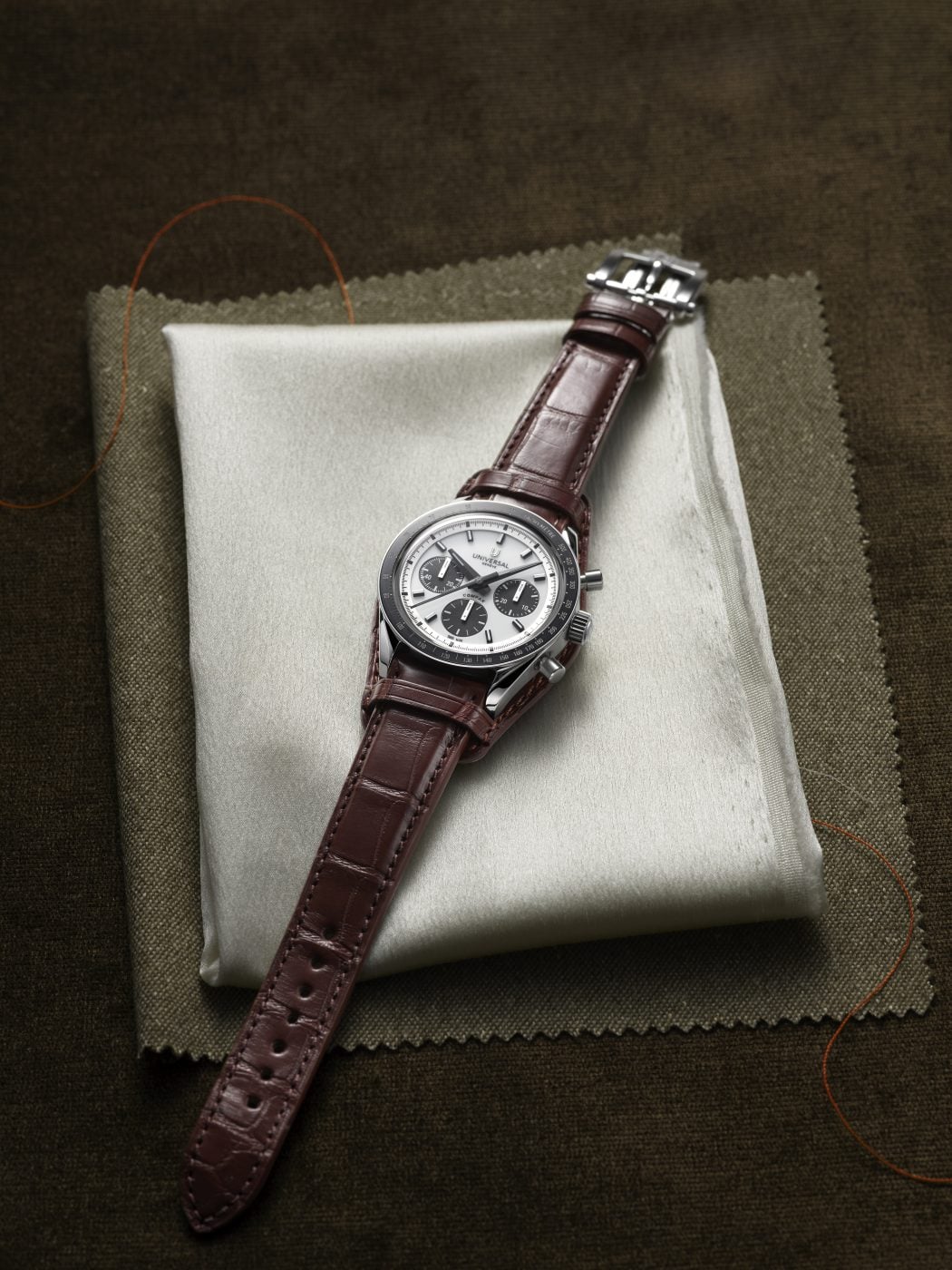
The Compax returns with Nina Rindt’s ghost firmly attached. Her much-photographed panda dial on a bund strap, worn trackside while she timed husband Jochen’s Formula One laps, turned the chronograph into a cultural object. The new editions lean into that legacy with a fashion-forward take on the original DNA.
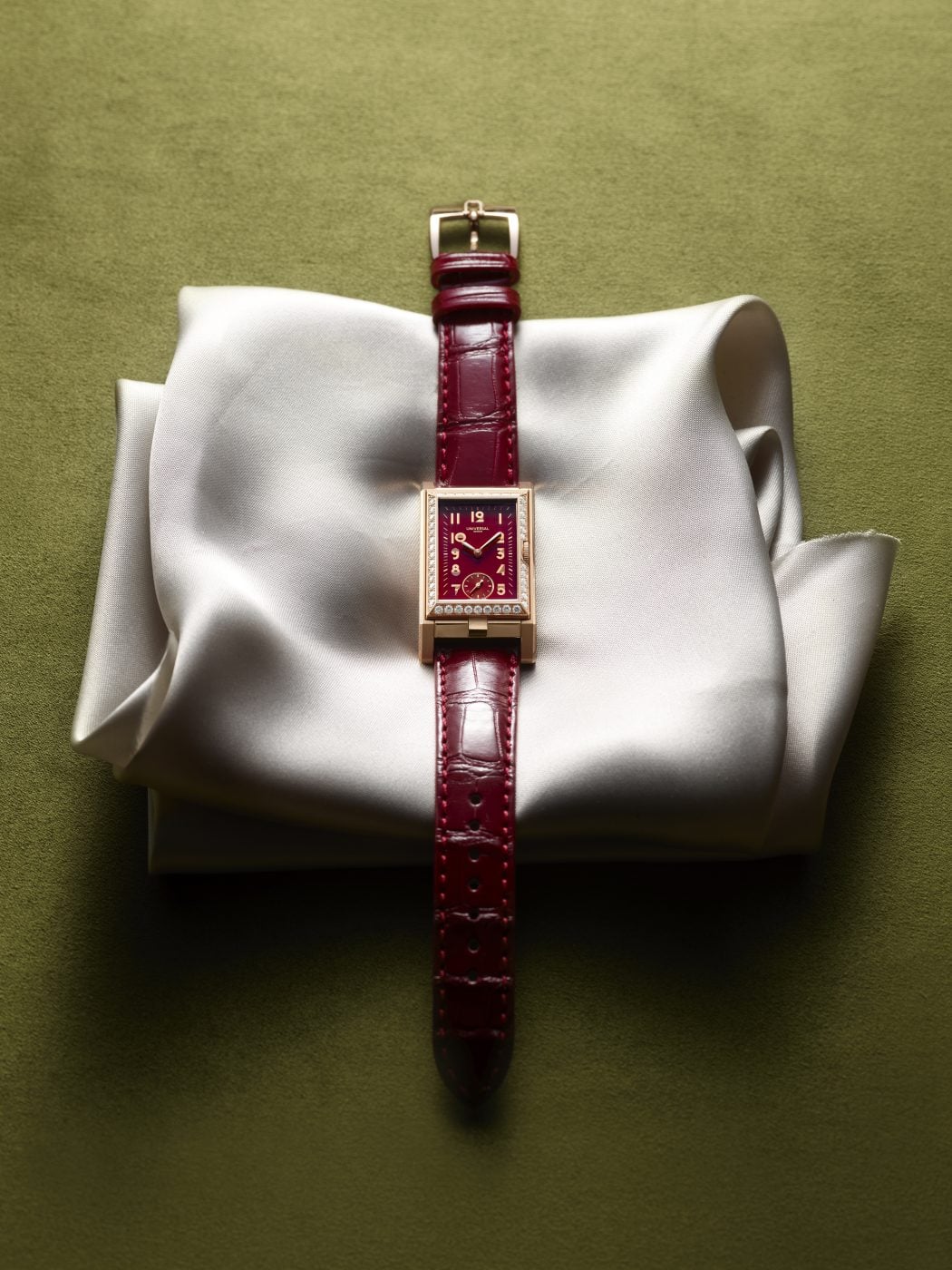
The Cabriolet is where things get properly interesting. First launched in 1933 as the Ideo, the reversible case was originally designed to protect the dial. Now it’s been reimagined as a dual canvas for personalisation, drawing on the visual languages of Art Deco poster designer Cassandre and painter Tamara de Lempicka. The primary dial uses Cassandre’s Bifur typeface rendered as lacquer inlay. A new manual-wound UG-111 calibre sits inside, just 3mm thin with a 72-hour power reserve.
The capsule edition is the real showstopper: 15 pieces in velvet teal with 18K rose gold cases, each caseback featuring a hand-painted miniature of a De Lempicka artwork by miniaturist Isabelle Villa. Five pieces each of three paintings. That’s the kind of detail that separates haute horlogerie from everything else.
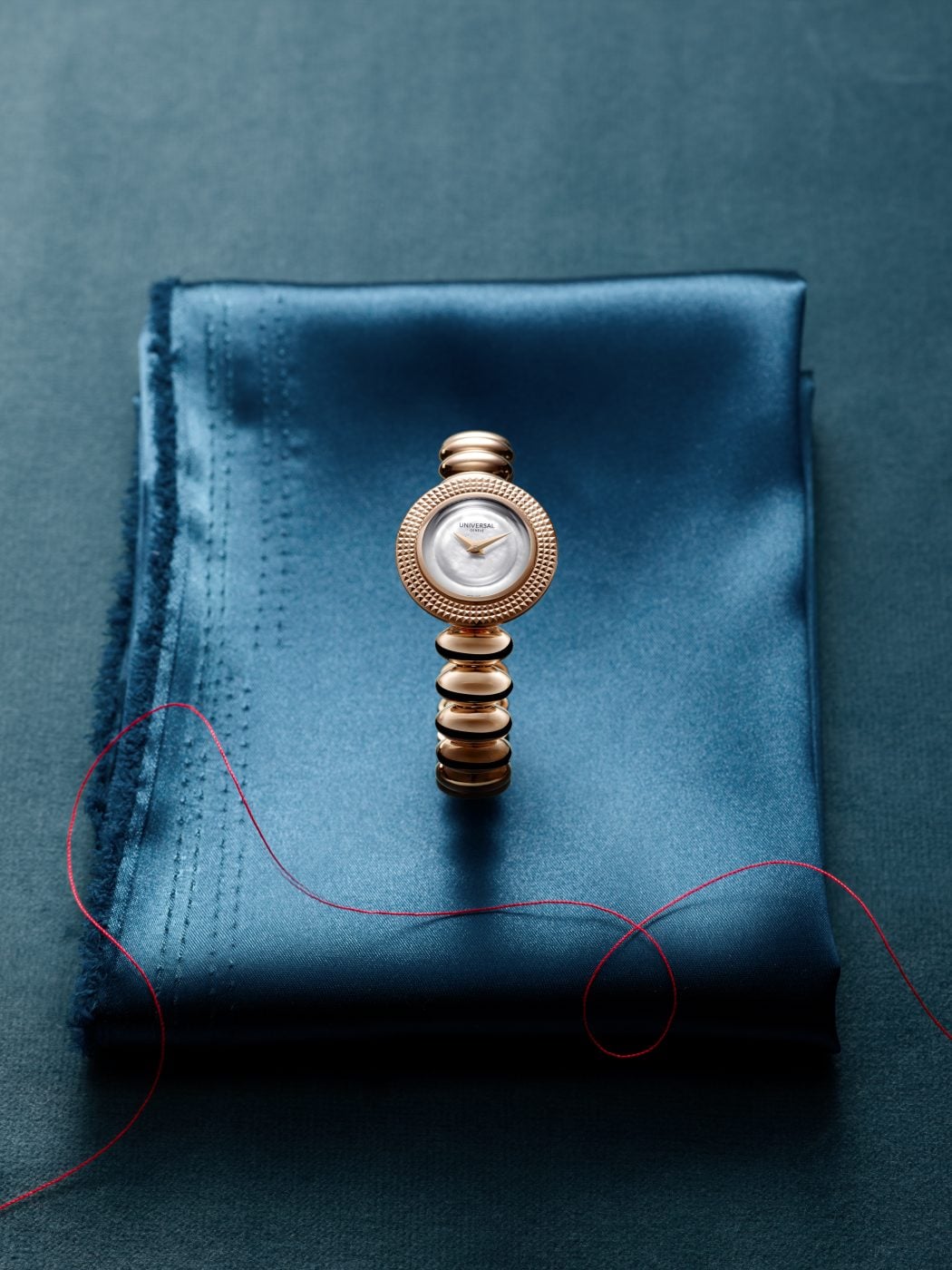
The Disco Mini targets women who’ve been underserved by the industry for decades. Named after the mid-century Disco Volante (“flying saucer”) watches, it’s a lugless, bangle-bracelet design with an interchangeable strap system spanning alligator leather and handcrafted tweed by French ribbon maker Julien Faure. The 28mm Prêt-à-Porter models come in rose gold and white gold, with a 32mm Disco Mini Lace capsule in white gold with a diamond-set bezel and blue mother-of-pearl dial.
And then there’s the Couture Collection, which sits above everything else as the brand’s haute horlogerie statement. Details are still emerging, but the positioning is clear: this is where Universal Genève plants its flag at the very top of the market.
The brand is heading back to its historic address on Geneva’s Rue du Rhône, which tells you everything about where Kern sees this sitting.
The collector market has been quietly obsessed with vintage Universal Genève for years. Polerouters have become the knowing alternative to the usual suspects. There’s real, earned equity here, built over decades of being undervalued relative to the usual Swiss trinity.
The question is whether Kern can convert that collector reverence into commercial momentum without diluting what made the originals special. Heritage relaunches are tricky. Lean too hard on nostalgia and you end up with a museum gift shop or a Cartier copycat. Stray too far from the originals and you lose the people who kept the flame alive. It’s all about balance.
But if anyone has the track record to thread that needle, it’s probably the guy who made Breitling cool again.

