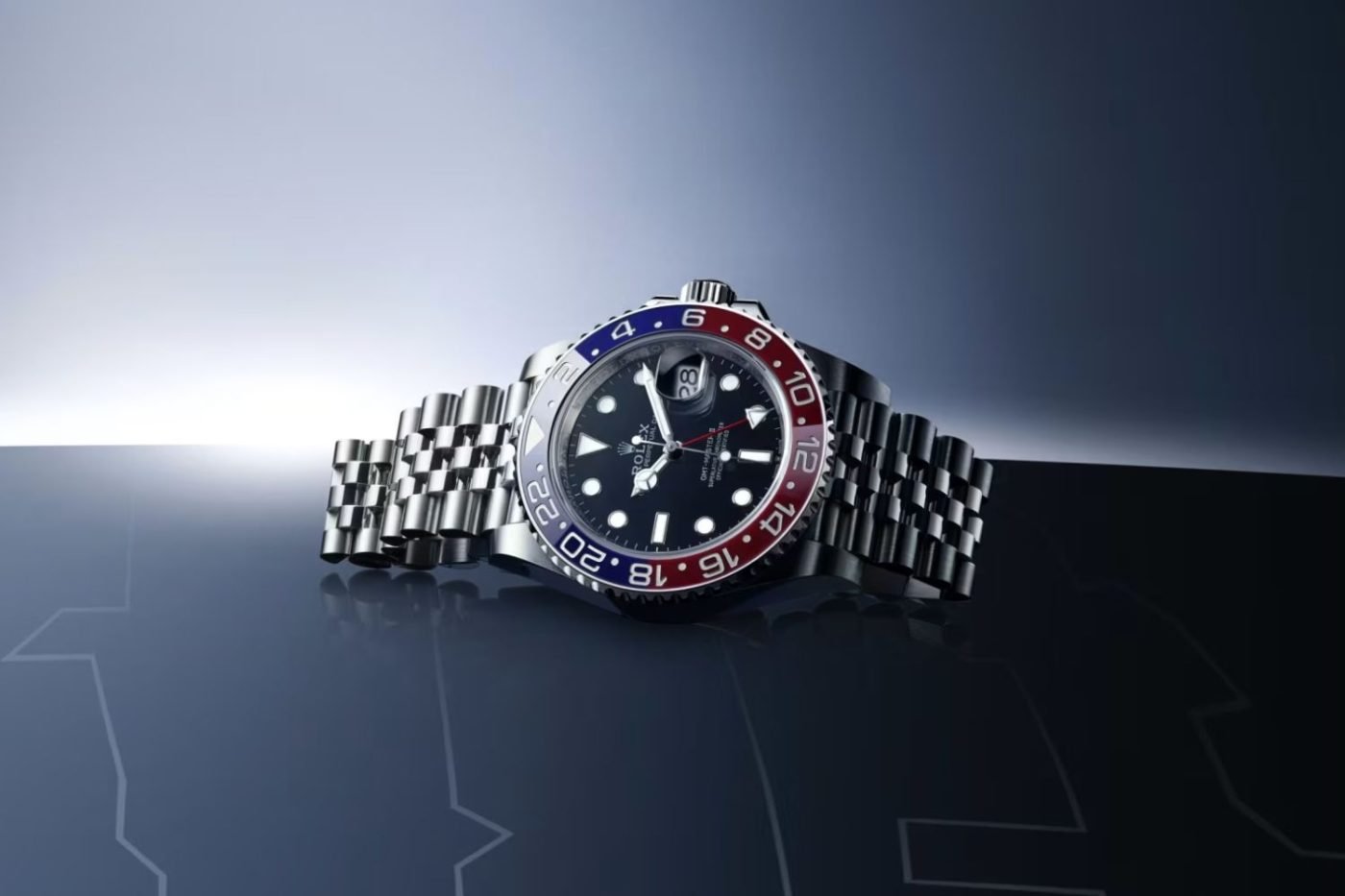
WatchPro has confirmed that Rolex has officially pulled the pin on the steel GMT Master II with the iconic red and blue “Pepsi” bezel, being notified by authorised dealers that no more deliveries are coming.
Customers still on waiting lists are being told, politely but firmly, to start looking at other models.
And just like that, one of the most hyped steel sports watches of the last decade is done. Or is it?
Now, before anyone starts panic-buying on Chrono24, let’s take a breath.
Curated news for men,
delivered to your inbox.
Join the DMARGE newsletter — Be the first to receive the latest news and exclusive stories on style, travel, luxury, cars, and watches. Straight to your inbox.
This happens every single year. The weeks leading into Watches and Wonders are peak season for discontinuation rumours, dealer whispers, and references quietly vanishing from websites.
It’s the watch world’s version of silly season, and the Pepsi has been the subject of “it’s being killed off” speculation since at least 2023. Every year the rumours swirl. Every year people lose their minds. And most of the time, what actually happens is Rolex retires a reference only to replace it with something updated at the Geneva show weeks later.
RELATED: Rolex GMT-Master II In Pepsi Colours & Stainless Steel Is The Modern Traveller’s Watch
Which raises the obvious question: why would Rolex kill one of its most popular models? The Pepsi GMT is arguably the single most desired steel sports watch in the entire Rolex catalogue. It’s the one that built AD relationships, the one that launched a thousand waitlists, the one that turned casual watch buyers into full-blown collectors. You don’t just bin that kind of cultural cachet. You evolve it.
Then there’s the production issue narrative, which has been floating around for a couple of years now. The story goes that Rolex was struggling with high failure rates on the red and blue ceramic bezels, that firing two colours into a single ceramic insert at scale was proving too difficult to maintain consistently. And look, it’s plausible on the surface.

Two-tone ceramic is genuinely tricky to produce. But Rolex has been making this bezel since 2018. That’s seven years of production. The idea that they’ve suddenly hit an insurmountable manufacturing wall after nearly a decade feels like a stretch, and it’s worth noting that nobody has ever actually confirmed these production problems on the record.
What’s far more likely is that Rolex is doing what Rolex always does: clearing the decks ahead of Watches and Wonders 2026. Kill the current reference, let the secondary market lose its collective mind for a few weeks, then unveil a new generation Pepsi with a tweaked case, a new movement, or some other incremental update that justifies a fresh reference number and, inevitably, a higher retail price.
RELATED: Rolex GMT-Master Buyers Guide: Everything You Need To Know
In the meantime, the secondary market is doing exactly what you’d expect. EveryWatch data shows median dealer prices for the Pepsi have spiked from around $48,500 AUD at the start of the year to roughly $50,700 AUD now.
The retail price, for anyone keeping score at home, is about $19,900 AUD. So you’re looking at a watch trading at roughly two and a half times retail, and that gap is only going to widen now that supply has officially been cut off. The ripple effect is already hitting the rest of the GMT lineup too. The “Batgirl” (black and blue bezel on a Jubilee bracelet) has surged to just under $40,400 AUD on the secondary market, more than double its retail price. When one reference dies, the others absorb the demand. It’s Rolex economics 101.
So if you own a Pepsi, hold it. If you were on a waitlist, commiserations. And if you think this is truly the end of the red and blue bezel, well, I’d bet good money we’ll be looking at a brand new one come April.

