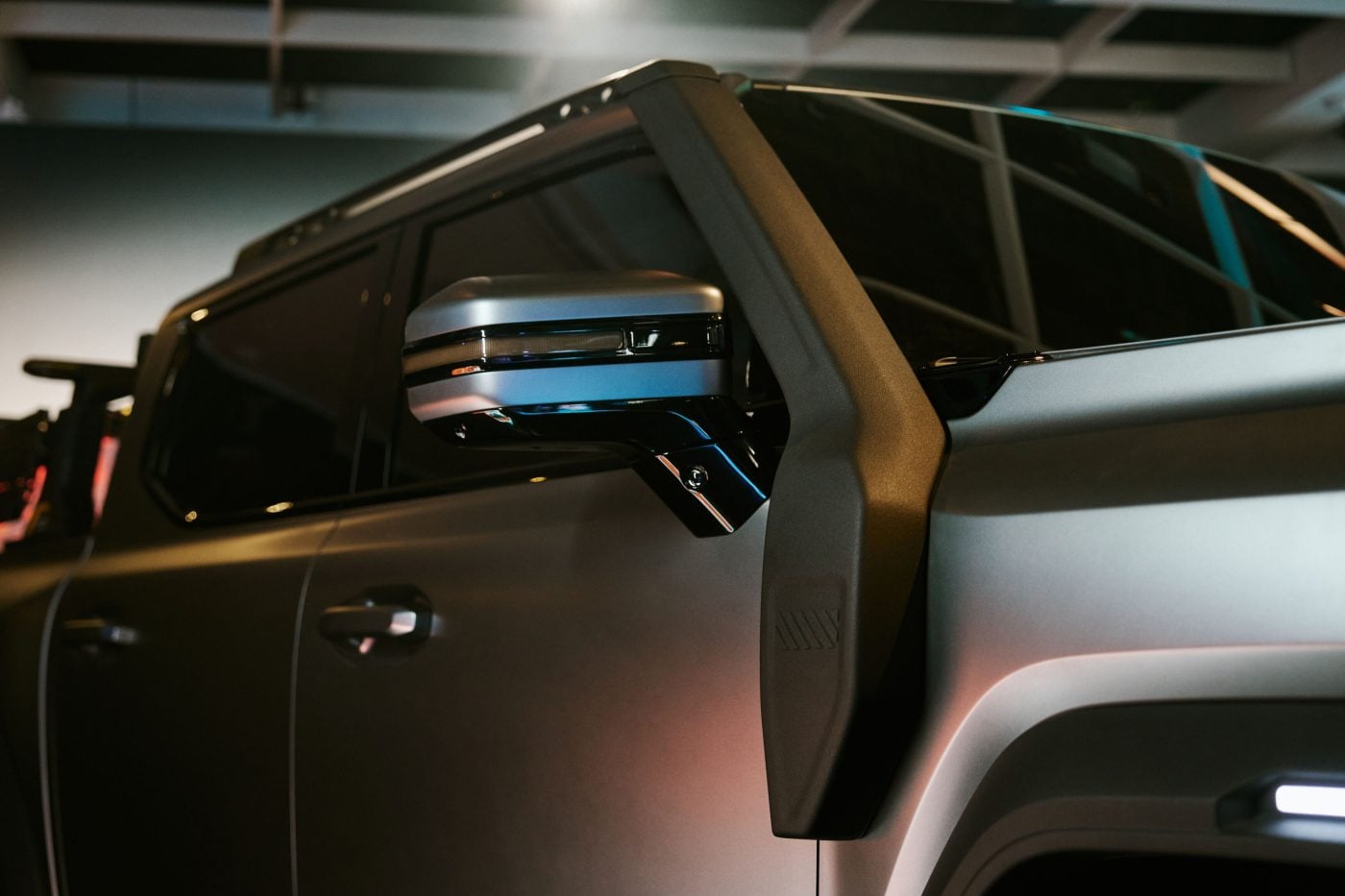
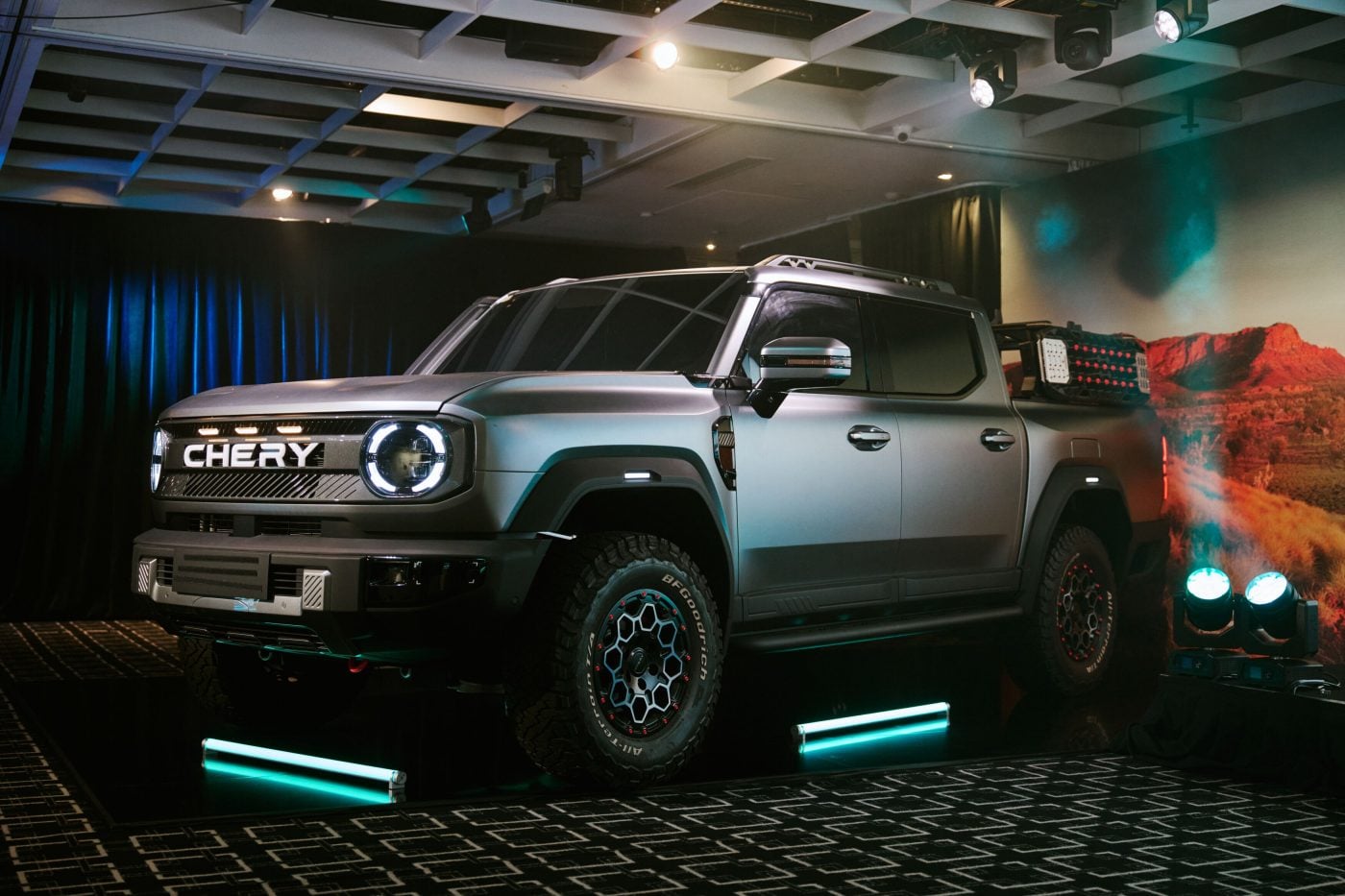
The dual-cab ute segment just got its most interesting wildcard in years. Chery has pulled the covers off the KP31 concept in Sydney, a diesel plug-in hybrid ute that doesn’t exist anywhere else in the world, and if it delivers on even half its promises, the establishment should be nervous.
Here are our top reasons it should be worth waiting for…
It’s the world’s first diesel PHEV ute.
Every other plug-in hybrid ute on the Australian market (the BYD Shark 6, GWM Cannon Alpha, Ford Ranger PHEV) pairs its electric motor with a petrol engine. Chery has gone the other way entirely, mating a 2.5-litre turbo-diesel with plug-in hybrid tech. That’s a world first in the dual-cab segment. The Ranger PHEV, for all its hype, still runs a petrol-electric setup. The BYD Shark 6 does the same. Neither has cracked diesel hybrid.
Why does it matter? Diesel delivers the low-down torque that actually matters when you’re towing a boat up a ramp or loaded to the gills on a construction site. The electric side handles your daily commute and city running on virtually nothing. It’s the best of both worlds in a way no other ute currently offers.
Chery is claiming 47 per cent thermal efficiency from the diesel powertrain, 10 per cent better fuel economy than the average diesel, and a 30 per cent reduction in vibration.
Unconfirmed reports out of China suggest outputs of 210kW and 650Nm from a twin-turbo setup. Figures that would put it firmly among the segment’s heaviest hitters.
Curated news for men,
delivered to your inbox.
Join the DMARGE newsletter — Be the first to receive the latest news and exclusive stories on style, travel, luxury, cars, and watches. Straight to your inbox.
It tows and hauls like a proper ute.
This is where Chery has clearly done its homework. The KP31 is rated at 3500kg braked towing and 1000kg payload. That matches the HiLux and Ranger, keeps pace with the Isuzu D-Max, and comprehensively outguns the Shark 6, which maxes out at 2500kg towing with a payload under 700kg.
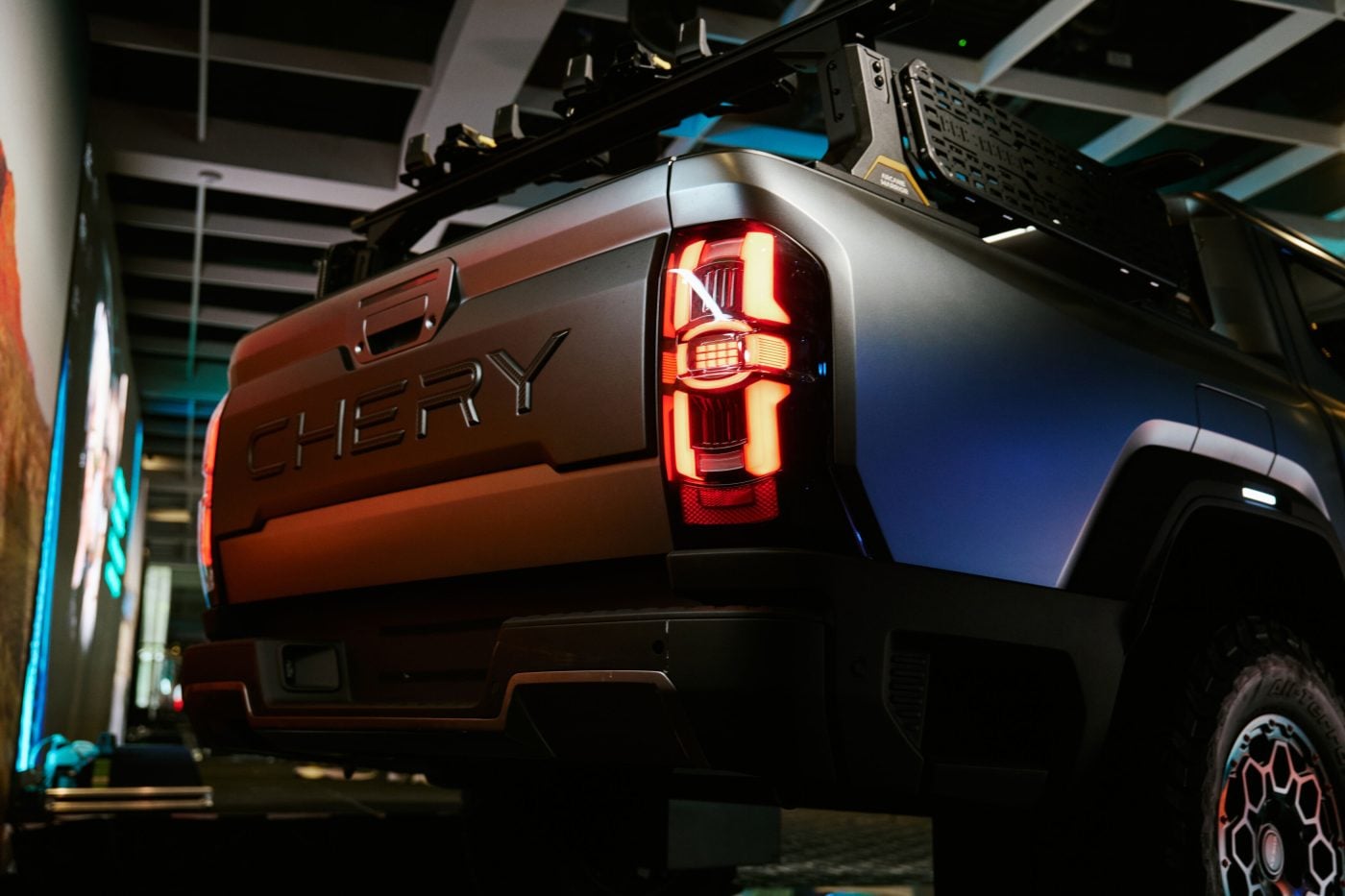
The GWM Cannon Alpha matches on towing but falls short on payload, too.
If you need a ute that actually works for a living, not just one that looks the part on the school run, these numbers matter. Chery COO Lucas Harris has been blunt about this: the company pushed its Chinese engineers hard for diesel capability specifically so the ute could handle full-time towing, carrying, and off-roading without compromise.
It’s genuinely built for Australian conditions.
Chery didn’t just slap a “for Australia” sticker on a Chinese-market ute. Harris and his local team took Chery’s global engineers to Stradbroke Island off Brisbane’s coast to show them how Australians actually use utes. The fishing rods, the caravans, the beach driving, the weekend warrior lifestyle. Boss Harris says it was a lightbulb moment for the Chinese side.
The result is a ute with triple locking differentials (front, centre, rear), a low-range transfer case, dedicated off-road modes, and a tight-turn feature similar to Ford’s Trail Turn Assist.
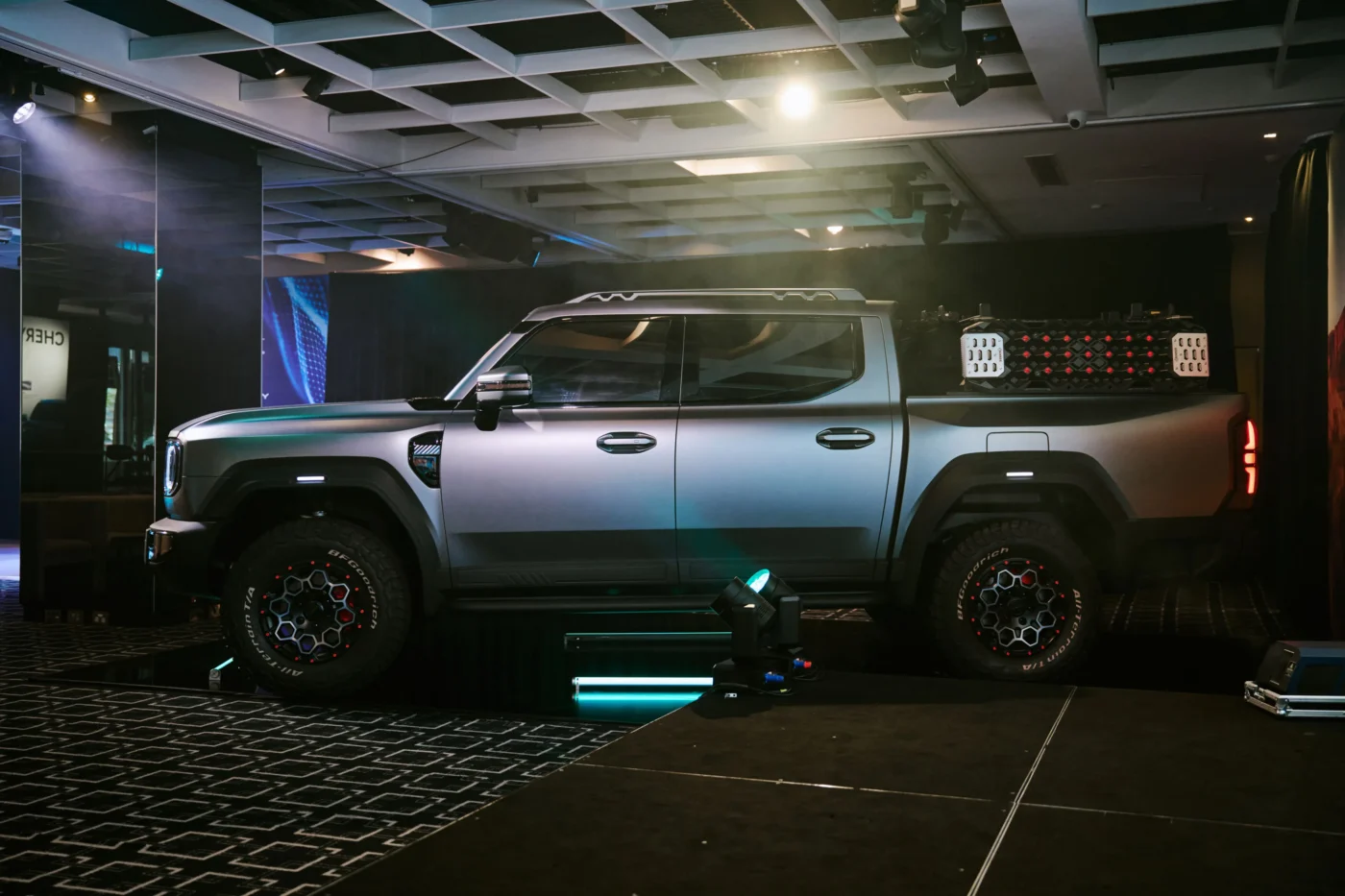
The concept rolled on 285/70 R17 BF Goodrich All-Terrains, a tyre-and-wheel package that was specced after Chery’s Australian team consulted local off-road tyre specialists to maximise aftermarket flexibility. Even the six-stud pattern was chosen to play nicely with existing Australian wheel options.
The concept is big, too.
At 5450mm in production trim, it’s longer than a Ranger and sits in Kia Tasman territory.
Aftermarket compatibility is designed in, not bolted on. Most new ute brands treat aftermarket compatibility as an afterthought. Harris has taken a different approach, engaging with ARB, Ironman, and TJM well before launch to ensure bumper mounts, bull bar fitment, and accessory compatibility are baked into the design from the factory floor.
For anyone who’s ever bought a new-to-market ute and then waited 18 months for a decent bull bar or canopy to become available, this is a significant shift in thinking.
The pricing should be aggressive.
Chery hasn’t confirmed pricing (or many production car details) yet, but read the room. The Shark 6 starts at $57,990. The Cannon Alpha PHEV from $59,990. The Ranger PHEV from $71,990. Chery has built its entire Australian strategy on value, and Harris has been clear that the ute will be positioned as a strong proposition against established rivals.
Expect pricing that makes the Shark 6 look over its shoulder. At that kind of money, it’s not just undercutting BYD. It’s starting to put pressure on base-model Ford Rangers, Toyota HiLuxes and Isuzu D-Maxes, too.
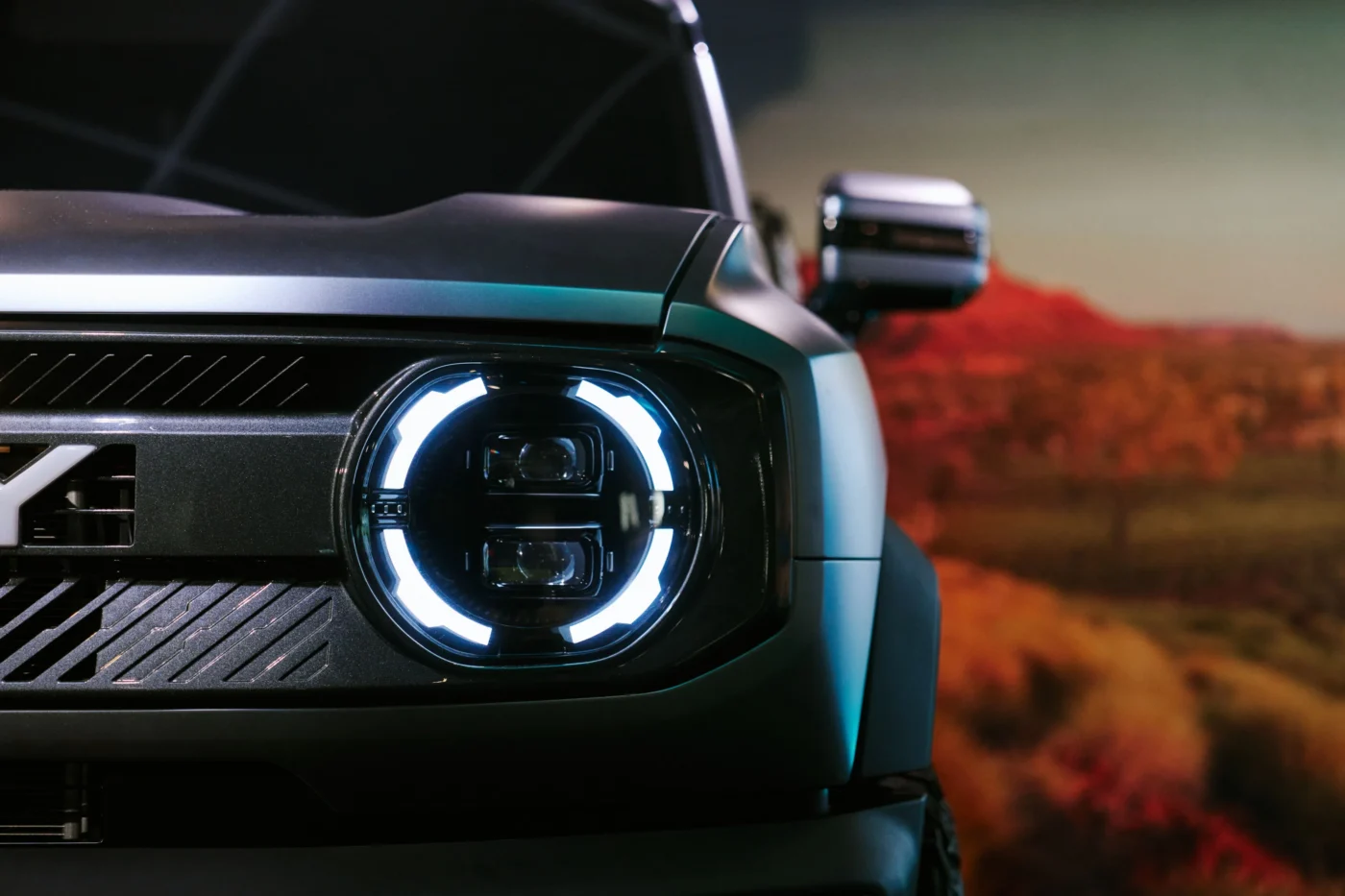
A petrol PHEV variant will follow in 2027 for buyers who want the lifestyle ute experience without diesel.
The bottom line The KP31 is still a concept, albeit one described as “very close” to the production version that’s due in Australian showrooms by Q4 2026. There’s still plenty Chery hasn’t revealed: battery capacity, EV-only range, exact power figures, and of course, what the thing will actually be called.
But the fundamentals look right. So, if Chery nails the execution and the price, this could be the ute that forces the entire segment to recalibrate.
At the very least, it’s worth waiting to see the final numbers before committing to anything else.

