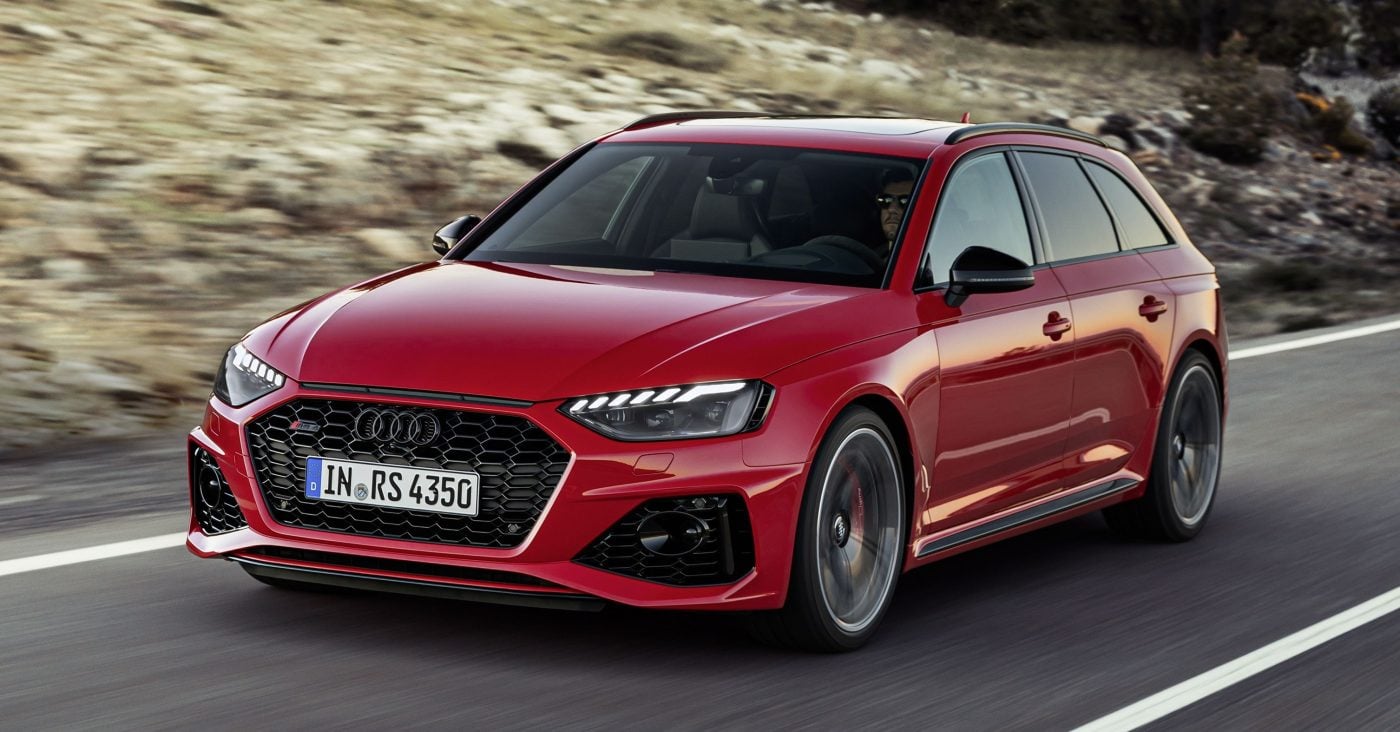
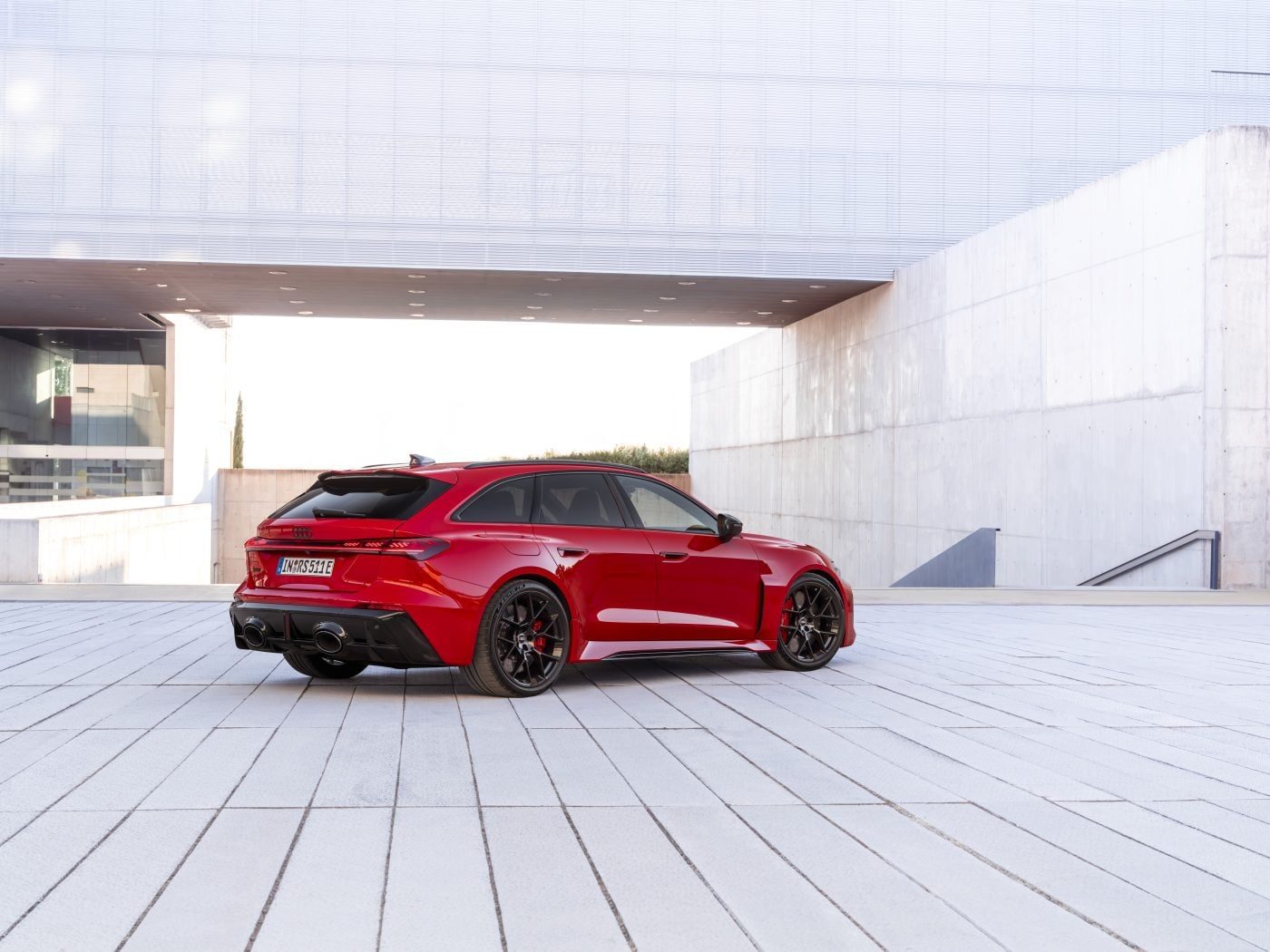
The new RS 5, which is what Audi is now calling the RS 4’s successor thanks to a naming reshuffle where odd numbers mean combustion and even numbers mean electric, was revealed this week. And while the spec sheet reads like the kind of thing that should have RS fans salivating, there’s a problem. A 580-kilogram problem, to be specific.
The headline number is 470kW. That’s what you get when you bolt a 130kW electric motor onto the familiar 2.9-litre twin-turbo V6, stuff a 25.9kWh battery pack under the boot floor, and call it Audi Sport’s first plug-in hybrid. It’ll do 0-100km/h in 3.6 seconds and offers up to 87 kilometres of electric-only range. On paper, it’s an absolute weapon.
But here’s the thing. The RS 5 Avant weighs 2,370kg. The B9 RS 4 Avant? Around 1,790kg. That’s more than half a tonne of difference. You could literally fill the B9’s boot with sand and still come in lighter than the new car rolling off the line empty.
And that gap tells you everything about what’s been lost in the transition.
Curated news for men,
delivered to your inbox.
Join the DMARGE newsletter — Be the first to receive the latest news and exclusive stories on style, travel, luxury, cars, and watches. Straight to your inbox.
The B9 RS 4 is a pure combustion car. No battery management. No regenerative braking modes. No “Boost” button that gives you ten seconds of maximum attack before the software decides you’ve had enough fun.
You turn it on, the 2.9-litre twin-turbo V6 is right there, all 331kW and 600Nm of it, no electric motor filling in torque gaps or smoothing out the power delivery on your behalf. The engine does the talking and you do the listening. That’s the deal.
It’s a relationship the RS 5 simply can’t replicate. Yes, it has an extra 139kW on tap. Yes, it has a trick torque vectoring rear axle and enough driving modes to fill a small manual. But all of that technology exists, at least in part, to manage the consequences of carrying an extra half a tonne around. The B9 didn’t need any of it because it didn’t have the weight problem in the first place.
There’s something to be said for a car that solves its dynamic challenges with engineering rather than software. The B9’s steering, particularly in dynamic mode where it locks to a constant 14:1 ratio, gives you a pointy front end without the nervousness.
The lighter V6 sitting further back than the old B8’s V8 gave it genuinely better balance. And the RS sport differential, while not perfect in its earlier iterations, was refined into something properly special by the time the Competition and Edition 25 Years models rolled around in the car’s final years.
Those late-life specials are worth paying attention to, by the way. The Competition got manually adjustable coilover suspension, lighter exhausts, and sharper gearbox calibration. The Edition 25 Years, limited to just 250 cars worldwide, went further still with bespoke Pirelli P Zero Corsa tyres, extra negative camber, and a ride height so low it looks like a tuner car. Both of those variants turned a very good fast wagon into a genuinely brilliant one.
And both now look like the kind of cars people will be fighting over in a couple of years.
The B9 RS 4 Avant is the last of its kind. The last mid-size Audi RS wagon without electrification. The last one under 1,800kg. The last one where the combustion engine is the whole show rather than half of a hybrid system. Every RS Avant from this point forward, including the next RS 6 which is also expected to go hybrid, will be heavier, more complex, and more reliant on battery power to make the numbers work.
When the C63 went from a twin-turbo V8 to a four-cylinder hybrid, prices on the older W205 models jumped almost overnight. The same thing happened with naturally aspirated M3s when BMW went turbo. Every time a successor arrives carrying more weight, more complexity, and less of whatever made the original special, the predecessor gets reappraised. The B9 RS 4 is about to get that treatment.
Expect used prices to firm up, particularly on low-kilometre examples and the limited-run Competition and Edition 25 Years cars.
Buyers who were on the fence will suddenly realise there’s no going back to a sub-1,800kg RS wagon, and the market will adjust accordingly. Anyone who picked up an Edition 25 Years for sticker price is already sitting on a smart investment whether they meant to or not.
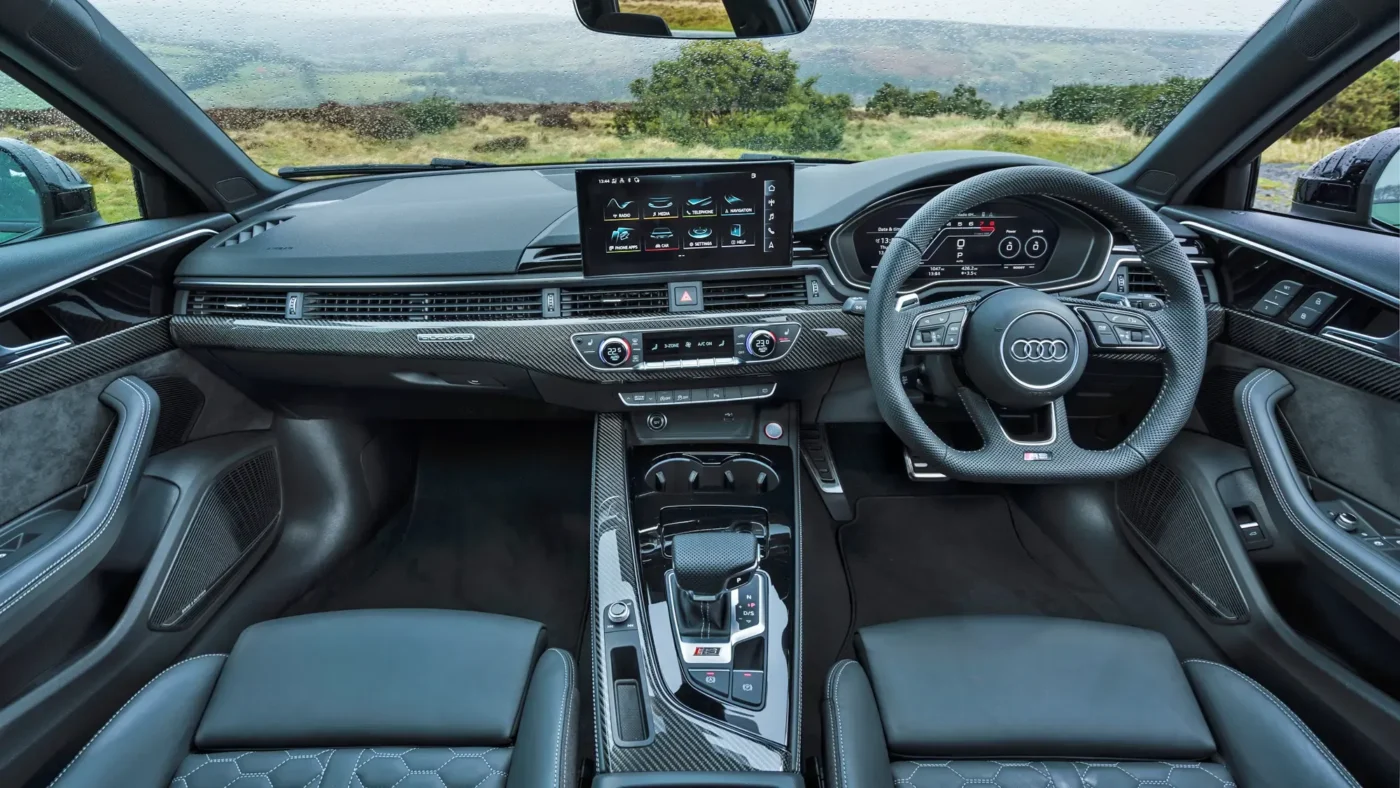
That doesn’t make the new RS 5 a bad car. It’s clearly a very fast, very capable machine and nobody who drives one is going to feel short-changed in a straight line. But it is a fundamentally different type of car to the one it replaces. The B9 is analogue where the RS 5 is digital. It’s light where the RS 5 is laden. And it offers a driving experience that connects you to the road in a way that 2,370kg of plug-in hybrid, no matter how cleverly engineered, is going to struggle to match.
If you’ve been sitting on the fence about picking up a B9 RS 4, the fence just got a lot shorter. Audi has accidentally made the case for its predecessor better than any review ever could. And the market is about to notice.

