The Swiss watch industry is having a rough trot. Big brands have all but stopped spending, and as someone who has run DMARGE for 15 years, I’ve watched how the current economic outlook has put the brakes on an entire luxury industry.
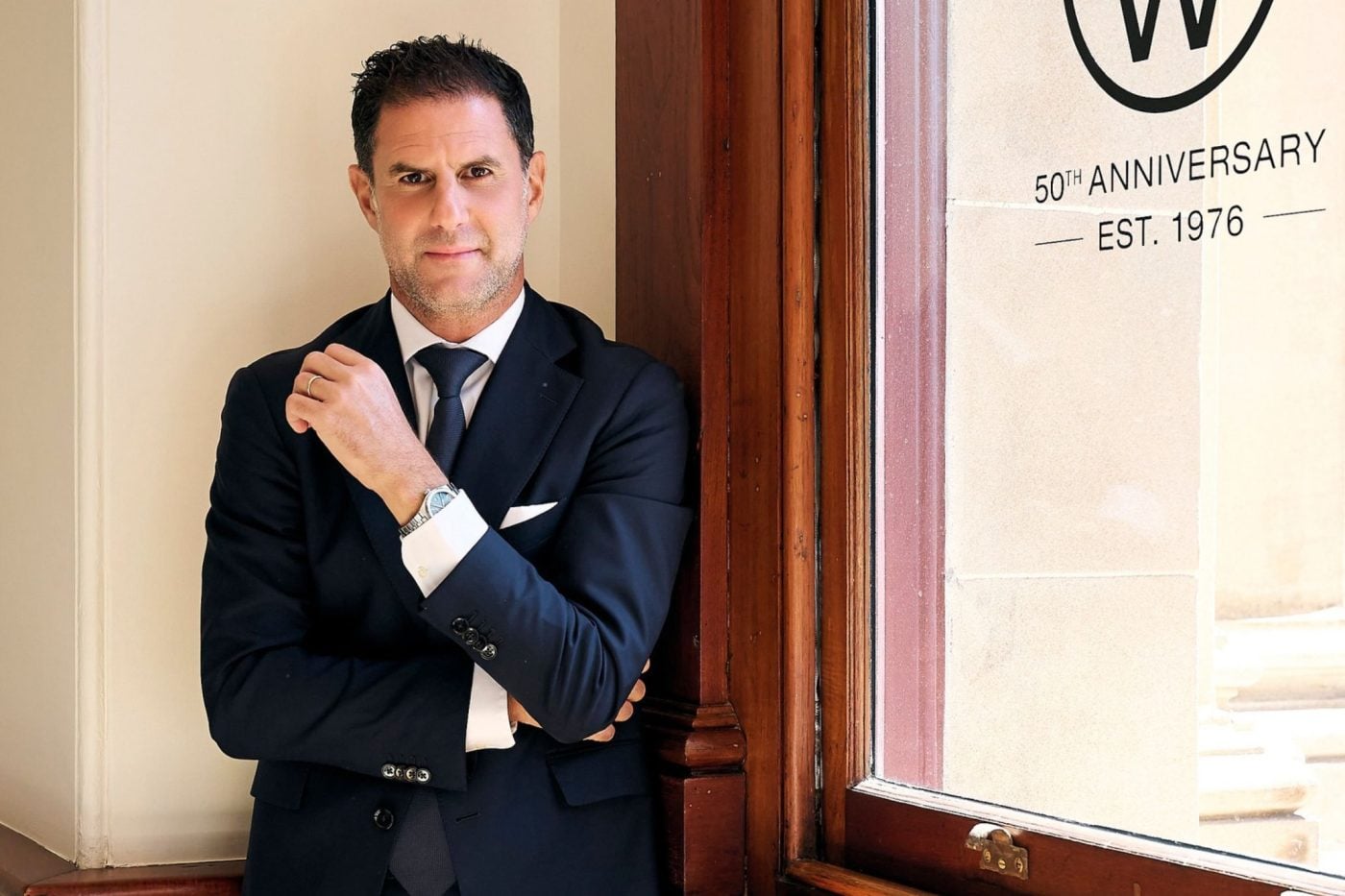
So it was slightly disorienting to sit across from Elie Bernheim, the third-generation CEO of Raymond Weil, and hear him say his company is growing in markets around the world. He flew in from Geneva yesterday on his second-ever trip to Australia, and he ordered a double espresso, which is fair enough for a man whose body clock still thinks it’s 2am.
“Big names are in trouble or difficulties, and we are growing,” he said. “For me, it’s a bit of a schizophrenic situation.”
The reason is almost boringly simple.
Curated news for men,
delivered to your inbox.
Join the DMARGE newsletter — Be the first to receive the latest news and exclusive stories on style, travel, luxury, cars, and watches. Straight to your inbox.
Raymond Weil has never pretended to be anything other than what it is, and in an economy where everyone from car buyers to watch collectors has started checking the receipt, that honesty has become a serious competitive advantage.
Most luxury brands get vague when you ask where they stop. Bernheim gives you numbers. Raymond Weil’s market sits between US$1,000 and US$4,000, with the core of the business between US$1,500 and US$3,000.
Above US$5,000, he says, is “out of our galaxy.” He doesn’t want to compete with brands that are above his league, and he’s refreshingly unbothered about saying so. “We are who we are,” he said. “I do not pretend to be who I’m not.”

That self-awareness extends to the movements. Raymond Weil uses the Sellita SW200, and Bernheim is happy to point out that anyone can go online and see what an SW200 costs. “We are not saying our SW200 Sellita movement could justify a watch above 10,000 Swiss francs,” he said. “It’s just telling the truth.”
Bernheim reckons the industry brought some of this on itself. “At some point, some end consumers felt abused,” he said, before settling on “deceived.” I offered “taken advantage of,” which he said was better, and then told him that in Australia we’d just say brands were ‘taking the piss’. He seemed happy enough to have that one attributed to him.
This isn’t a pivot dreamed up for a soft market. Raymond Weil turns 50 this year, and Bernheim’s grandfather founded it in Geneva in 1976, in the middle of the quartz crisis, on a value-for-money model from day one. His father used to say he wanted to offer refined timepieces at accessible prices.
What’s impressive is that they held that line in both directions. “We did not go up when the economy was booming, and then suddenly change direction to something more affordable because things were negative,” Bernheim said.
Meanwhile the market between $10,000 and $25,000 has softened noticeably, and value has become the buzzword whether you’re shopping for a watch or a Chinese EV.
Bernheim sees the same pattern in cars. Chinese, Japanese and Korean manufacturers arriving with a sharper proposition forced the European car industry to adapt quickly or collapse, and he thinks the Swiss watch industry has always found its best ideas in tough periods. “If you feel that things will never change, you’re over,” he said.
His father’s caution also kept Raymond Weil out of China. From the end of the ’90s until COVID, China was the Eldorado of Swiss watchmaking, and the brand didn’t have the financial resources to compete there. “We missed the train,” Bernheim said. “We were crying every morning because we knew it was the fantastic Eldorado.”
China has never been more than one per cent of his turnover. So when that market turned down, Raymond Weil wasn’t heavily affected. As Bernheim puts it, between nothing and nothing, there is nothing.
Price consistency didn’t mean standing still on everything else. When the pandemic hit, the US and UK made up 50 per cent of Raymond Weil’s turnover, and both were facing closures that could last months or years. “I was really scared of losing everything,” Bernheim said.
His father’s strategy had been to focus on a handful of key markets and let the others run by themselves, which meant the watches were designed for those markets and not much else. Bernheim put everything back on the table, decided Raymond Weil had to be a worldwide brand, and started building new collections to spread the risk.
That also meant a changing of the guard internally. Some people who had been there for ages believed the brand had to stay a certain way because it was the right recipe, and Bernheim felt it no longer was. “Some people left, and I had to ask some people to leave too,” he said. “Either people support your vision or they don’t. It’s the same for everything, business or the life of a couple.”
In other words, you’re either on board, or you’re out the door.
The first watch out of that reset was the Millésime, designed during COVID and launched right after it.
Bernheim had spotted the birth of the watch enthusiast as a new kind of customer, and wanted a neo-vintage piece with a contemporary edge that would seduce them.
It worked. When I first saw it, my reaction was that I couldn’t believe Raymond Weil had made it, and the whole internet seemed to feel the same way. It went on to win the Challenge Watch Prize at the GPHG.
“I was absolutely convinced it would become a success,” Bernheim said. “What I never expected was such a common feeling from everyone. You always have haters and lovers, but with the Millésime it was a lot of love from everyone.”
It also opened up Japan, where Raymond Weil had almost no distribution before COVID. A 35mm version made especially for Japanese buyers helped the brand grow to more than 65 points of sale there, and Southeast Asia, where the brand had not been doing well, has turned around too. 35mm seems small to the common Australian wrist, but when you actually tried this piece on, it just felt right. Small was chic, again.
The anniversary year’s big launch is the A.R.T. collection, the brand’s first ever integrated bracelet watch, which Bernheim was wearing on his right wrist. With the Freelancer making up more than 40 per cent of turnover and the Toccata covering timeless classic elegance, the missing piece was a sports chic option in the category with the most traction right now.
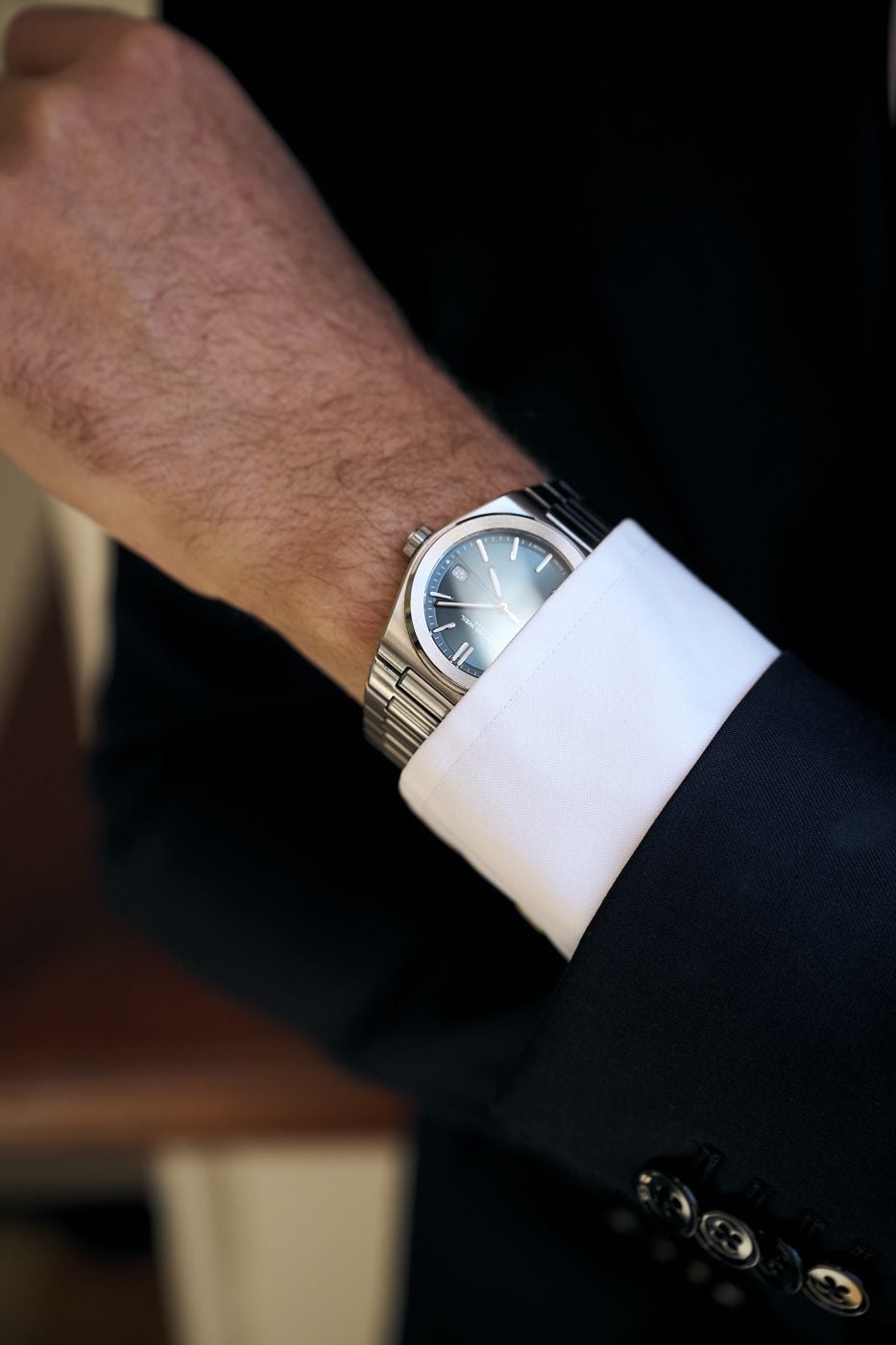
“We would have been very stupid not to have an integrated watch as part of the range,” he said. The design takes its cues from the ’70s without going over chic or over sporty, because, as he points out, Raymond Weil isn’t a sports brand. It has a clean bezel with no screws, no crown protection and a simple dial, which helps it stand apart in a category where 50 watches in one photo can start looking the same.
The price was the real brief. “It’s very expensive to buy an integrated watch at the moment; it’s too expensive,” Bernheim said, and the aim was something elegant at a very good price without being silly or arrogant about it.
The market has answered. “Unbelievable,” he said of sales. “I cannot produce enough.” There’s a 38mm automatic and a 30mm quartz, and Bernheim is particularly proud of the wearability, saying the weight is just as it should be.
For the collectors, there’s also The Fifty, a 50-piece limited edition chronograph built around 50 new-old-stock Valjoux movements, from a production run Bernheim says was probably around the year his grandfather founded the company. It’s a lovely bit of storytelling, though the A.R.T. is the bigger story.
Both watches made their debut at Watches & Wonders in Geneva, where Raymond Weil is one of the most affordable brands on show, and Bernheim thinks it may be the most affordable. Next year will be its fourth edition at the fair, after he walked away from Baselworld in 2018, one of the first brands to do so, because he felt its business model was old.
He reckons being the value option in that room is a strong message, in a world where more and more people want the right value for money. Retailers who weren’t interested in the brand before are now coming to him, because the market is changing and they want a good entry-level brand in their portfolio.
I did have one complaint from this year’s fair. We saw the A.R.T. in Geneva and then weren’t allowed to publish until June or July, which is a strange ask when everything goes live the moment someone takes a photo. Bernheim took it on the chin. “You are not the only one to complain about that,” he said, admitting that sometimes when you are too passionate you want to reveal everything at once, when you should be planning better.
He’s already learned the lesson. The Millésime Tuxedo launched in February, when Raymond Weil was probably the only brand releasing anything, and he says it gained far more visibility for it. He promised they’ll do better next year.
Raymond Weil sells direct online in its mature markets, and while Bernheim won’t pretend the margin doesn’t matter, he values the customer data even more. Without the scale of the big groups, knowing exactly who buys his watches lets him send the right messages to the right people, mostly through social and digital.
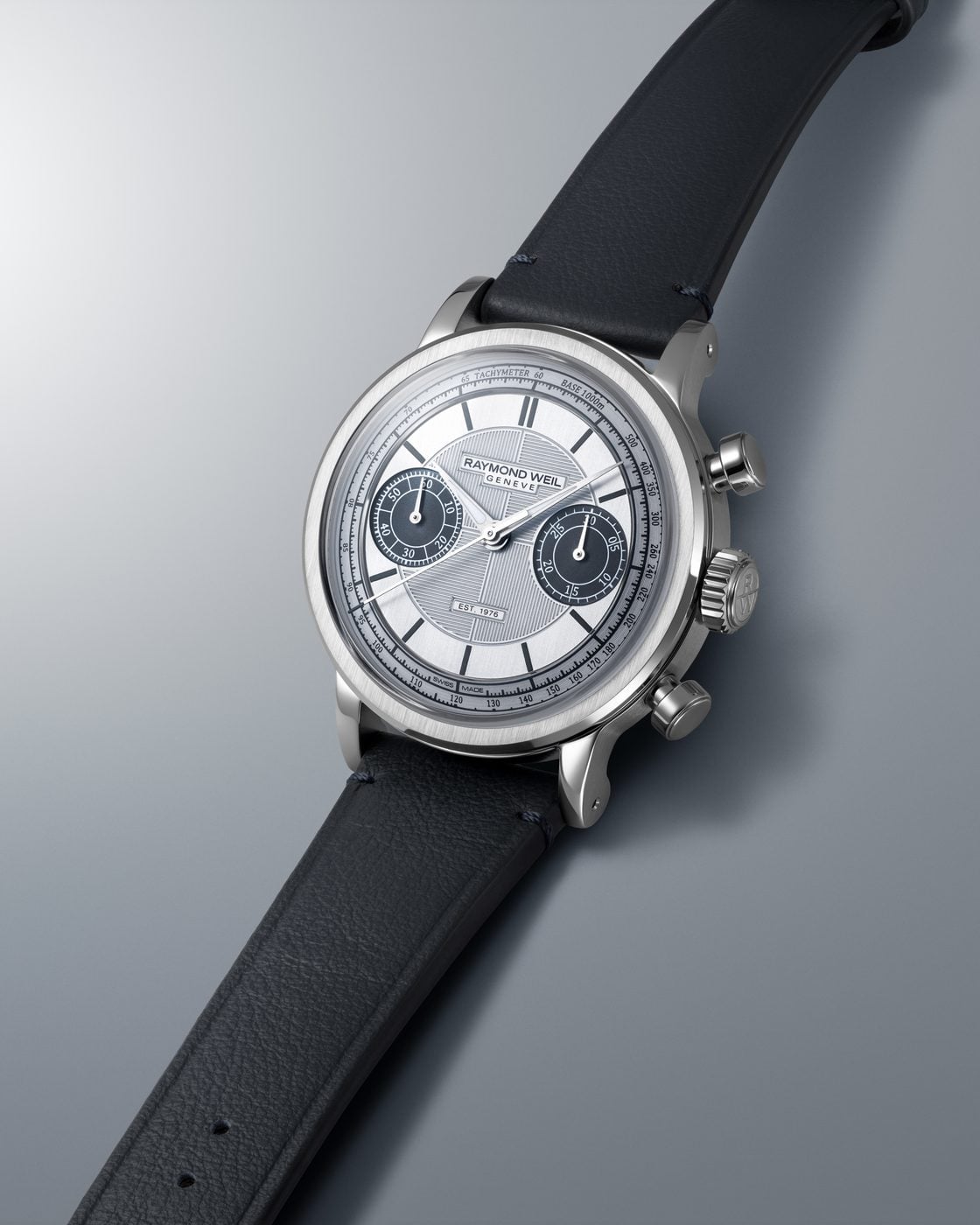
It’s worked well enough that people have approached him about buying the company. “It means we are not doing stupid things,” he said. “It’s good for your ego.”
He’s not selling. Raymond Weil is profitable, which he notes is rare in the watch industry and is the reason it’s still independent, and he likes the idea that one of his kids or his nephew might be the next generation. “There is not a single morning where I’m not excited by what I’m doing,” he said.
Australia has been an important market since the very beginning, and he did a quick tour of Sydney retailers yesterday.
Bernheim agrees that Raymond Weil has the right product for Australian buyers right now, though he wanted to stay modest about it. “Let’s be a bit humble,” he said, just before time was called.
Humble, in this case, looks a lot like being right.
