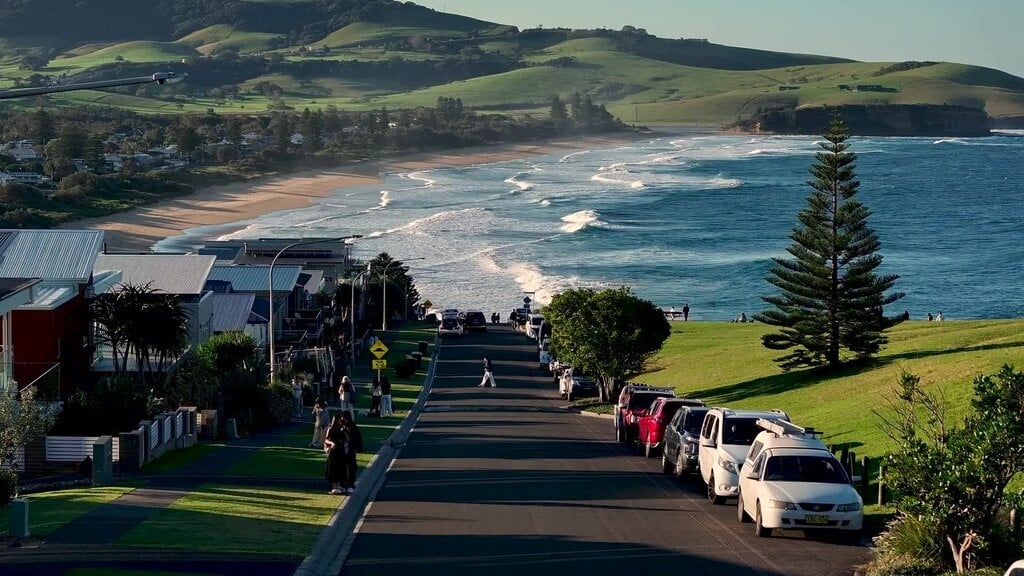
Tasman Drive was never trying to be famous. It was just a quiet residential street in Gerringong, south of Sydney, with a ureal view at the bottom of the hill and people living normal lives at the top of it.
Then the internet noticed the angle. The road falls towards the ocean. The green hills. The blue water. The sort of shot that makes a phone camera feel like it has discovered something sacred.
Over the past year, visitors have started arriving to recreate the same photo, some crawling past in cars with phones hanging out of windows, others setting up tripods in the road as if the street came with a content permit.
RELATED: Forget Europe. This Northern Summer, Australians Should Be Looking West For A Big Adventure
Curated news for men,
delivered to your inbox.
Join the DMARGE newsletter — Be the first to receive the latest news and exclusive stories on style, travel, luxury, cars, and watches. Straight to your inbox.
The View Belongs To Everyone Until It Blocks Your Driveway
It is easy to understand the appeal. Tasman Drive has the kind of coastal backdrop tourism boards would happily spend six figures trying to manufacture. Multimillion-dollar homes sit on one side, while the other opens towards grass, ocean and the bay below. Stand in the right place and the street seems to pour straight into the water.
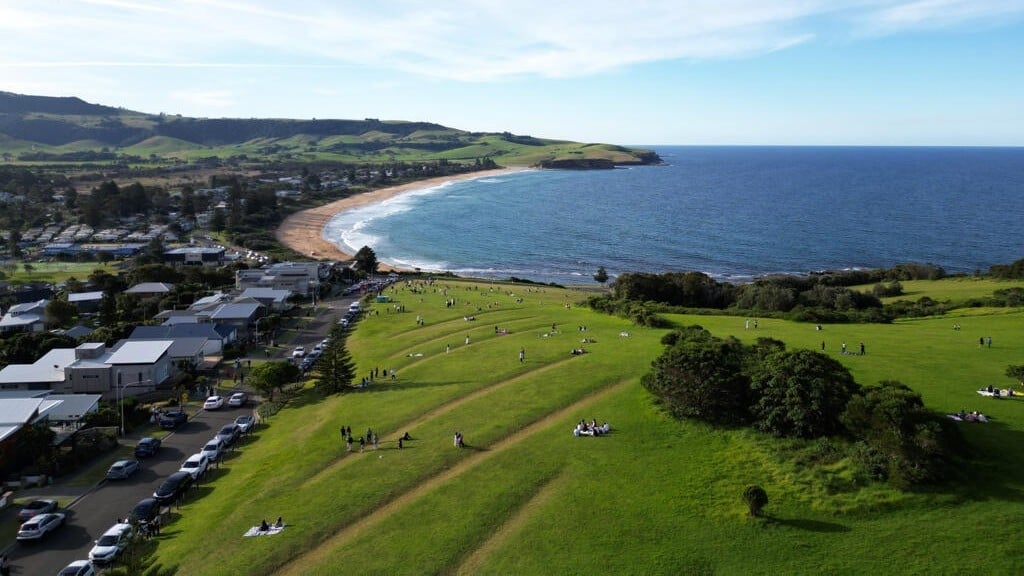
That image has done what beautiful images now do. It travelled faster than the town could prepare for. One TikTok calling it Australia’s most beautiful street has pulled millions of views, and the road has since become a regular weekend gridlock, with hundreds of visitors turning up for photos and videos.
RELATED: Tourism Is Booming In All The Wrong Places
Locals Are Living Behind The Postcard
The problem is that Tasman Drive is not a lookout with parking, toilets and a neat little sign telling people where to stand. It is a normal street, which means daily life now has to bend around everyone else’s photo.
Residents have dealt with traffic, blocked driveways, parking chaos, tourists crossing onto private property and visitors asking to use bathrooms and kitchens. Council discussions have even noted reports of people relieving themselves on lawns, which is a fairly efficient way to drain the magic out of a coastal view.
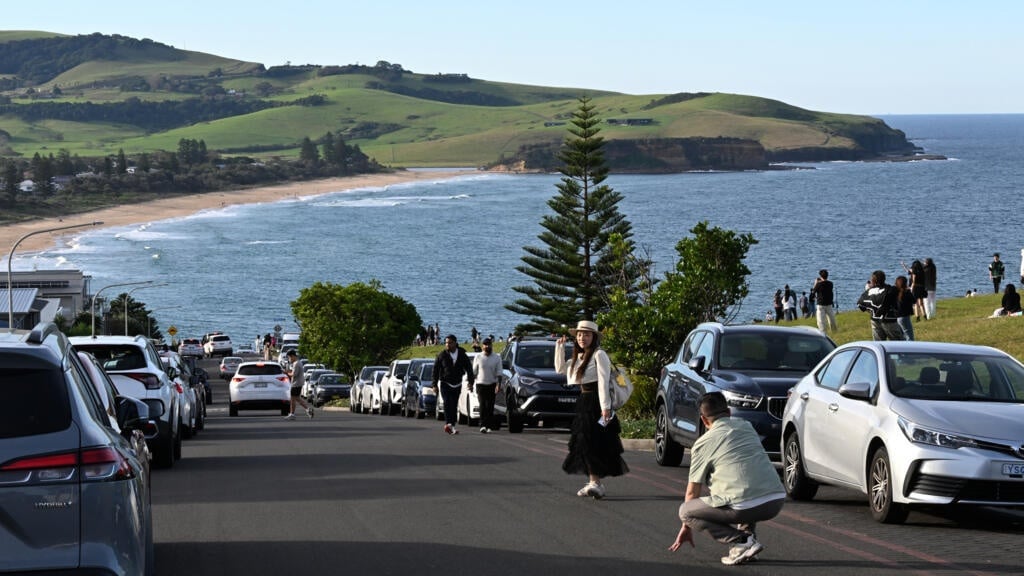
There is money in the attention, of course. Tourism spending in the area has reportedly jumped to around A$2.4 million a month, up more than 50 per cent from the previous six-month period. Local businesses have also said the extra visitors have helped during quieter stretches.
Still, the trade-off is not simple. Some residents are happy to share the view. Others are tired of trespassing, drones, noise, rubbish and tourists who take the photo but do not always spend much in town. A few have reportedly even used fertiliser on lawns to discourage people from treating private grass like a viewing platform.
The council is now looking at practical fixes, including parking restrictions, better signage, more bins and clearer directions to public bathrooms. That may help, but it does not change the bigger lesson.
In 2026, a quiet street does not need a hotel, a theme park or even a café to become a destination. It only needs the right view, the right algorithm and enough people willing to stand in the road for proof they were there.

