
Here’s the thing about us watch collectors. We’ll spend three months agonising over whether to buy a piece, fly interstate to try it on, read every forum thread ever written about it, and then wear it daily without cleaning it once.
We treat the purchase like a sacred ritual but the maintenance like an afterthought. And it shows.
I pulled a bracelet off a Tudor the other day to swap in a strap and nearly dry-retched. Months of dead skin, sweat, sunscreen and what I can only describe as inner-city grime had built up between the lugs, hidden by the end links like a dirty secret. This is a watch I wear to nice restaurants. To meetings. To places where people can see me. And underneath? Filthy. Absolutely filthy.
So let’s talk about how to actually clean a watch properly. It’s not complicated, it doesn’t take long, and there’s really no excuse for walking around with a timepiece that looks like it’s been through a tradie’s toolbox.
Curated news for men,
delivered to your inbox.
Join the DMARGE newsletter — Be the first to receive the latest news and exclusive stories on style, travel, luxury, cars, and watches. Straight to your inbox.
Why Your Watch Is Dirtier Than You Think
Every watch is a magnet for grime. The case, the bezel, the crown, the bracelet or strap, the clasp, the space between the lugs.
Everywhere that metal meets metal or metal meets skin, there’s an opportunity for sweat, oil, dead skin cells, food residue and general city pollution to settle in and make itself comfortable. The areas you can’t see are almost always the worst offenders. Under the clasp. Between bracelet links. Around the crown tube where the winding stem enters the case. Between the case and the strap attachment points. If you haven’t looked at those spots on your watch recently, brace yourself.
And it’s not just a cosmetic problem. Built-up grime can actually cause damage over time. On metal bracelets, trapped moisture and salt from sweat can accelerate corrosion, particularly on lower-grade steels.
On leather straps, oils and sweat break down the material and cause cracking. On rubber and silicone, sunscreen and insect repellent can degrade the material faster than you’d think.
Understanding Your Watch Materials
Before you start scrubbing anything, you need to know what you’re working with, because different materials have very different tolerances.
Stainless steel is the workhorse of the watch world. Everything from a Seiko Presage to a Rolex Submariner uses it, and it handles cleaning well. It’s tough, corrosion-resistant and forgiving. But brushed surfaces need gentle, directional cleaning to avoid disrupting the grain, and polished surfaces will show swirl marks if you use the wrong cloth or too much pressure.
Gold is a different story entirely. It’s soft, and it scratches far more easily than steel. Yellow gold, white gold, rose gold: they all have different alloy compositions, but they share that vulnerability to micro-scratches.
See how to clean a gold watch below.
A Rolex Day-Date in yellow gold or a Patek Philippe Calatrava needs to be treated with kid gloves. White gold has a rhodium plating that can wear off over time, and aggressive cleaning will speed that up. Rose gold contains copper in the alloy, which can react to certain chemicals. The rule with gold is simple: less pressure, always.
Titanium is lighter than steel and resistant to corrosion, which is why it shows up on tool watches like the Tudor Pelagos and various Grand Seiko models. But it scratches more easily than steel, and matte-finished titanium surfaces are particularly sensitive to abrasion. Light pressure only, and avoid anything that could polish away that matte texture.
Ceramic is the quiet achiever. Brands like Omega, Zenith, Hublot and IWC use it for everything from bezels to full cases. It’s scratch-resistant, lightweight, hypoallergenic and doesn’t tarnish. But it’s also brittle. It won’t scratch, but it can chip or crack if you’re careless. Cleaning should be gentle: soft brush, appropriate cleaner, no soaking, NO ultrasonic machines.
And then there’s sapphire crystal. The glass on your watch face (on anything remotely decent, at least) is almost certainly sapphire. It’s incredibly hard and resistant to scratching, but it loves fingerprints. A quick wipe with a microfibre cloth usually does the job, but for stubborn smudges you’ll want a proper cleaning solution.
Straps And Bracelets: The Forgotten Frontier
If the case is the face of your watch, the bracelet or strap is the underwear. And like underwear, most people don’t clean it nearly often enough.
Metal bracelets come in several styles, and each has its own cleaning quirks. The Oyster-style bracelet (popularised by Rolex) has wide, flat surfaces that are easy to wipe down, but dirt loves to collect around the clasp and end links. Jubilee-style bracelets are flexible and comfortable but have lots of small surfaces that trap grime in every gap.
Beads of Rice and Milanese mesh bracelets are the worst offenders: the tight weave traps skin, dust and residue deep within the structure and requires regular upkeep to stay presentable. A blast of compressed air can help dislodge debris from mesh bracelets before you go in with a brush.
Rubber and silicone straps are popular on dive watches and sporty pieces. They’re comfortable and water-friendly but attract lint, dust and can develop a greyish film from sweat and sunscreen buildup. Warm water and a soft brush will sort most of that out, but a proper cleaning solution makes a noticeable difference.
Leather straps are the most delicate!!!!!
Never submerge them. Never soak them. Even minimal moisture can damage stitching, adhesives or cause the leather to deteriorate, warp or develop mould. The best approach is a slightly damp cloth with a gentle cleaner, followed immediately by drying. Leather conditioner applied sparingly can help extend the life of the strap, but most leather bands are ultimately consumable items that you’ll replace every year or two.
NATO and fabric straps are actually the least hygienic option according to research, trapping more bacteria than any other strap material. The upside is they’re cheap and machine-washable (on a gentle cycle in a mesh bag, air dry).
The Right Way To Clean Your Watch
The process itself is straightforward. What matters is using the right products and the right technique.
Start by removing the bracelet or strap if you can do it safely. This lets you clean the case and bracelet separately and gets into those hidden areas between the lugs and behind the end links. If you’re not confident doing this, leave it attached and work around it carefully.
Use a proper watch cleaning solution, not dish soap, not Windex, not whatever random household cleaner is under your sink. You need something pH-neutral and formulated specifically for the materials on your watch.
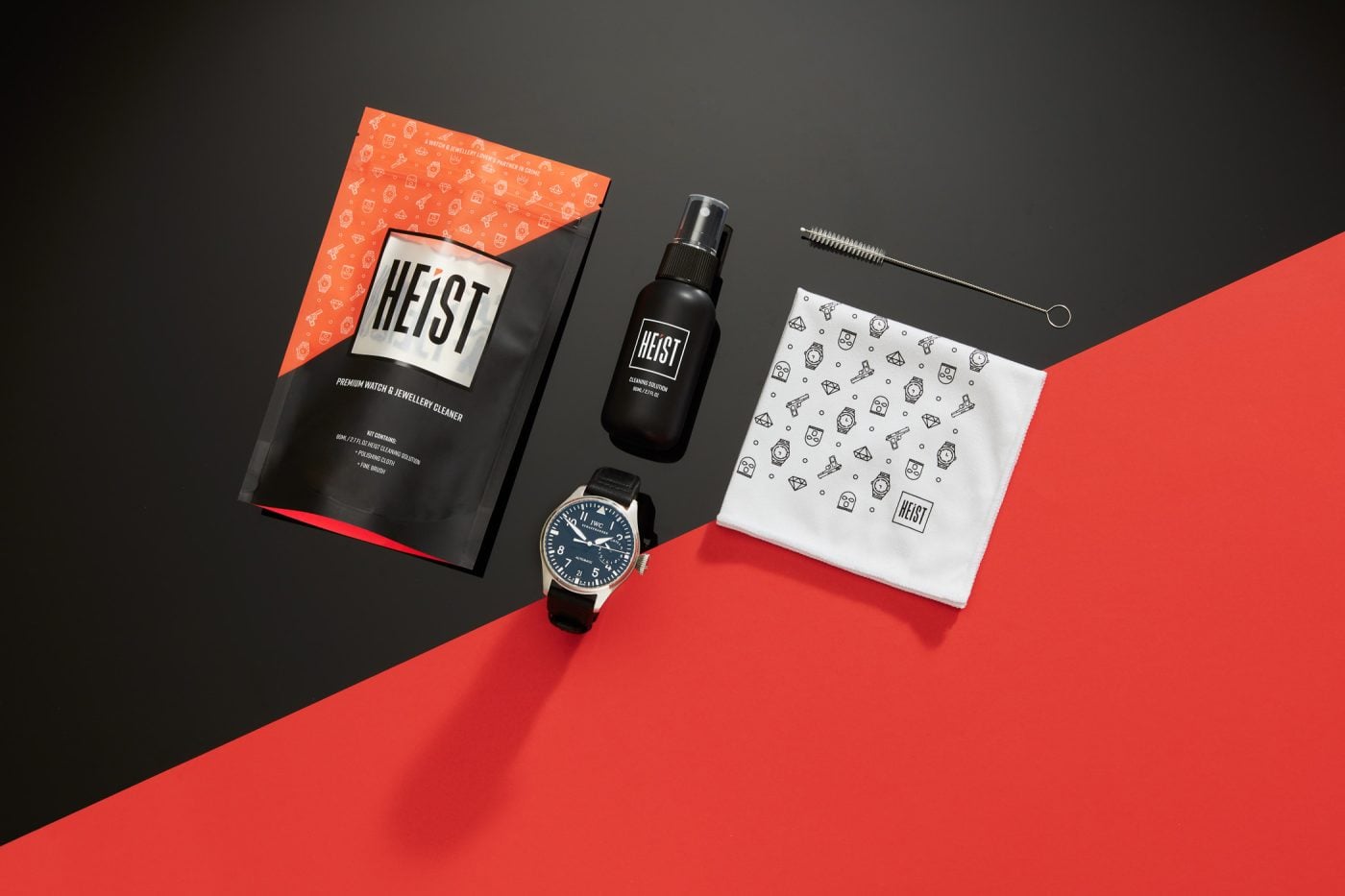
This is where the HEIST Watch Cleaner Kit comes in, and hand on heart, it’s the best option I’ve found. The formula is all-natural, pH-neutral, and safe for stainless steel, gold, titanium, ceramic, sapphire, rubber and leather. It uses de-ionised water as a base with sodium citrate to break down grime, soybean extracts for natural degreasing, and no harsh chemicals whatsoever. It won’t corrode finishes, strip protective coatings or compromise gaskets.
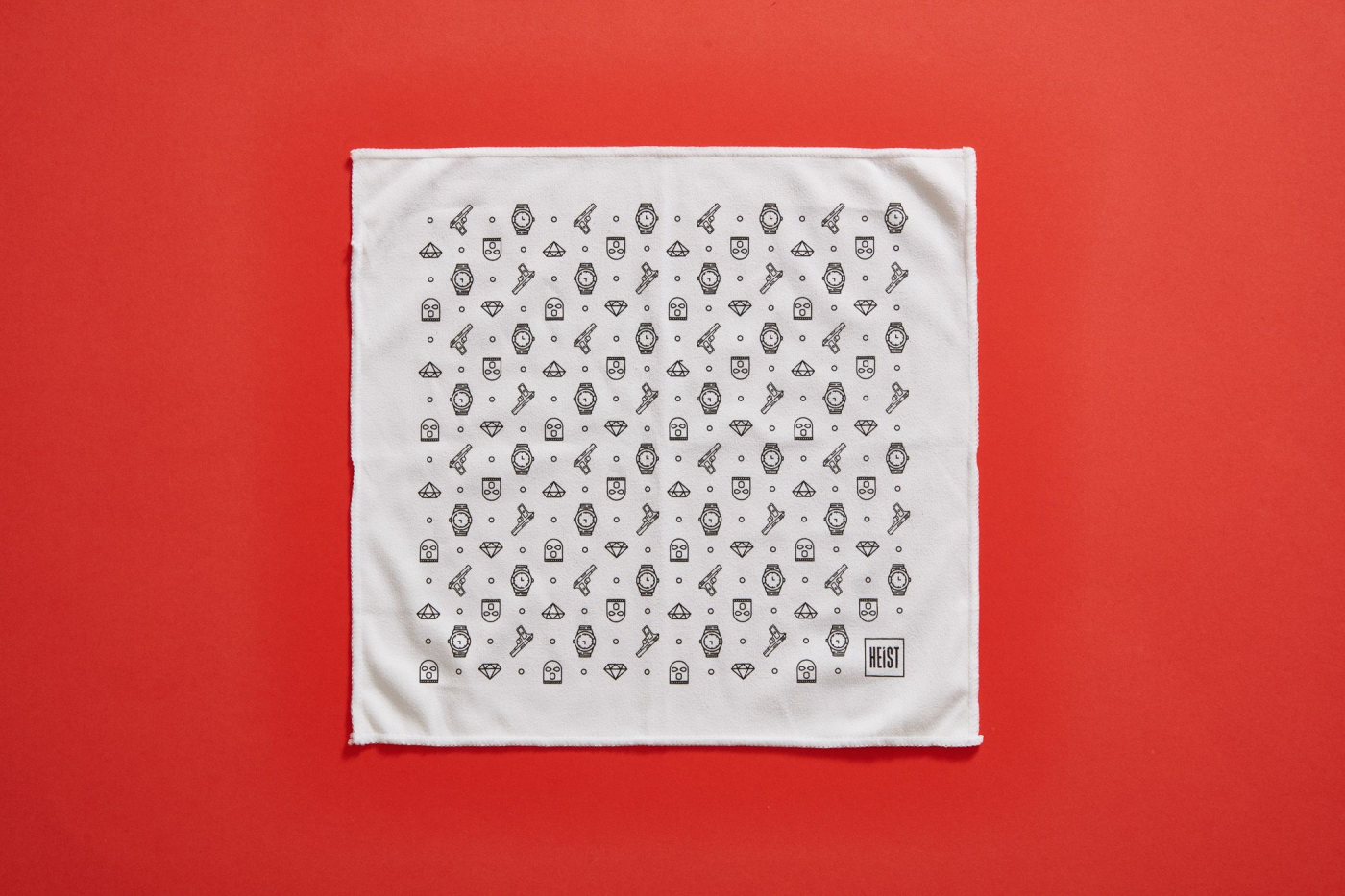
The kit comes with an 80ml bottle of cleaning solution, a soft-bristle brush that bends to reach awkward spots (around crowns, between links, under bezel lips), and a microfibre cloth covered in a cheeky print of guns, jewels and balaclavas (the brand is called HEIST, after all). The whole thing packs into a resealable pouch that fits in hand luggage, which is genuinely useful if you travel with watches.

Apply the solution to the cloth or brush. Work it gently around the case, bezel, crown, caseback and bracelet. Use the brush between links, around the clasp and in the gaps around the lugs. For ceramic watches, use short controlled strokes and let the solution do the heavy lifting rather than applying pressure. For gold, go lighter again. Always brush along the grain on brushed surfaces.
Wipe off any remaining residue with a clean damp cloth, then pat everything dry with a fresh microfibre cloth. Let the watch air dry completely before wearing or storing it. The whole process takes about two to three minutes, and the difference is immediately obvious.
For Americans it’s on Amazon US. For Australia it’s on Amazon AU. Or use Amazon US for rest of world shipping.
How Often Should You Clean?
After every wear: a quick wipe with a microfibre cloth on the case sides, clasp and underside of the bracelet. This removes fresh oils and sweat before they set. It takes ten seconds and prevents the kind of buildup that requires more aggressive cleaning later.
Weekly: if you’re wearing the same watch daily, especially in summer or humid conditions, do a light clean with your HEIST kit. Focus on the clasp, end links and any area where skin contact is highest.
Monthly: a full clean with the kit, ideally with the bracelet removed. This is when you go after all the hidden spots and get everything back to looking like it just came out of the boutique.
The Bottom Line of Watch Things
You wouldn’t drive a $100,000 car without washing it. You wouldn’t wear a $5,000 suit without dry cleaning it. But plenty of people walk around wearing five and six-figure watches that haven’t been properly cleaned since the day they bought them.
It doesn’t take expensive equipment. It doesn’t require a watchmaker. It just requires a couple of minutes, the right kit, and a basic sense of self-respect not to walk into a room wearing a dirty watch.

