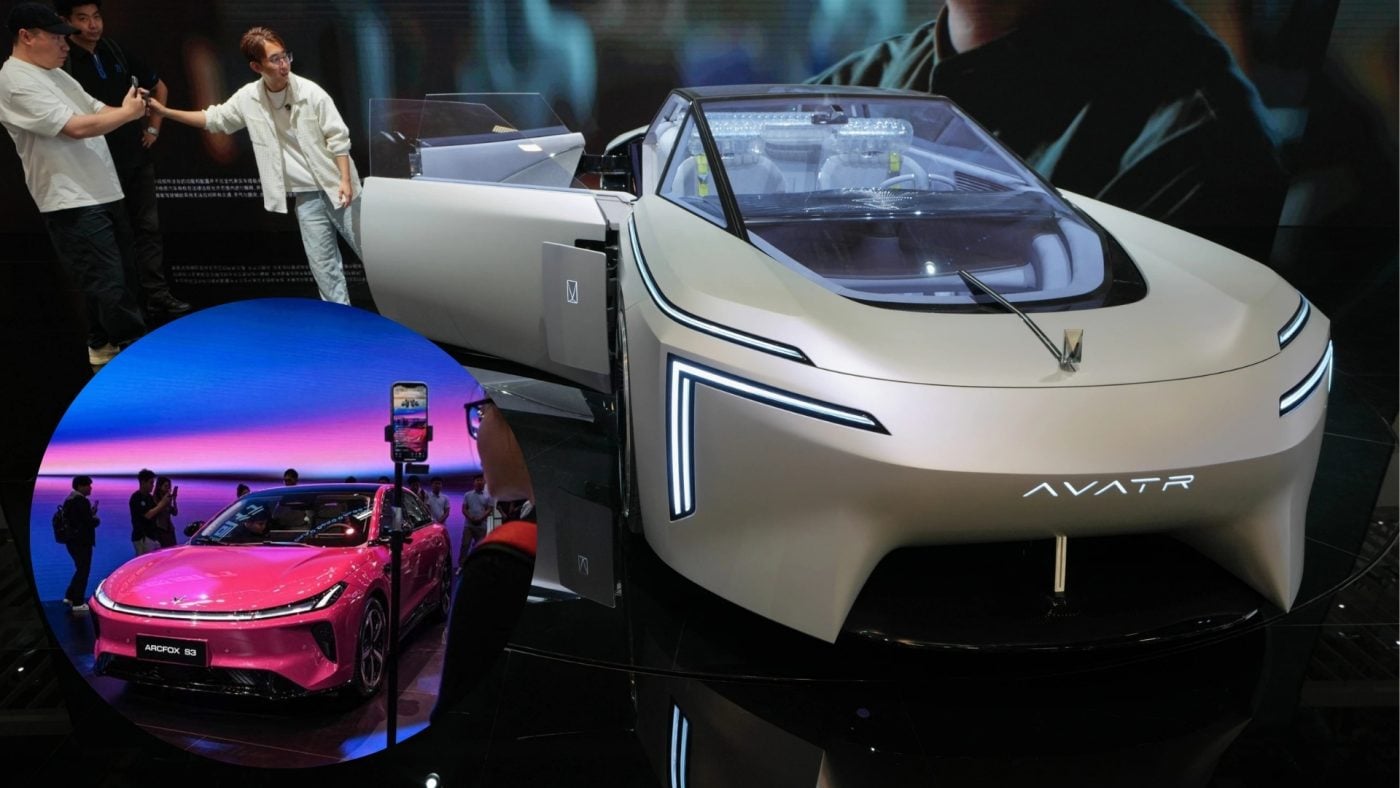
The 2026 Beijing Auto Show is not a motor show in the way most of us still think about motor shows. It is a flex. Across ten days at the China International Exhibition Center, 1,451 vehicles were on display, including 181 global debuts and 71 concept cars, on a footprint roughly the size of 50 football fields that makes Frankfurt look like a regional caravan expo.
The theme was “Future of Intelligence.” The subtext was harder to miss: China is no longer catching up to the global car industry. China is the global car industry now, and the Germans, Americans, Japanese and Koreans are flying in to study, partner up, or quietly panic.
RELATED: China’s 4×4 Off-Road Australian Invasion Has Only Just Begun
Here are the ten most interesting things to come out of it.
Curated news for men,
delivered to your inbox.
Join the DMARGE newsletter — Be the first to receive the latest news and exclusive stories on style, travel, luxury, cars, and watches. Straight to your inbox.
1. Xiaomi turned up with a 1,900-horsepower hypercar concept
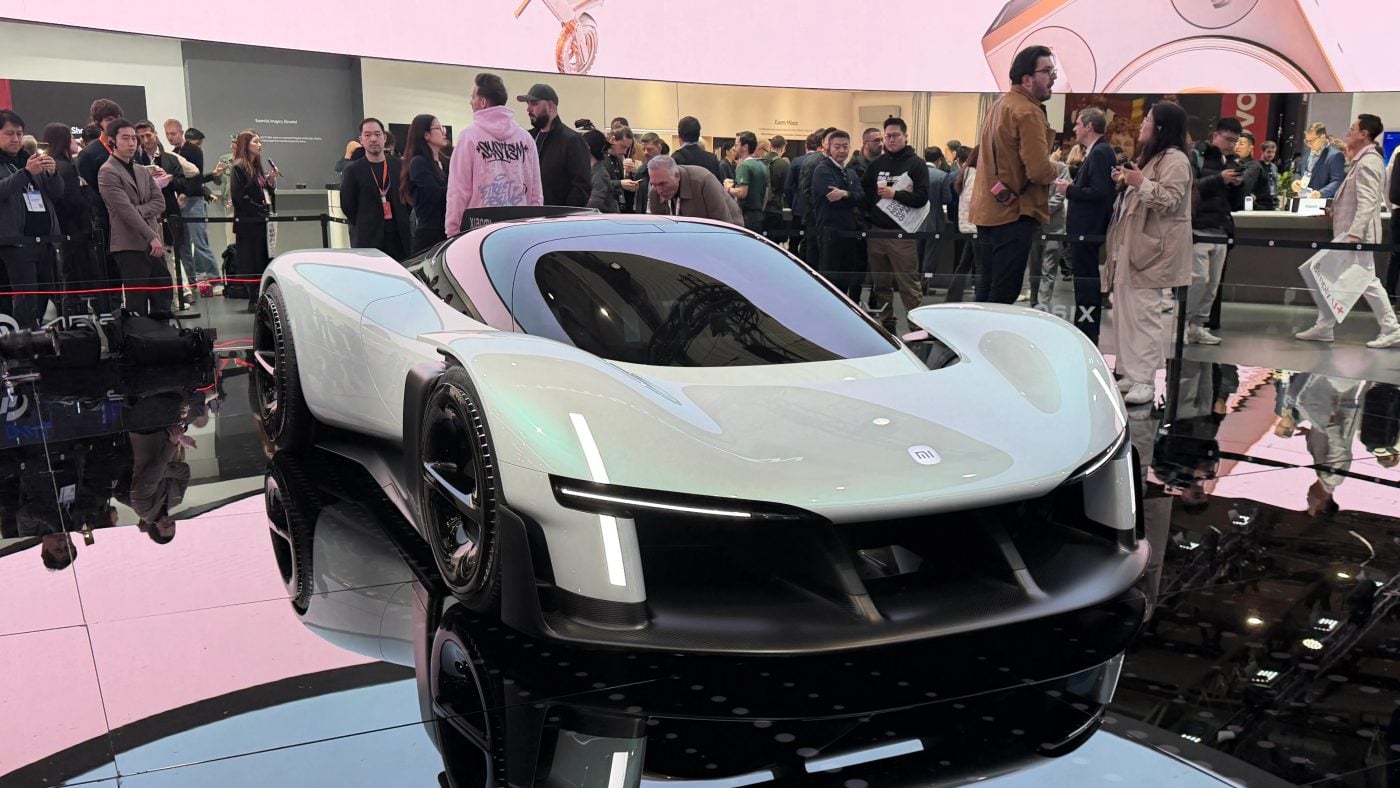
The phone company. The one that made the SU7 sedan that already embarrassed Porsche on a track in China. The Xiaomi Vision Gran Turismo concept was the show’s loudest statement, even sitting still.
Xiaomi is talking about a drag coefficient of 0.29, an aerodynamic efficiency figure of 4.1, and a power output close to 1,900 horsepower. The interior is what Xiaomi calls a “sofa racer,” which is exactly as ridiculous and on-brand as it sounds.
It will never see a production line. It does not need to. The Vision GT exists to remind everyone that Xiaomi has gone from selling earbuds to credibly designing a rival to anything Maranello can stamp out, in five years.
RELATED: Chinese Xiaomi Hypercar Nürburgring Record Ruined By Brake Failure Safety Concerns
2. BYD took 30,000 orders for the Great Tang in 24 hours
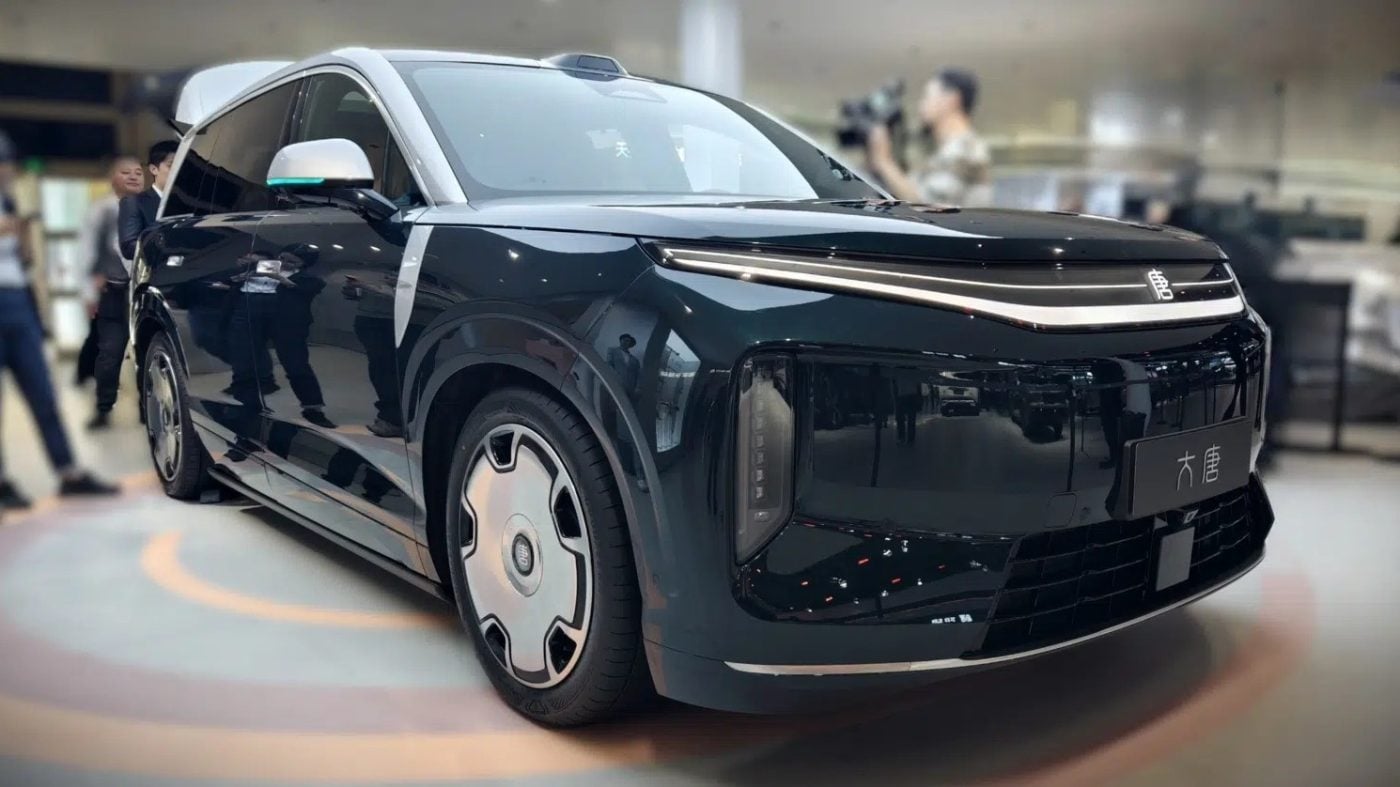
The headline number from the Chinese floor. BYD opened pre-sales for its Great Tang flagship SUV on April 24, with pricing set between 250,000 and 320,000 yuan, roughly AUD $55,000 to AUD $70,000. The 30,000-order milestone landed inside a day.
For context, that is roughly Toyota Prado money for a 5.3-metre, three-row, seven-seat full-size electric SUV. The Great Tang sits on a 1000V high-voltage architecture with the second-generation blade battery, and is the first D-class flagship under BYD’s Dynasty Network series.
The dual-motor all-wheel-drive version produces 585 kW (784 hp) and hits 0 to 100 km/h in 3.9 seconds, with up to 950 km of CLTC range on the rear-drive version. Australian buyers should be doing the maths.
3. Leapmotor built a plug-in hybrid with a bigger battery than most EVs
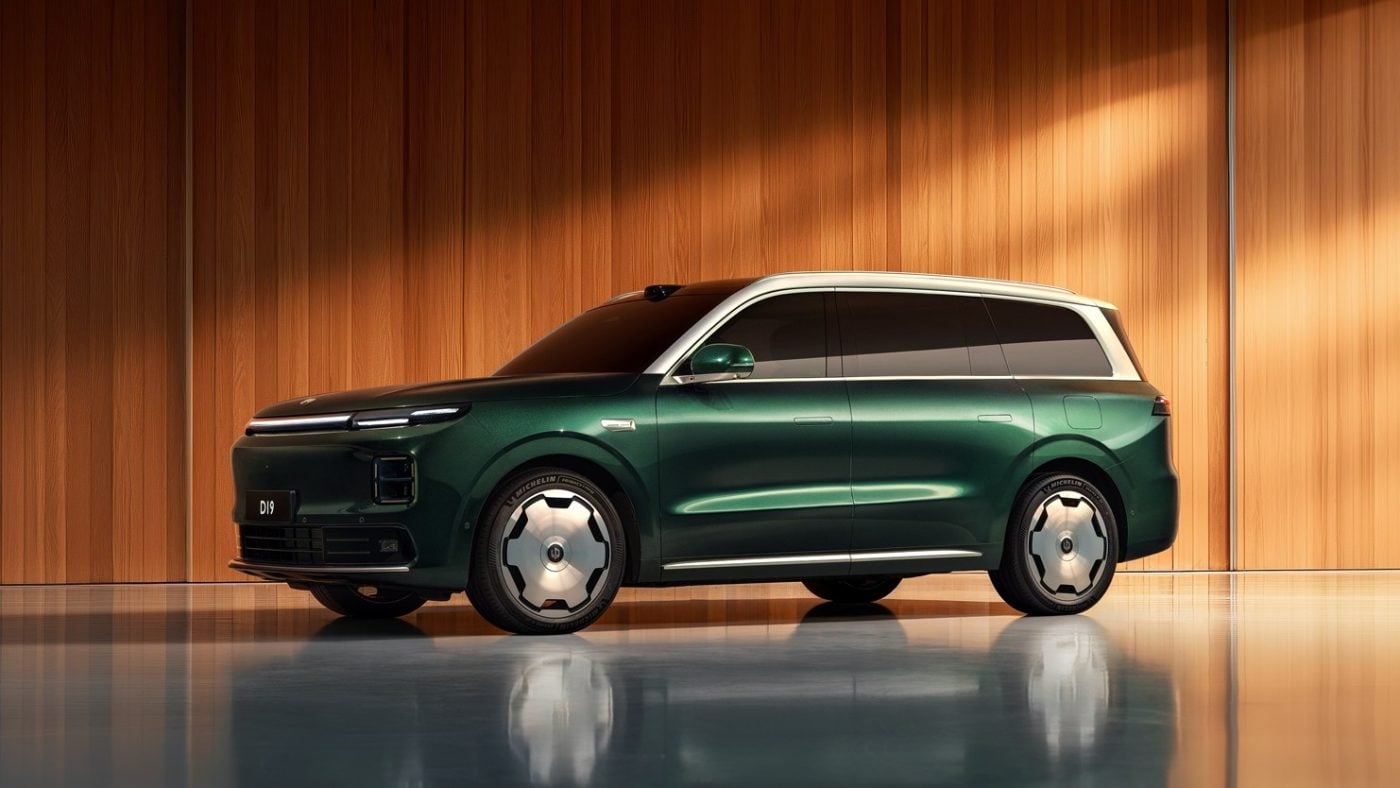
Leapmotor showed up with the D19, a full-size flagship SUV that makes most plug-in hybrids look half-finished. The EREV version carries an 80.3kWh battery and can run up to 500km on electric power alone. That is not a backup plan. That is an EV with a petrol generator tagging along.
The full-electric version goes further, with up to 720km range and a tri-motor setup capable of sub-three-second acceleration. Inside, it leans hard into luxury with huge screens, 23-speaker audio, air suspension, and even a built-in fridge.
A seven-seat SUV at around AUD $45,000 with this kind of battery and range is where the rest of the industry starts doing uncomfortable maths.
4. Yangwang’s U9 Xtreme is now the fastest production car on Earth
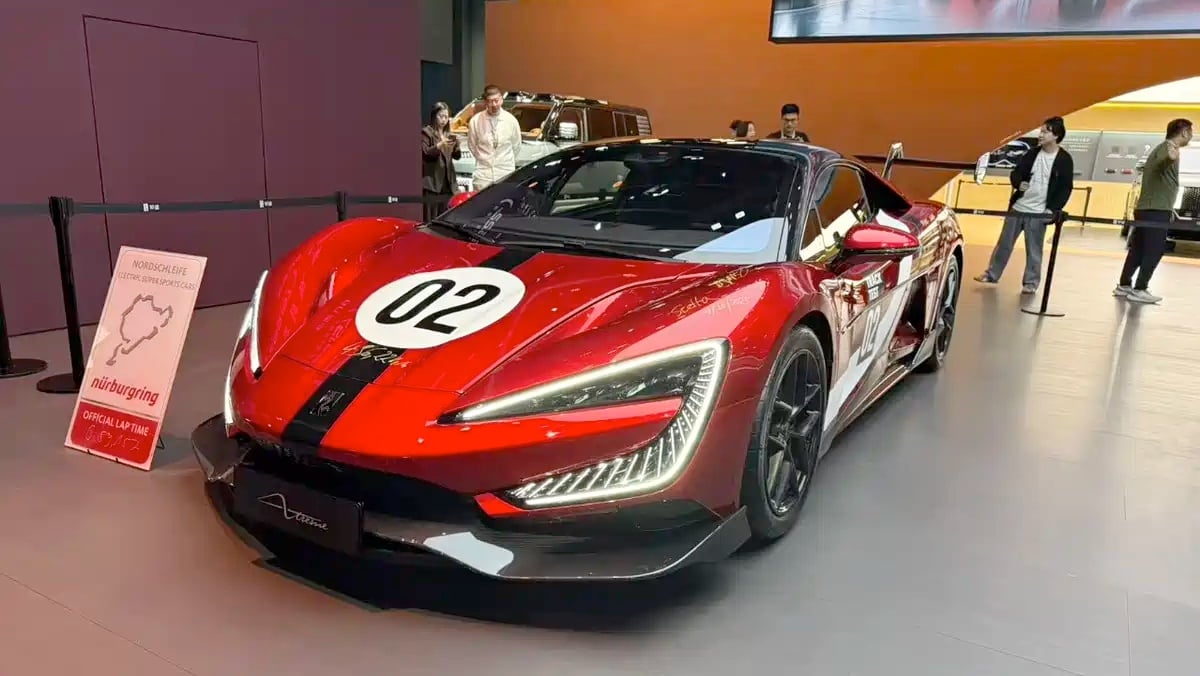
BYD’s halo brand brought receipts. The U9 Xtreme has over 3,000 horsepower, gets a special black-and-gold paint scheme, and is limited to 30 units worldwide.
It currently holds the top speed record for a production car at 496.22 km/h, regardless of powertrain or fuel source. Read that twice. Faster than a Bugatti Chiron Super Sport, faster than a Koenigsegg Jesko Absolut, in a car you can actually buy.
The four-seat U8L Ding Cang edition also debuted, sitting on an 880 kW four-motor platform with a 2-litre turbo range extender. Yangwang sold 307 cars in March. They do not care, and that is precisely the point.
5. CATL parked a flying car next to a -50°C battery demo
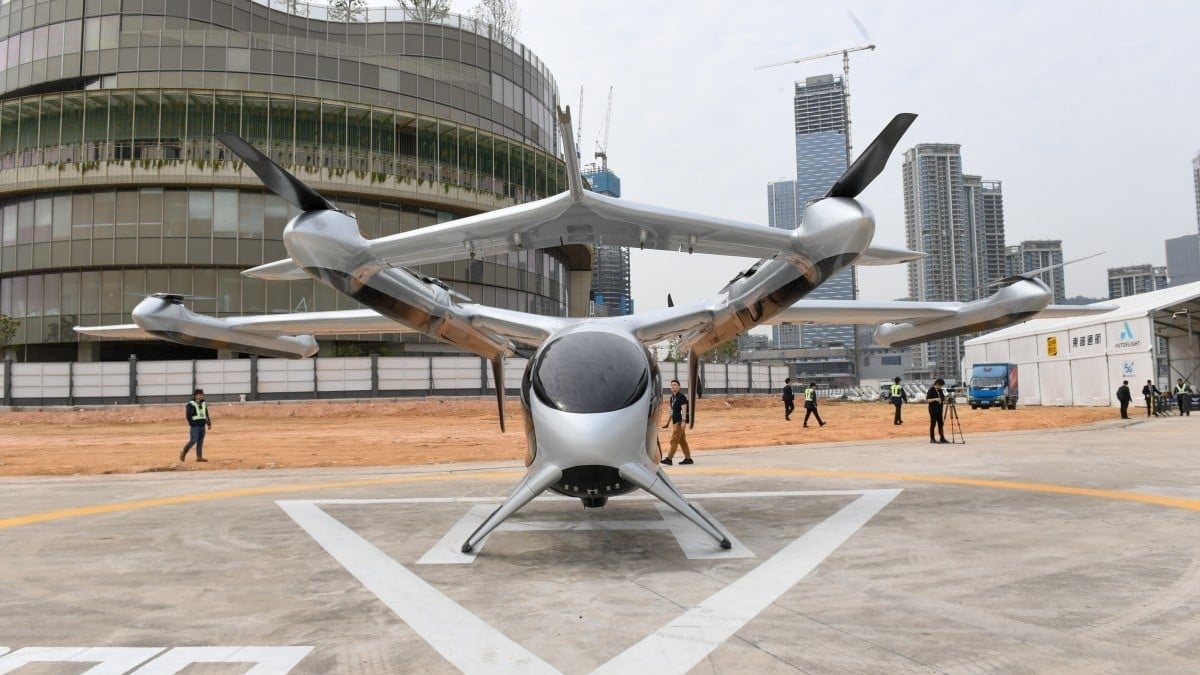
CATL rolled out a concept flying car as a sidebar exhibit, which tells you everything about where the world’s biggest battery supplier sees the next decade going.
CATL also ran a live demonstration of its Naxtra battery operating at minus 50 Celsius. Lithium chemistry that survives Antarctic conditions, on the same stand as a personal aircraft. That is one company, in one booth.
The future of mobility, according to Beijing, is not just electric. It also takes off.
6. Xpeng launched a Range Rover rival with robotaxi hardware for AUD $90k
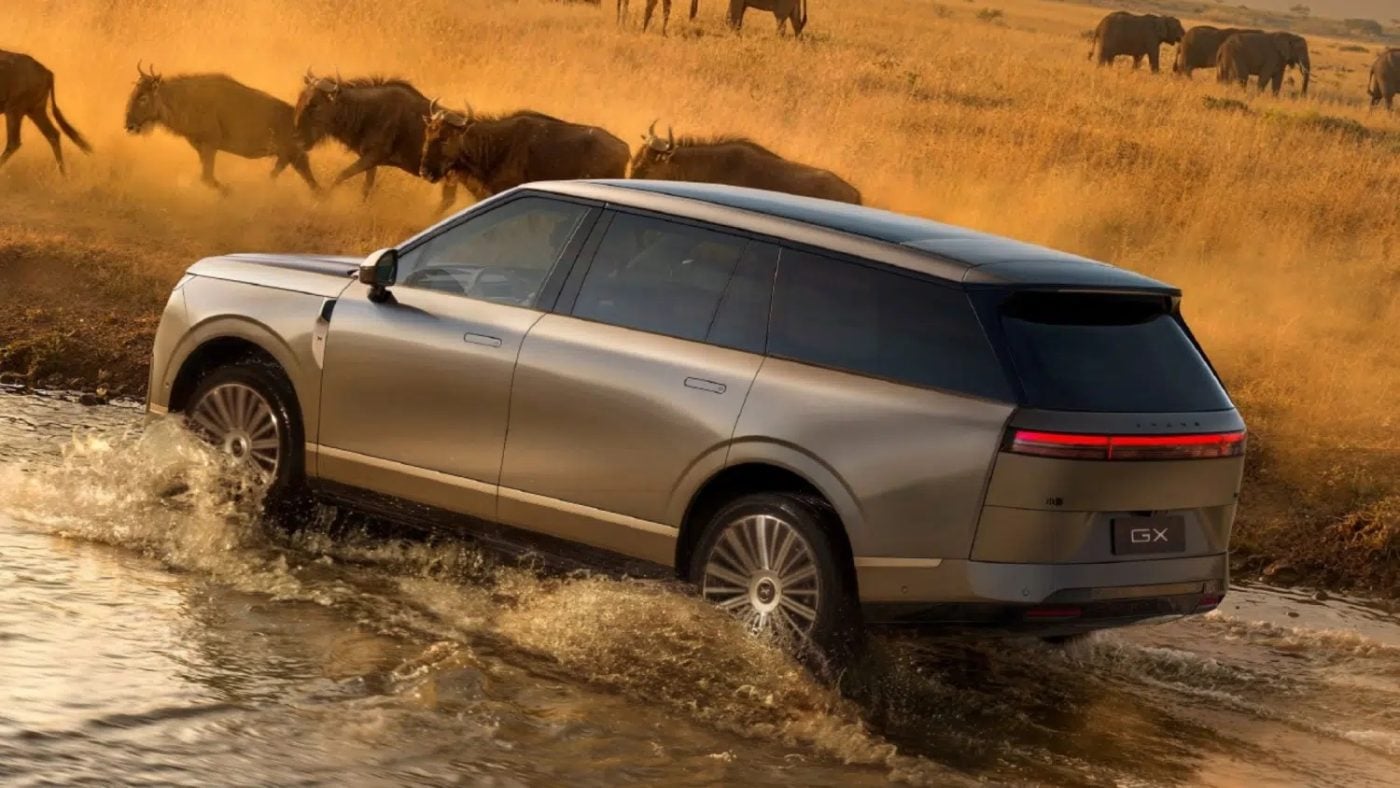
The most credible “we are coming for you” moment from any Chinese brand at the show. Xpeng officially unveiled the GX, a full-size six-seater flagship SUV starting at 399,800 yuan, around AUD $87,000, with up to 750km of AWD range in pure electric form.
The exterior is unmistakably Range Rover-shaped, but that is where the similarities stop. It runs on four proprietary Turing AI chips delivering 3,000 TOPS of computing power, supports Xpeng’s second-generation VLA autonomous driving system, and uses a Bosch steer-by-wire system with aviation-grade six-layer redundancy.
Xpeng has also obtained a public road testing license in Guangzhou and is running normalised L4 demonstration operations. The brand also rolled out the IRON humanoid robot and its “Land Aircraft Carrier” split-type flying car at the same booth. CEO He Xiaopeng wants 10,000 robots shipped by 2027. The man does not appear to sleep.
7. The Avatr 06T is a 955-horsepower wagon for under AUD $63,000
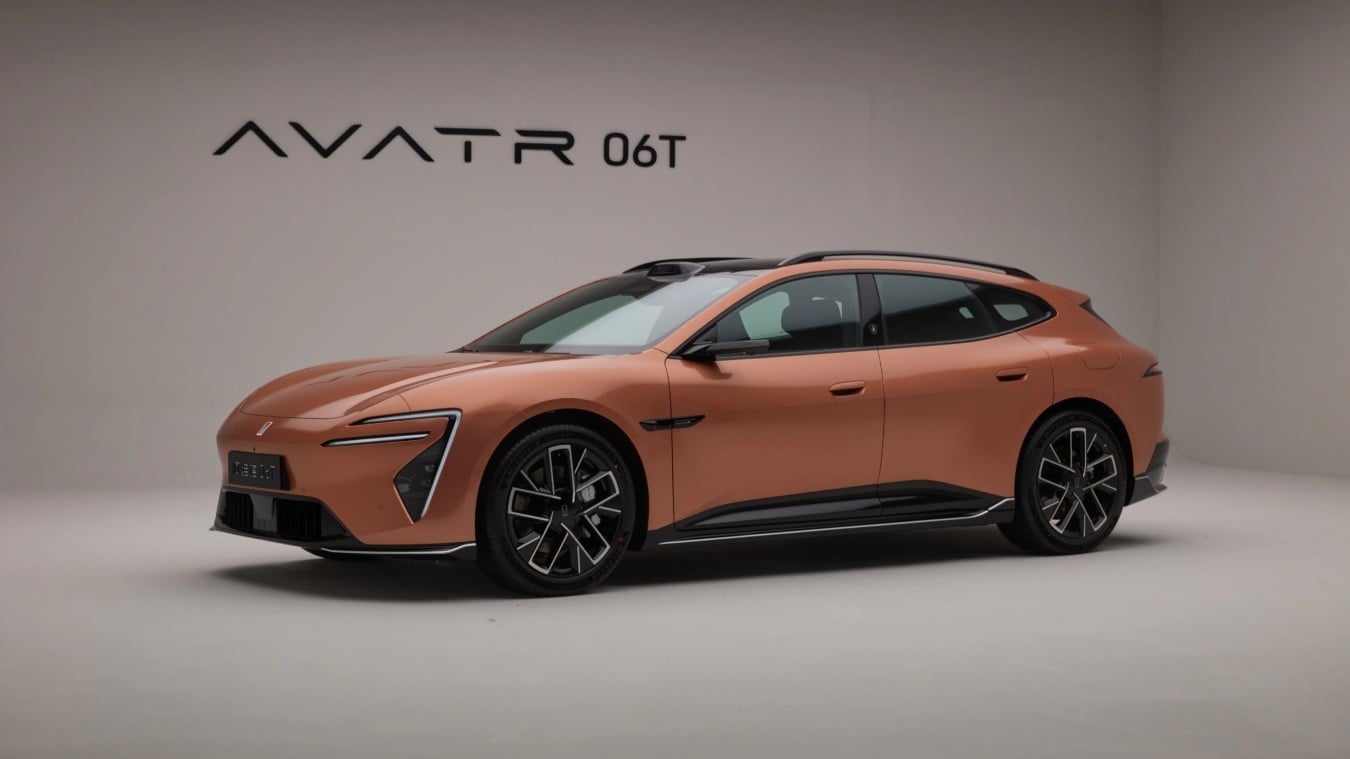
This one is personal. As a self-confessed wagon enthusiast and rim snob who daily-drives an RS4 Avant, the Avatr 06T is the car at this entire show that I cannot stop thinking about.
The 06T is a luxury sports wagon from a joint venture between Changan, Huawei and CATL. It comes as a pure EV or with an extended-range setup, and the flagship tri-motor version makes 955 horsepower with a 0-100 km/h claim of 2.78 seconds. Supercar-quick, with room for the dog and the golf clubs.
The interior is built around a 35.4-inch 4K panoramic display and a 15.6-inch centre screen, all running on Huawei’s HarmonySpace 5 OS. Pricing starts at 219,900 yuan (about AUD $48,000) and tops out at 279,900 yuan (about AUD $63,000).
The new BMW M5 Touring is 717hp and starts north of AUD $260,000. That is the entire story of Beijing 2026 in a single comparison.
RELATED: China’s Hottest SUV Arrival Wants A Piece Of Australia’s Premium Market
8. Deepal launched three cars at once, including an off-roader with a roof searchlight
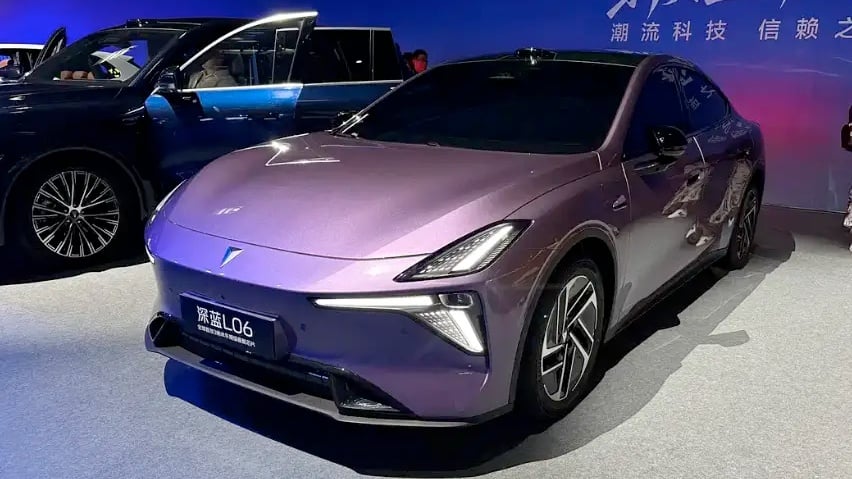
Changan’s electric sub-brand decided one debut was insufficient. Deepal pulled covers off the new L06 sedan, the S09 SUV, and the G318 off-roader in the same press conference.
The L06 Extended-Range Edition is the headline. It claims a maximum CLTC range of 1,505 km, a pure-electric range of 245 km, and NEDC fuel consumption as low as 3.46 L/100 km, priced from 134,900 yuan. That is roughly AUD $30,000 for a sports sedan that out-ranges a Toyota Camry hybrid by a country mile.
The G318 is the wild card. It is a purpose-built electric off-roader with a roof-mounted searchlight that throws a 250-square-metre lighting area, plus an integrated luggage frame. Aimed squarely at the kind of buyer who does not stop driving when the sun goes down. Land Rover should be taking notes.
9. GWM is building a twin-turbo V8 specifically for Australia
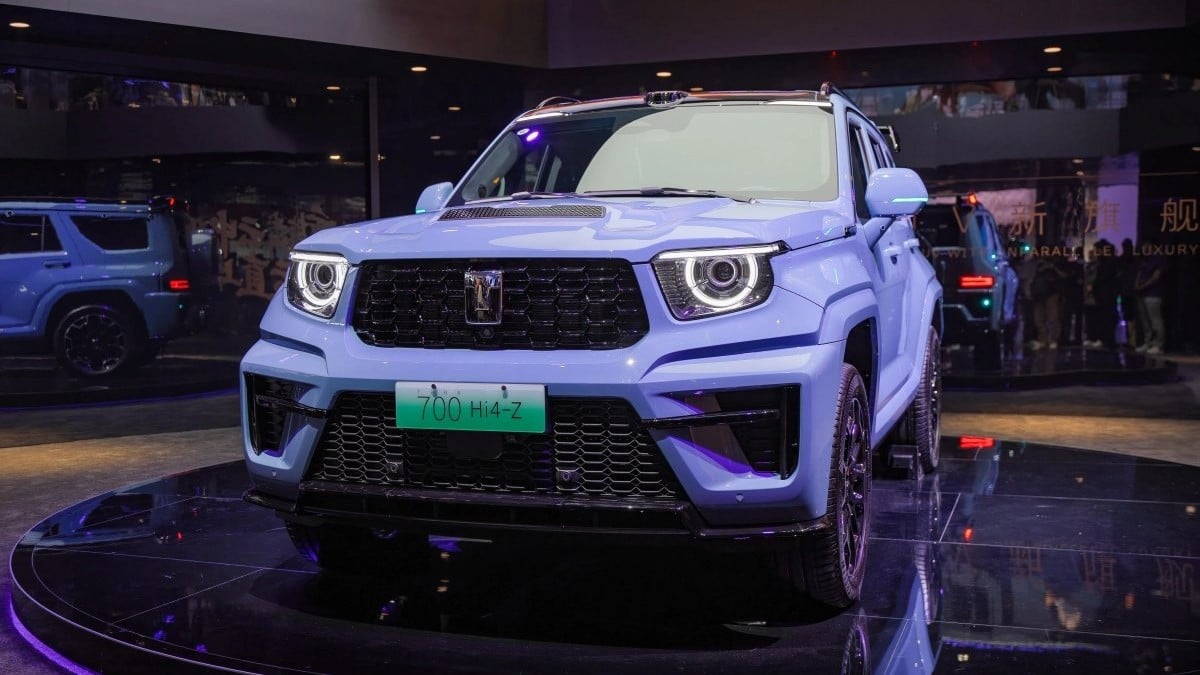
This one is for the diehards. While Toyota dropped the V8 from the LandCruiser 300 and Nissan moves the next Patrol to a twin-turbo V6, GWM has gone the other way and announced a brand-new twin-turbo 4.0-litre V8 for the Tank 700.
GWM chairman Jack Wei was unusually direct about who the engine is for. He confirmed at the show that the V8 was developed specifically for export markets, not for Chinese buyers, and called out Australia and New Zealand by name as the markets driving the decision.
Also revealed in Beijing was the Tank 700 Hi4-Z, a plug-in hybrid pairing a 2.0-litre turbo with two electric motors for a combined 644kW. GWM finished seventh in Australia year-to-date in 2026. A V8-powered Patrol rival, in a market where V8s are quietly going extinct, is the move that lands them in the top five.
10. Chery built an SUV that turns into a dual-cab ute, and it might be coming to Australia
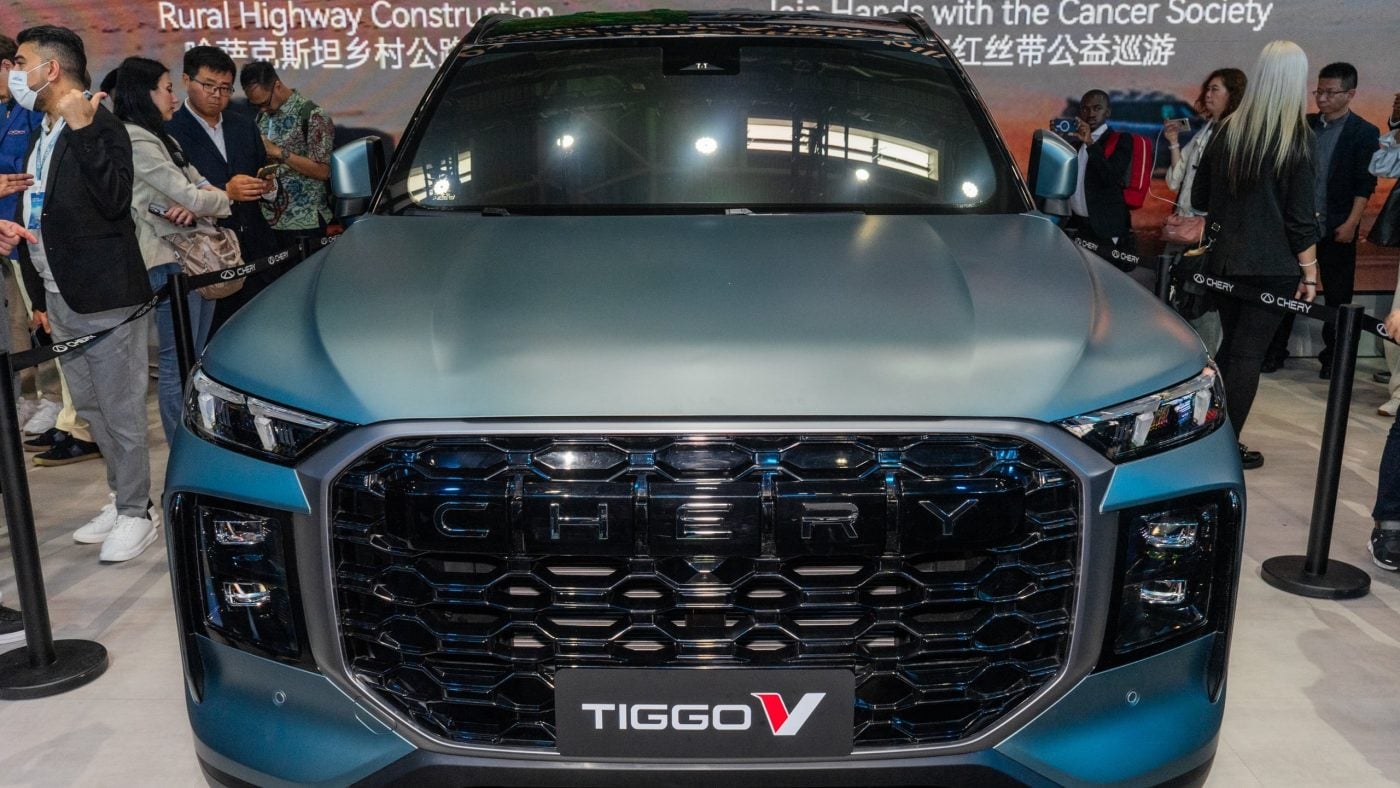
The most genuinely new idea on the floor. Chery unveiled the 2027 Tiggo V, a three-row family SUV with a removable canopy that converts the entire rear of the car into an open ute tub.
The party piece is a detachable rear body shell. With the third row of seats removed, it leaves you with what Chery calls a “visual-effect sports bar” and a set of adjustable dividers. Six configurations are possible from the same vehicle, including a camper. One car, six lives.
Chery Australia has not officially confirmed it for local showrooms yet, but the brand has openly flagged interest in a lifestyle-focused monocoque ute as a sister model to its heavier-duty plug-in hybrid ute project, currently codenamed KP31. A Tiggo V at HiLux money would land in Australia like a bomb. Toyota and Ford should be paying very close attention.
DMARGE’s Two Cents On The Beijing 2026 Motor Show
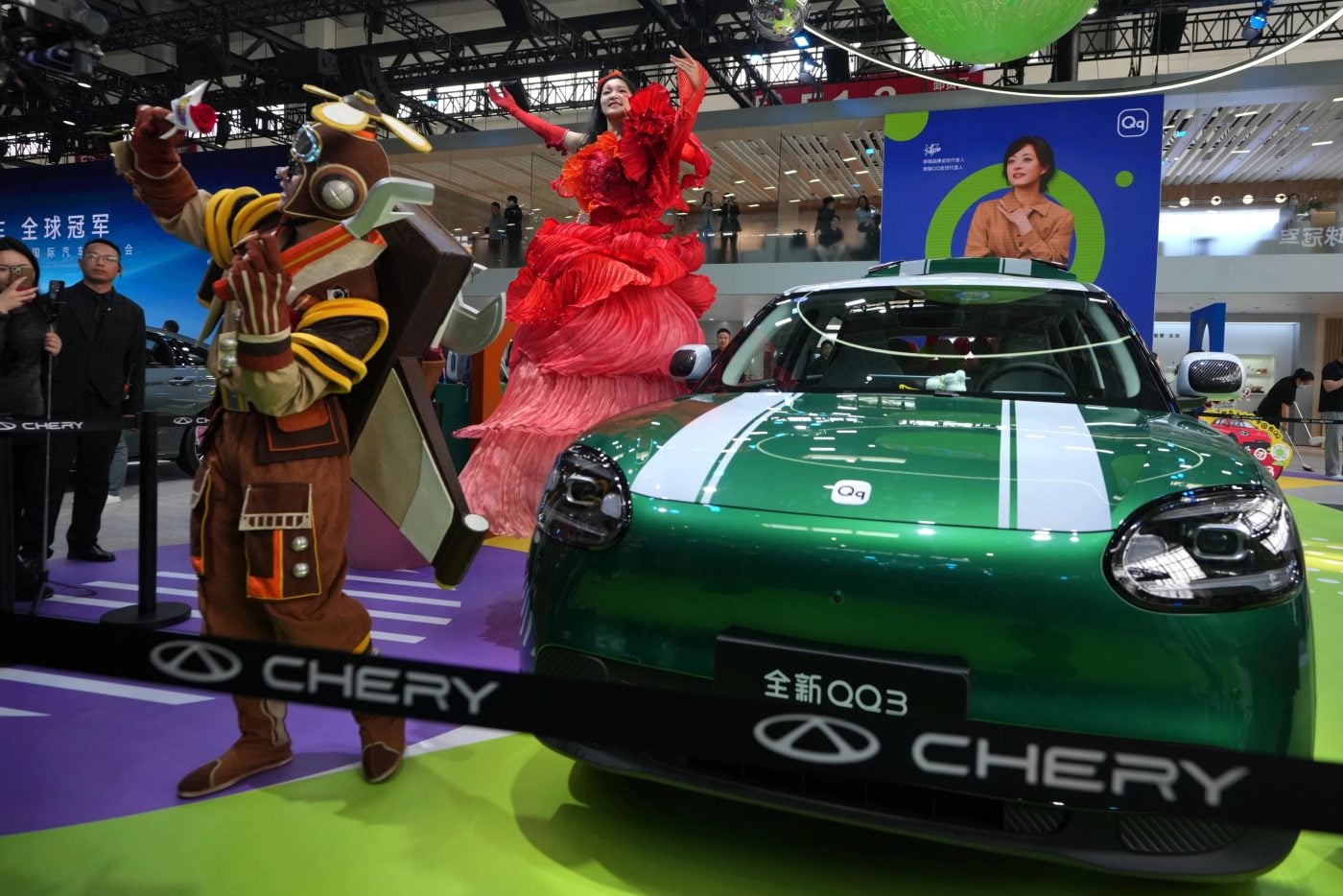
Beijing 2026 was not really about cars. It was about who controls the next decade of mobility, and the answer is no longer obvious.
The most telling moment of the show was not on a turntable. It was Alibaba quietly announcing that its Qwen AI model would now run inside vehicles from BYD, Geely, Li Auto, Changan, Dongfeng, BAIC, Great Wall, SAIC Volkswagen, and SAIC’s IM Motors. The car is becoming a phone with wheels, and the Chinese tech stack is doing the building.
Watching a 3,000-horsepower Yangwang share floor space with a flying CATL battery prototype, a Deepal off-roader, a 955-horsepower Avatr wagon priced like a Camry, a GWM V8 built for Bathurst country, and a Chery family hauler that turns into a dual-cab on demand, the European and Japanese stands looked, frankly, like guests at someone else’s party.
The party is in Beijing now. BYO translator.

