Last year, JLC played it focused. Nine new Reverso models, the Hybris Artistica Calibre 179 Gyrotourbillon in white gold, a polo-themed booth. It was a love letter to a single icon, and it worked. Jérôme Lambert had just returned as CEO, and the message was clear: we know what we are, we’re leaning into it.
This year, the message is different. This year, JLC has essentially opened every drawer in the Manufacture at once.
There are two new pieces under the Hybris banner, both of them properly wild. There are four new Reverso Tribute Enamel watches that complete Hokusai’s Waterfalls series, a project that’s been running since 2018. And there’s a brand new capsule collection called La Vallée des Merveilles, launching with three Reverso One models decorated with champlevé enamel scenes of Hawaiian birds and Japanese cranes.
It’s a lot. But when you’ve got 180 skills under one roof and more than 430 patents to your name, you’re allowed to flex occasionally.
Curated news for men,
delivered to your inbox.
Join the DMARGE newsletter — Be the first to receive the latest news and exclusive stories on style, travel, luxury, cars, and watches. Straight to your inbox.
Let’s get into it.
The Gyrotourbillon À Stratosphère Is a Tourbillon Inside a Tourbillon Inside a Tourbillon – Like Inception but for a watch
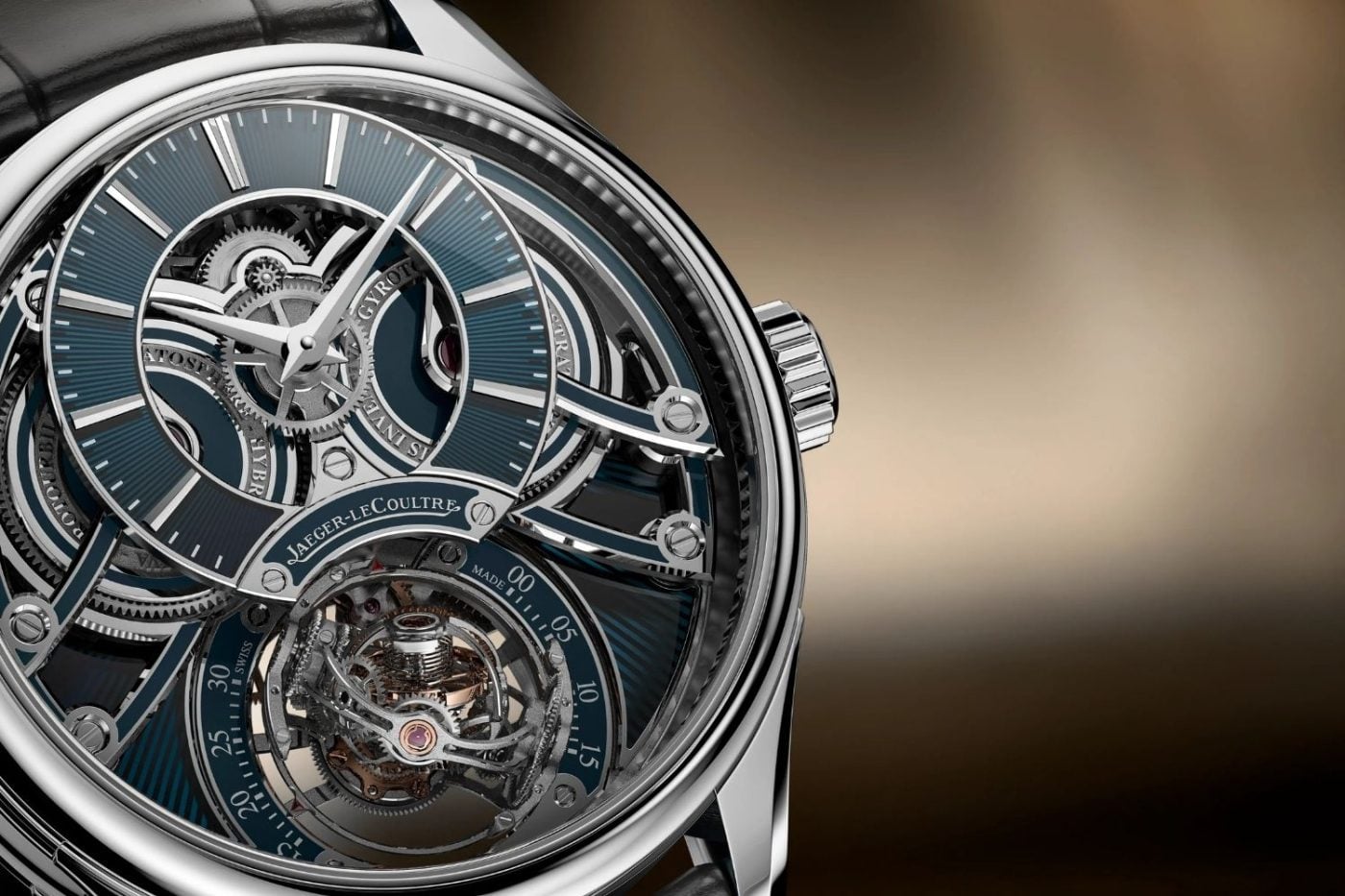
Start with the headline piece. The Master Hybris Inventiva Gyrotourbillon À Stratosphère houses Calibre 178, a triple-axis tourbillon that covers 98 percent of all possible positions. For context, the original Gyrotourbillon from 2004 hit 70 percent. This one took 22 years of development to get from there to here.
The name comes from the stratosphere, the layer of Earth’s atmosphere where jets cruise because it’s calm and free from turbulence. The metaphor is a bit on the nose, but the engineering backs it up. Three titanium cages rotate along X, Y and Z axes at 20, 60 and 90 seconds respectively.
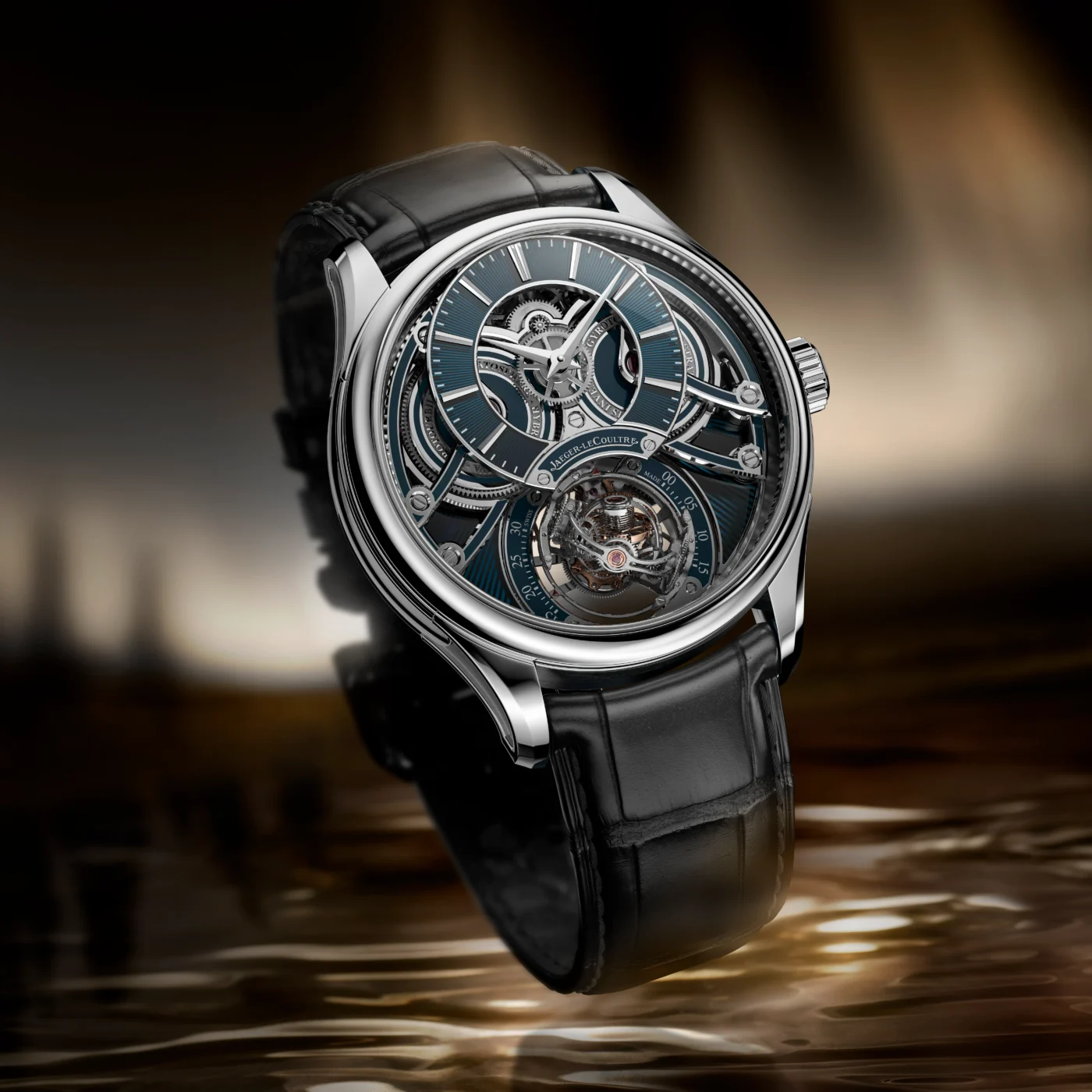
The whole assembly runs on ceramic ball bearings, uses a cylindrical balance spring for concentric beating in every position, and weighs 0.78 grams across 189 components. That’s almost double the component count of a typical time-only movement, packed into something lighter than a paperclip.
This is also the first piece in a new Hybris sub-line: Hybris Inventiva, which will only ever feature a single complication per watch, provided it’s groundbreaking enough to justify its own series. The concept is that these start as internal “impossible hypothesis” projects, worked on in secret for years or decades, then get released to the public once they’re proven. It’s the kind of thing that only a fully integrated manufacture can pull off.
The 42mm platinum case is finished with guillochage, translucent blue enamel and blue lacquer across the movement plates, bridges and barrel covers. Sixteen different decorative techniques in total. The tourbillon bridge on the caseback was inspired by JLC’s 1946 pocket watch tourbillon. Limited to 20 pieces.
Specifications
| Spec | Detail |
|---|---|
| Reference | Q5306480 |
| Case | 42mm x 16.15mm, Platinum (950/1000) |
| Movement | Calibre 178, manual-winding |
| Functions | Hours, minutes, seconds, triple-axis Gyrotourbillon À Stratosphère |
| Power reserve | 72 hours |
| Dial | Ring dial, guilloché with translucent blue enamel |
| Caseback | Transparent sapphire |
| Water resistance | 50m |
| Strap | Blue alligator, 18K white gold adjustable folding buckle |
| Edition | Limited to 20 pieces |
The Ultra Thin Minute Repeater Tourbillon Opens the Movement Right Up
The second Hybris piece takes Calibre 362, the world’s thinnest automatic minute repeater tourbillon first launched in 2014, and strips it bare. Three of the movement’s structural bridges have been replaced with transparent sapphire crystal, and the dial has been pared back to an open-worked ring of 18K white gold encircling the entire mechanism.
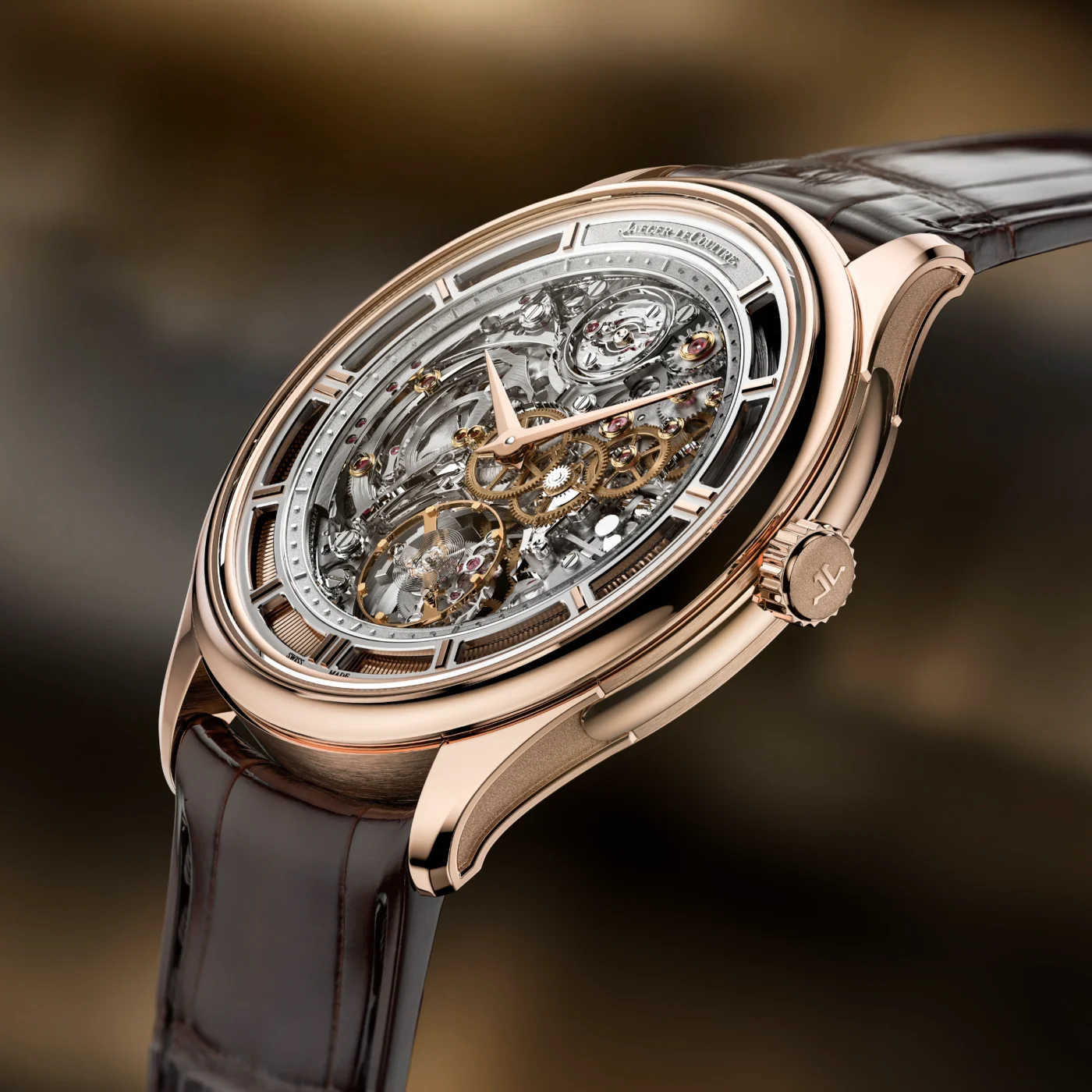
The result is that you can see essentially everything. All 593 components. The full operating sequence of the minute repeater. The flying one-minute tourbillon spinning without a bridge above it. The guilloché peripheral winding rotor crafted by the Métiers Rares atelier. Seven weeks of assembly time per watch.
The movement itself remains 5mm thick, sitting inside an 8.25mm pink gold case that’s been newly designed with 60 parts to house this specific calibre. Instead of a conventional slide to activate the repeater, there’s a retractable button at 10 o’clock and a lock-release button at 8 o’clock, both redesigned for this edition.
The repeater mechanism has 187 components and features one-piece square-profile gongs paired with trebuchet-style hammers for a more powerful strike. There’s also JLC’s patented silent time-lapse reduction mechanism, which cuts the pause between hour and minute chimes for a more fluid sound. And the S-shaped hairspring, patented and invented specifically for this calibre, is fully visible thanks to the absence of a tourbillon bridge.
Ten pieces. This is strictly “if you know, you know” territory.
Specifications
| Spec | Detail |
|---|---|
| Reference | Q13125S2 |
| Case | 41.4mm x 8.25mm, 18K Pink Gold (750/1000) |
| Movement | Calibre 362, automatic |
| Functions | Hours, minutes, minute repeater with silent time-lapse reduction, one-minute flying tourbillon |
| Power reserve | 42 hours |
| Front dial | 18K White Gold, open-worked |
| Caseback | Transparent sapphire |
| Water resistance | 30m |
| Strap | Brown alligator, 18K pink gold pin buckle |
| Edition | Limited to 10 pieces |
The Hokusai Waterfalls Series Finishes an Eight-Year Mission
Since 2018, JLC has been working through Hokusai’s eight-piece A Tour of the Waterfalls of the Provinces series on Reverso Tribute Enamel watches. It started with The Great Wave off Kanagawa (technically from a different series, the Thirty-Six Views of Mount Fuji), then moved into the waterfalls proper: Kirifuri in 2021, Amida Falls in 2022, Ono and Yoshitsune in 2023.
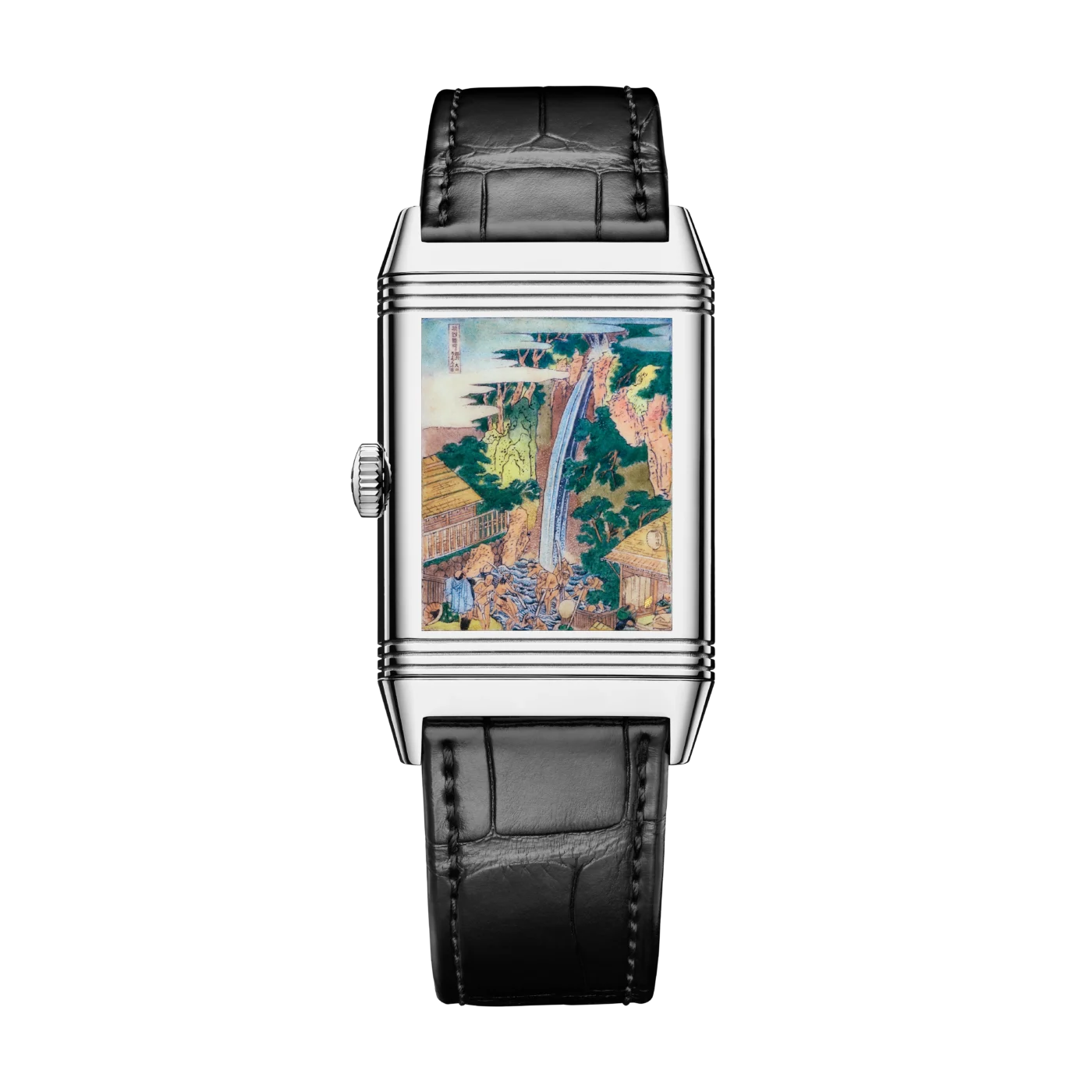
Now the final four arrive. Rōben Waterfall at Ōyama, Kiyotaki Kannon Waterfall at Sakanoshita, Yōrō Waterfall in Mino Province, and The Falls at Aoigaoka in the Eastern Capital. Each is limited to 10 pieces in 18K white gold. Each requires around 80 hours of enamel work and a minimum of 14 layers fired at 800°C.
The detail that stops you is the Japanese cartouches near the top of each caseback painting. They’re the original captions from Hokusai’s prints, handwritten at a microscopic scale on a surface of just 2cm². And they’re legible.
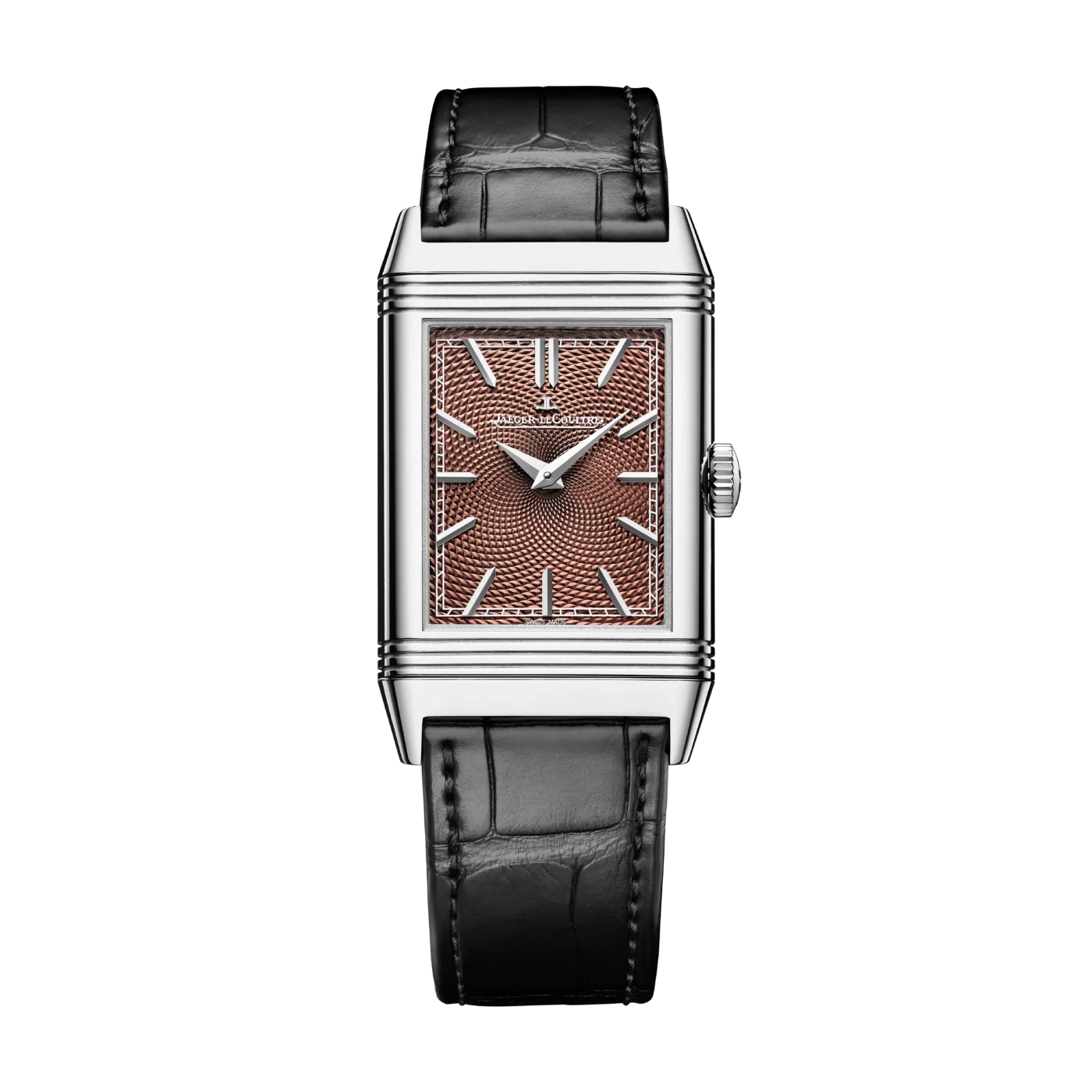
Each front dial gets a different hand-guilloché pattern under translucent coloured enamel: barleycorn in walnut-brown for Rōben (147 lathe passages), wavy in near-emerald for Kiyotaki (198 passages), bamboo in olive for Yōrō (144 passages), and herringbone in cyan-blue for Aoigaoka (360 passages). All powered by the manually wound Calibre 822, 2.94mm thick, shaped to the Reverso case, with 42 hours of power reserve.
This is the kind of work that most brands farm out. JLC does it in-house, at the Métiers Rares atelier, and the consistency across eight years of production on this series is remarkable.
Specifications
| Spec | Detail |
|---|---|
| Reference | Q39334T7 (Rōben), Q39334T8 (Kiyotaki), Q39334T6 (Yōrō), Q39331T9 (Aoigaoka) |
| Case | 45.6 x 27.4mm x 9.73mm, 18K White Gold (750/1000) |
| Movement | Calibre 822, manual-winding |
| Functions | Hours and minutes |
| Power reserve | 42 hours |
| Front dial | Hand-guilloché with grand feu enamel (barleycorn / wavy / bamboo / herringbone) |
| Caseback | Miniature-painted grand feu enamel |
| Water resistance | 30m |
| Strap | Black alligator or 18K white gold Milanese bracelet (interchangeable) |
| Edition | Limited to 10 pieces each |
La Vallée des Merveilles Launches With Hawaiian Birds and Japanese Cranes
The entirely new capsule collection is called La Vallée des Merveilles, and it’s built as an ongoing series dedicated to nature depicted through JLC’s rare handcrafts. The first release features three Reverso One models inspired by Kauai, Hawaii and Hokkaido, Japan.
The “Hibiscus Syriacus” carries a scene of an Akialoa (a Hawaiian bird) hovering over a blue hibiscus on the caseback, executed in Grand Feu champlevé enamel with 24K gold-leaf paillonné pistils and blue lacquer. The pink gold case sparkles with 335 grain-set diamonds.
The “Hibiscus Rosa” goes bolder with a red hibiscus, 489 snow-set diamonds in nine different sizes, and nine layers of enamel just to get the red right without the metal oxides turning brown. Each piece requires 130 hours of Métiers Rares work on the case alone.
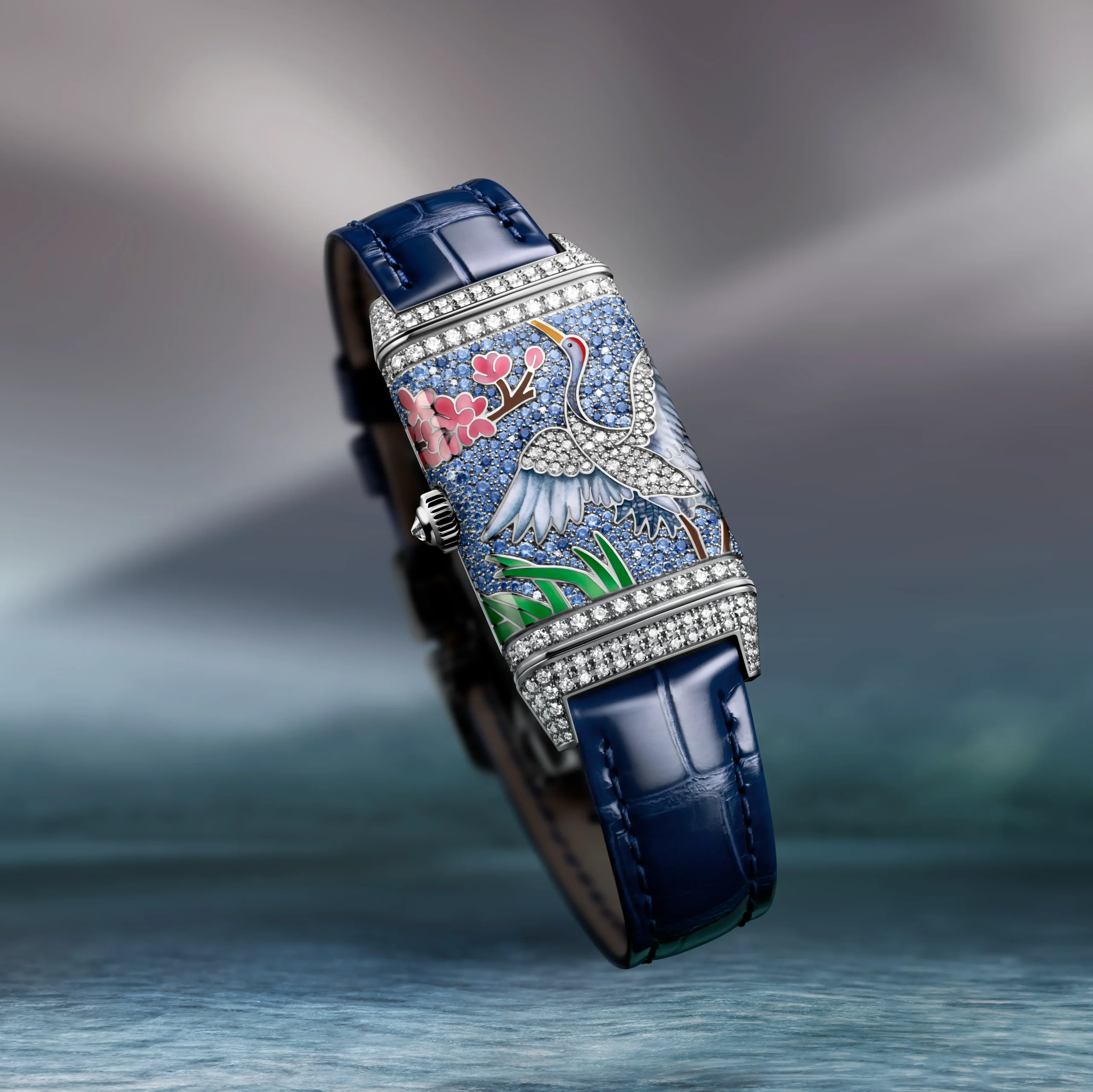
The “Sakura” model is the Japanese entry: a red-crowned crane beneath cherry blossoms in white gold, with 269 diamonds and 395 sapphires in two different shades of blue, mixed using the snow-setting technique with coloured gemstones for the first time at JLC.
All three are 40mm x 20mm, powered by Calibre 846 with 50 hours of power reserve, limited to 20 pieces each.
Specifications
| Spec | Detail |
|---|---|
| Reference | Q3292424 / Q3292324 (Hibiscus Syriacus), Q3292325 / Q3292425 (Hibiscus Rosa), Q3293426 (Sakura) |
| Case | 40 x 20mm x 9.09mm, 18K Pink Gold (Hibiscus) / 18K White Gold (Sakura) |
| Movement | Calibre 846, manual-winding |
| Functions | Hours and minutes |
| Power reserve | 50 hours |
| Front dial | Mother-of-pearl |
| Caseback | Grand Feu champlevé enamel, paillonnage, diamonds (Hibiscus Syriacus adds lacquer and engraving; Sakura adds sapphires) |
| Water resistance | 30m |
| Strap | Blue or red alligator; optional diamond-set 18K gold bracelet (Hibiscus models) |
| Edition | 20 pieces each (Hibiscus Syriacus, Hibiscus Rosa, Sakura) |
DMARGE’s Two Seconds
What JLC has done here is essentially lay out the full spectrum of what a completely integrated manufacture can achieve in a single year. At one end, you’ve got a triple-axis tourbillon that took two decades to develop and a minute repeater movement held together with sapphire bridges.
At the other, you’ve got artisans painting legible Japanese characters on a 2cm² caseback and gem-setters spending 125 hours placing sapphires on a crane’s body with a single-hair brush.
The risk with a showing this broad is that nothing cuts through. But JLC avoids that by making each piece so technically or artistically extreme that it demands attention on its own terms.
If there’s a criticism, it’s that none of this is remotely accessible. The cheapest thing here is probably one of the Reverso One models, and even those will be deep into six figures before you factor in diamond-set bracelets. But that’s not really the point.
The point is that JLC wants to remind the world that when it comes to combining complications, artistic craft and in-house everything, the Vallée de Joux is still the address that matters.

