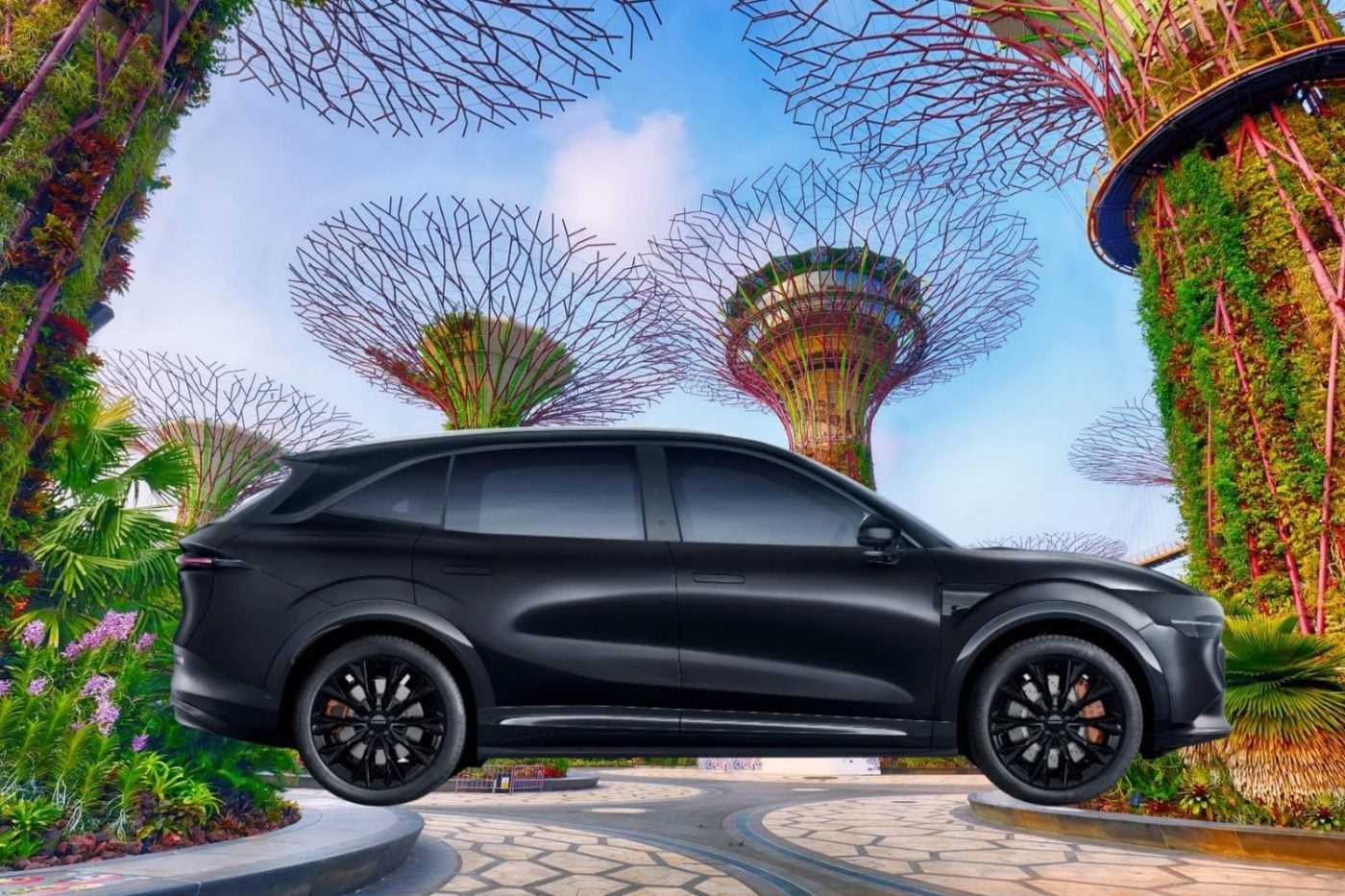
We were in Singapore last week and couldn’t help noticing how many Zeekr 7Xs were on the road. It’s the same Chinese electric SUV that has become a fixture in Australian driveways over the past year, which makes it easy to miss until you find out what one costs over there.
The answer is around five times what it costs here.
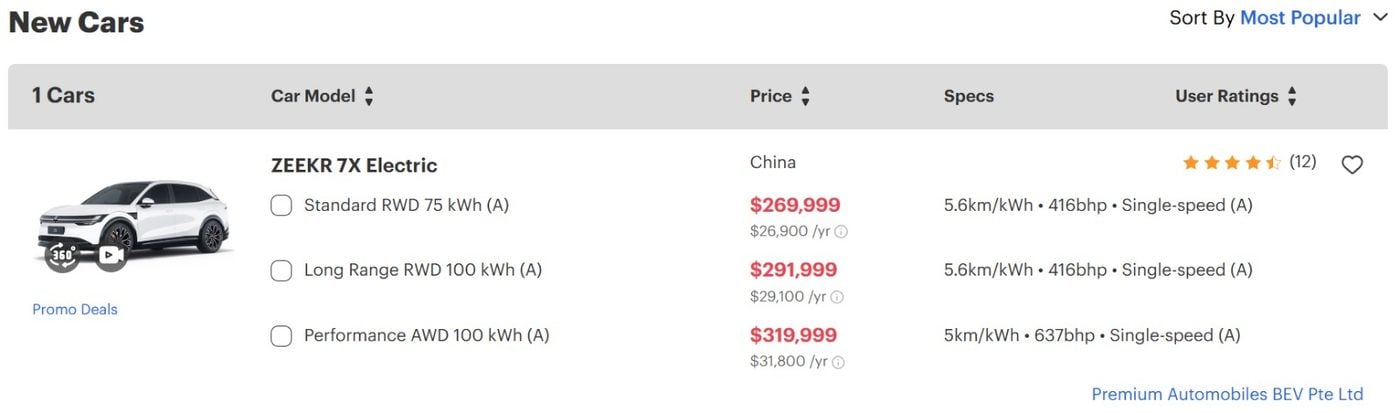
Local listings through distributor Premium Automobiles BEV have the 7X Standard RWD with a 75kWh battery at S$269,999, the Long Range RWD at S$291,999 and the Performance AWD at S$319,999. At roughly A$1.11 to the Singapore dollar, that works out to about A$300,000, A$324,000 and A$355,000 for a family SUV.
In Australia, the 7X starts at $57,900 before on-road costs, with the Long Range at $63,900 and the Performance at $72,900. It topped its class on April’s VFACTS charts and ranked as the country’s third best-selling EV for the year at that point, riding a wave of Australian EV sales that have exploded in 2026. It’s popular enough that one owner recently told us why they sold the greatest station wagon ever made to buy a 7X Performance.
The biggest reason for the gap is the Certificate of Entitlement, or COE. Before anyone in Singapore can register a car, they need to win one at a government auction, and supply is deliberately tight under the Land Transport Authority’s zero vehicle growth policy.
Curated news for men,
delivered to your inbox.
Join the DMARGE newsletter — Be the first to receive the latest news and exclusive stories on style, travel, luxury, cars, and watches. Straight to your inbox.
The 7X falls into Category B, which covers cars above 1600cc or 130bhp and EVs producing more than 110kW. With 416bhp, the Zeekr clears that bar comfortably. In the first October bidding round, Category B attracted 1,126 bids for 945 certificates and closed at S$130,100.
That’s roughly A$144,000 just for the right to own a car, which is more than two base 7Xs cost in Australia before you’ve paid for the actual vehicle.
The auction mechanics don’t help. Every successful bidder in a category pays the same premium, set at the highest unsuccessful bid plus one dollar, and the certificate only lasts 10 years. After that, owners either scrap the car or renew, and anyone renewing a Category B COE this month pays a prevailing quota premium of S$131,616.
On top of the COE sits the Additional Registration Fee, a tax tied to the car’s open market value. Electric cars get a break, but it’s shrinking. According to the Land Transport Authority, buyers who register an EV in 2026 get 45 per cent off the ARF capped at S$7,500, down from S$15,000, with combined savings of up to S$30,000 once emissions rebates are added.
That early adoption incentive ends on 31 December 2026, which means anyone who buys a 7X in January will pay more for exactly the same car.
Running costs aren’t gentle either. Singaporean motoring title Torque puts the annual road tax on the 7X Standard at S$4,336.
The same listing shows depreciation of S$26,900 a year on the base car. Singaporean buyers watch that number closely, because the COE turns ownership into something closer to a 10-year lease than a purchase. Owners who deregister early do get some money back through the PARF rebate, which starts at 75 per cent of the ARF paid for cars under five years old and tapers to 50 per cent at nine to 10 years.
So why are there so many on the road? Part of it is simple maths. The COE costs the same whether it goes on a Toyota or a Zeekr, so once a buyer is already in for S$130,000 before touching a car, the vehicle itself becomes a smaller slice of the bill. That pushes people upmarket, and Chinese brands are offering a lot of premium SUV for the money, something we’ve been watching closely as Chinese EVs chase Porsche, Ferrari and BMW.
Timing helped too. Zeekr launched the 7X in Singapore in September 2025 at Marina Bay Sands, handing over its 100th car in the country the same night, with pricing from S$239,999 at the time. The base car now sits around S$30,000 higher. By then, roughly half of all new cars and taxis registered in Singapore between January and August 2025 were already fully electric.
And Singapore is hardly short of money, as anyone who saw the city-state auctioning off the Hermès it seized in a $2.4 billion laundering bust will know.
Next time someone at a barbecue complains about the on-road costs on their EV, send them this.
