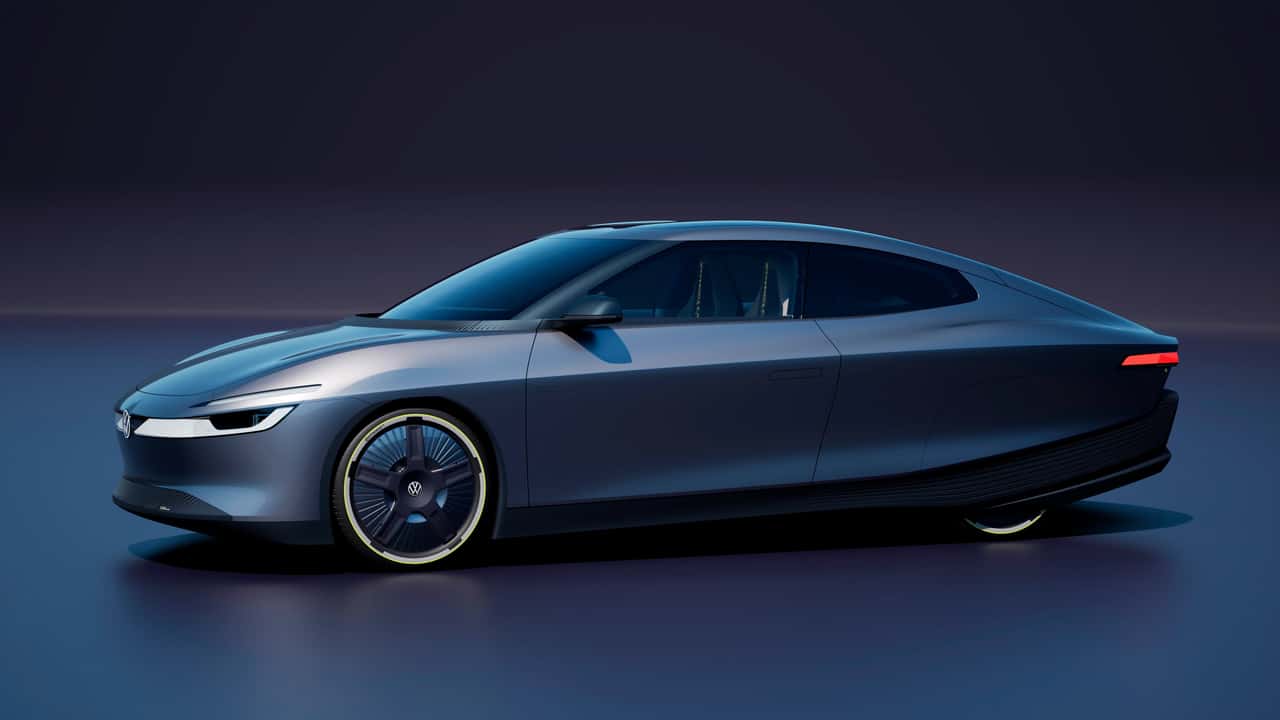
The Mission Efficiency is a Volkswagen, which is worth establishing early, because a teardrop coupe with covered rear wheels, frameless glass and no door handles you can actually see reads more like a Jetsons prop than anything Wolfsburg has put on a stand this decade. Most people shown a photo guess Cybercab.
It is also, as of this week, the most aerodynamic road-approved car ever built.
The 0.158 drag coefficient that earns it the title sits well clear of a Mercedes EQS at 0.19 and a Tesla Model 3 at 0.23, and it beats the carbon fibre XL1 Volkswagen built when Ferdinand Piëch was still chasing his one litre car, which also stopped at 0.19. Frontal area does half the work, and at 2.08 square metres there is not much of the Mission Efficiency to push through the air in the first place.
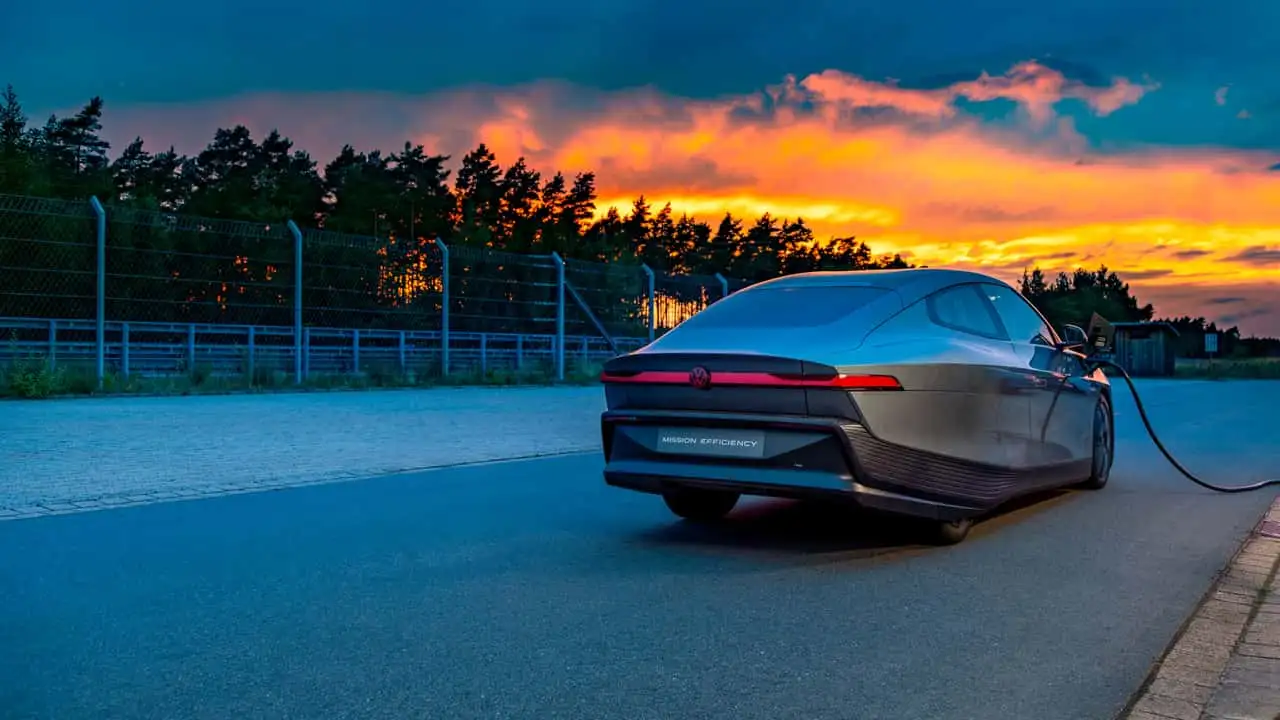
Volkswagen proved it on a road rather than a rolling chart, running the thing 1,278.36km from Wolfsburg to Vienna via Poznań and Olomouc on one charge of a 54.9kWh battery and rolling into Austria with 164km still in reserve.
Average speed was 67.72km/h and consumption came in at 6.89kWh per 100km, or 7.51kWh once charging losses are counted. A separate run at a constant 68km/h with the air conditioning off dropped that to 6.48kWh, and Record Institute Germany certified all three figures in its category for near production, everyday four seat EVs.
What makes the numbers interesting is how boring the hardware is. Underneath sits the same MEB+ platform, the same 99kW front motor and essentially the same battery pack Volkswagen is putting into the ID. Polo, so nothing exotic is doing the heavy lifting.
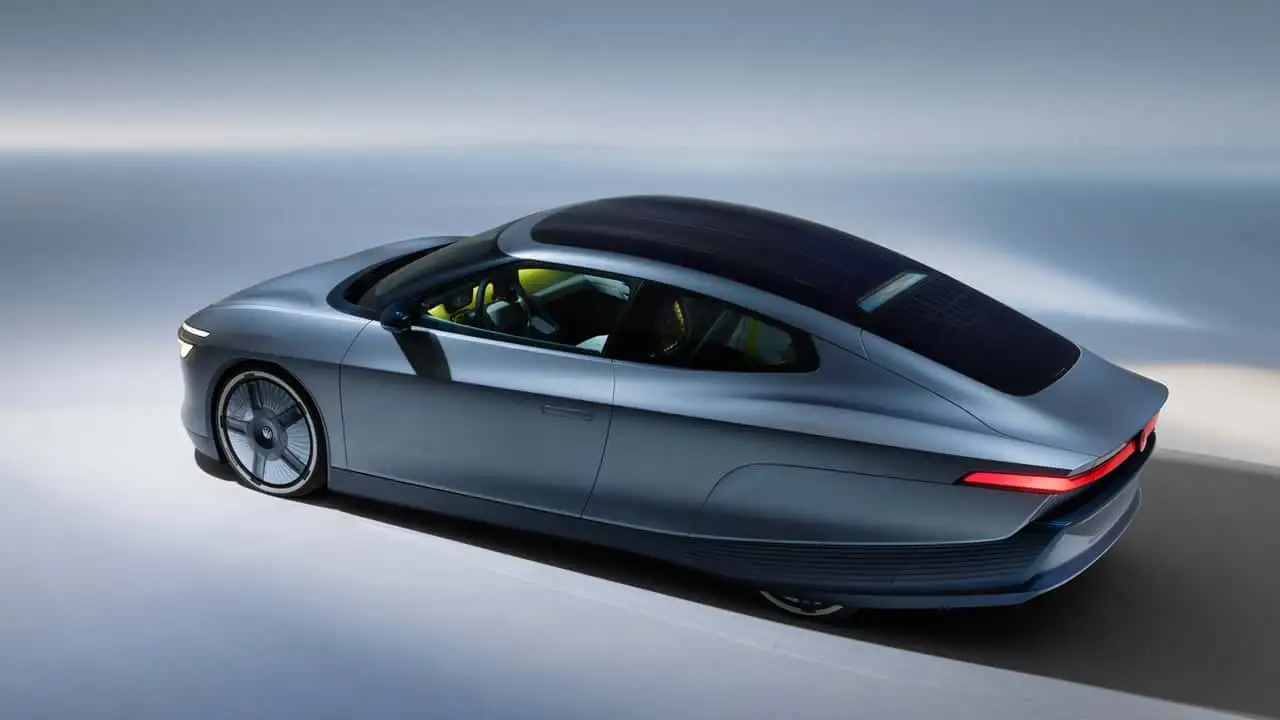
The shape is doing all of it. Volkswagen stretched the wheelbase 100mm past the Polo’s, pulled the rear track in by 170mm to taper the tail, clad the rear wheels and the entire underbody, sank the door handles into the skin, and patented a set of deflectors that sit inside all four wheels to stop turbulence building in the arches. Three slats in the lower bumper open asymmetrically depending on what the cooling system needs.
Curated news for men,
delivered to your inbox.
Join the DMARGE newsletter — Be the first to receive the latest news and exclusive stories on style, travel, luxury, cars, and watches. Straight to your inbox.
All of which pays better the harder you push. Above 80km/h the prototype uses more than 30 per cent less energy than a standard ID. Polo, and at 140km/h it draws roughly what that Polo needs at 100km/h, which is the sort of maths that would make a Sydney to Melbourne run almost free.
Where the aero ran out of answers, Volkswagen took weight out instead. Panels are thinner, the rear seats fold flat, and the central touchscreen has been replaced by a phone dock and a portable Bluetooth speaker.
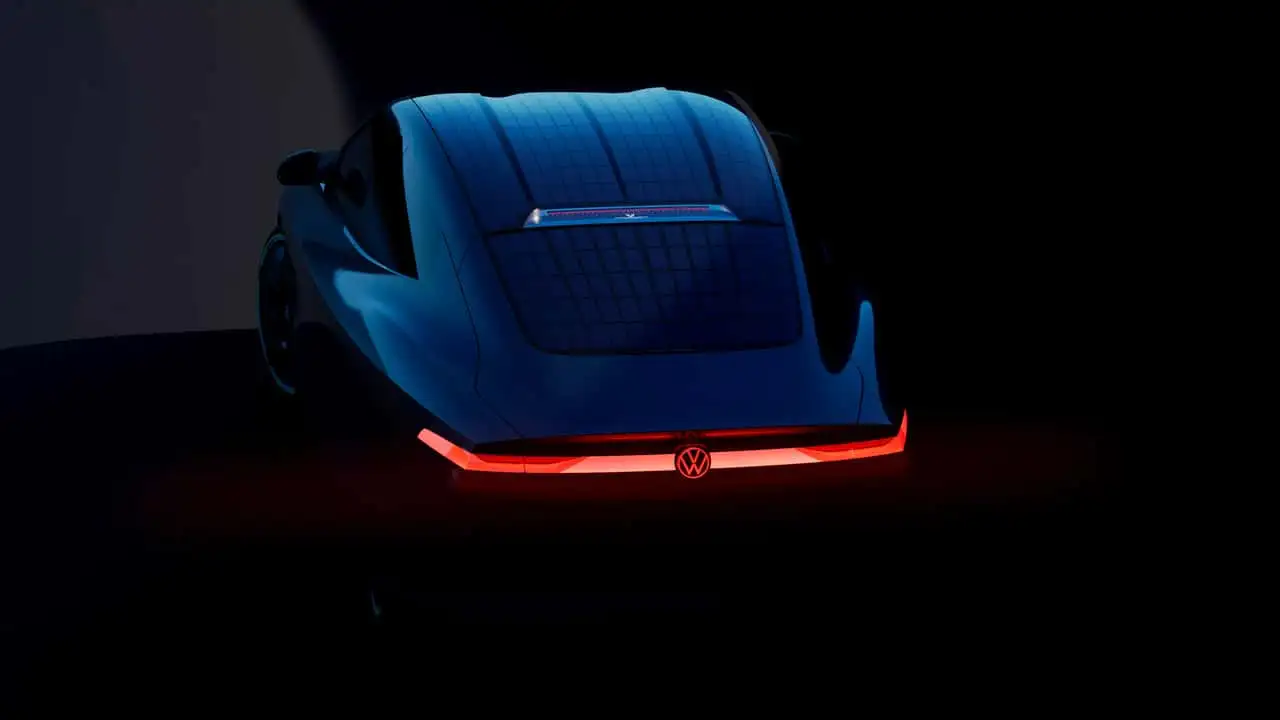
A solar roof feeds up to 30km of range back into the ancillaries.
Australians should temper the enthusiasm. The ID. Polo that donates all this hardware still is not locked in for local showrooms, with Volkswagen Australia executives telling CarExpert that our appetite for SUVs makes the case for a small electric hatch difficult, and the Mission Efficiency itself is a prototype nobody will be able to buy.
It would have landed in the same fight as the Chinese EVs already undercutting Europe on price, which is part of why the sums are hard.
It matters anyway, because every carmaker has arrived at the same conclusion at once. Ford is shaving drag off its next-generation electric ute, Mercedes, Audi and Porsche are all fighting over the same tenths, and as Beijing made painfully clear this year, a kilowatt-hour saved by shape is a kilowatt-hour of battery nobody has to pay for.
The harder question is whether anyone wants to own the result. Efficiency reads brilliantly on a spec sheet and poorly in a driveway, and a car engineered to disturb as few air molecules as possible will never have the presence Australians keep paying for, which is the trap Volkswagen has fallen into before. It has won the physics argument. Winning the one in the showroom is a different record entirely.
