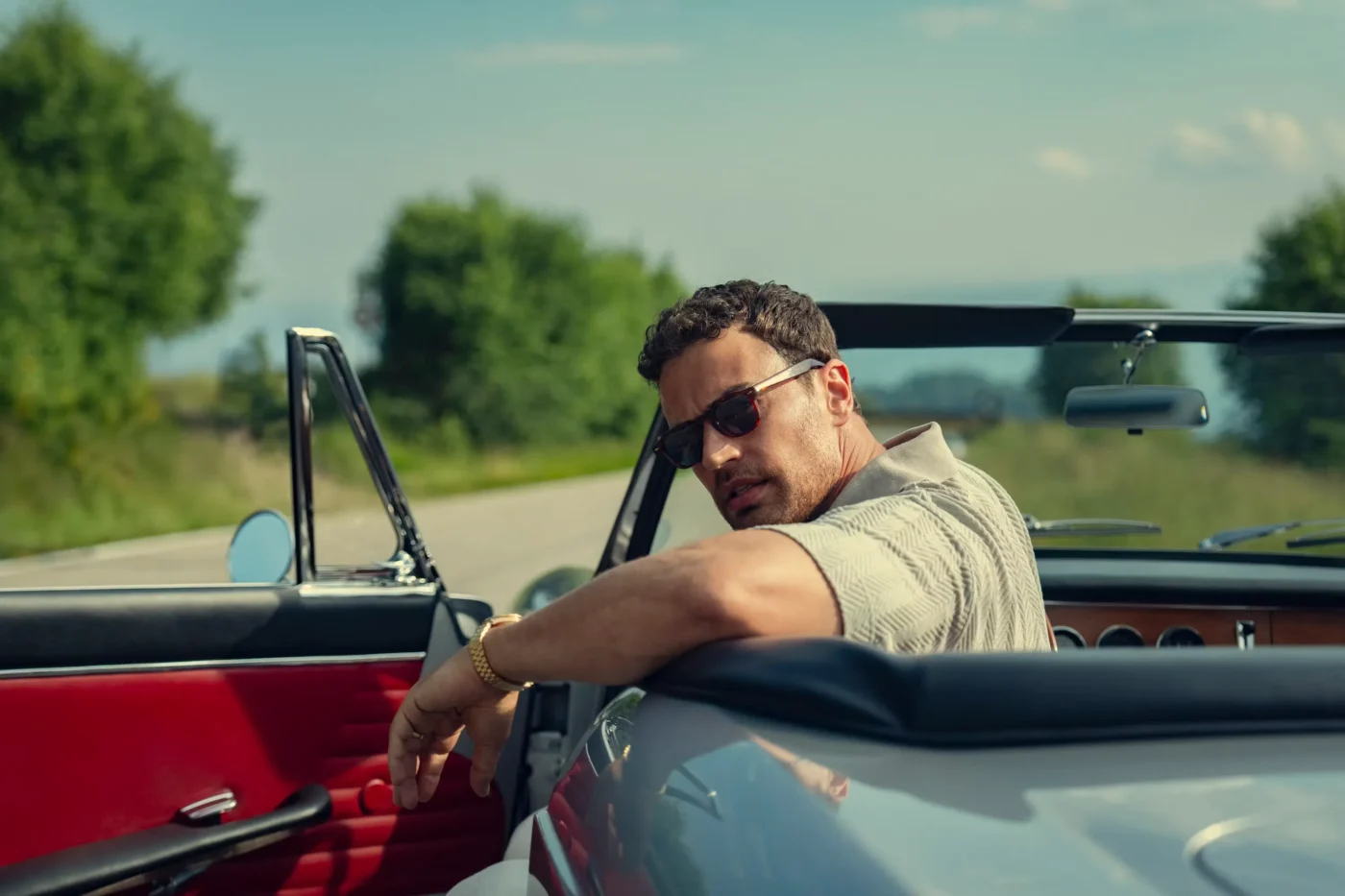
I slid into Loulou Bontemps’s DMs about halfway through season two of The Gentlemen, which is not my usual caper. Curiosity got the better of me, and I decided to shoot my shot. It paid off.
I wanted to know how the whole thing actually comes to life, and more specifically, what happened between season one and season two. The fashion jump is not subtle, and most viewers won’t miss it.
We manage to connect for a video call from the Moroccan desert, where she is currently shooting season three, walking in circles to hold reception and describing her location as less than desirable. Which tells you roughly how much of this job is glamour.
Because there is a particular kind of television wardrobe that makes men feel poor, and this is it. People pause scenes to identify sunglasses and argue in comment sections about whether a watch suits a character’s arc. I’m one of those people, and I’m not ashamed to admit it.
Curated news for men,
delivered to your inbox.
Join the DMARGE newsletter — Be the first to receive the latest news and exclusive stories on style, travel, luxury, cars, and watches. Straight to your inbox.
The assumption underneath all that is unlimited Netflix money. Bontemps, who runs a costume department of 200 people, punctures that myth within about four minutes of our call.
What changed between the two seasons was partly access and partly nerve. Brands that were cautious the first time around were far more generous the second, and Guy Ritchie spent the whole shoot asking for more.
They elevated the entire thing, and the reward has been watching people notice things that rarely get noticed. It feels like the show is having its own Devil Wears Prada moment, where the outfits are just as important as the characters.
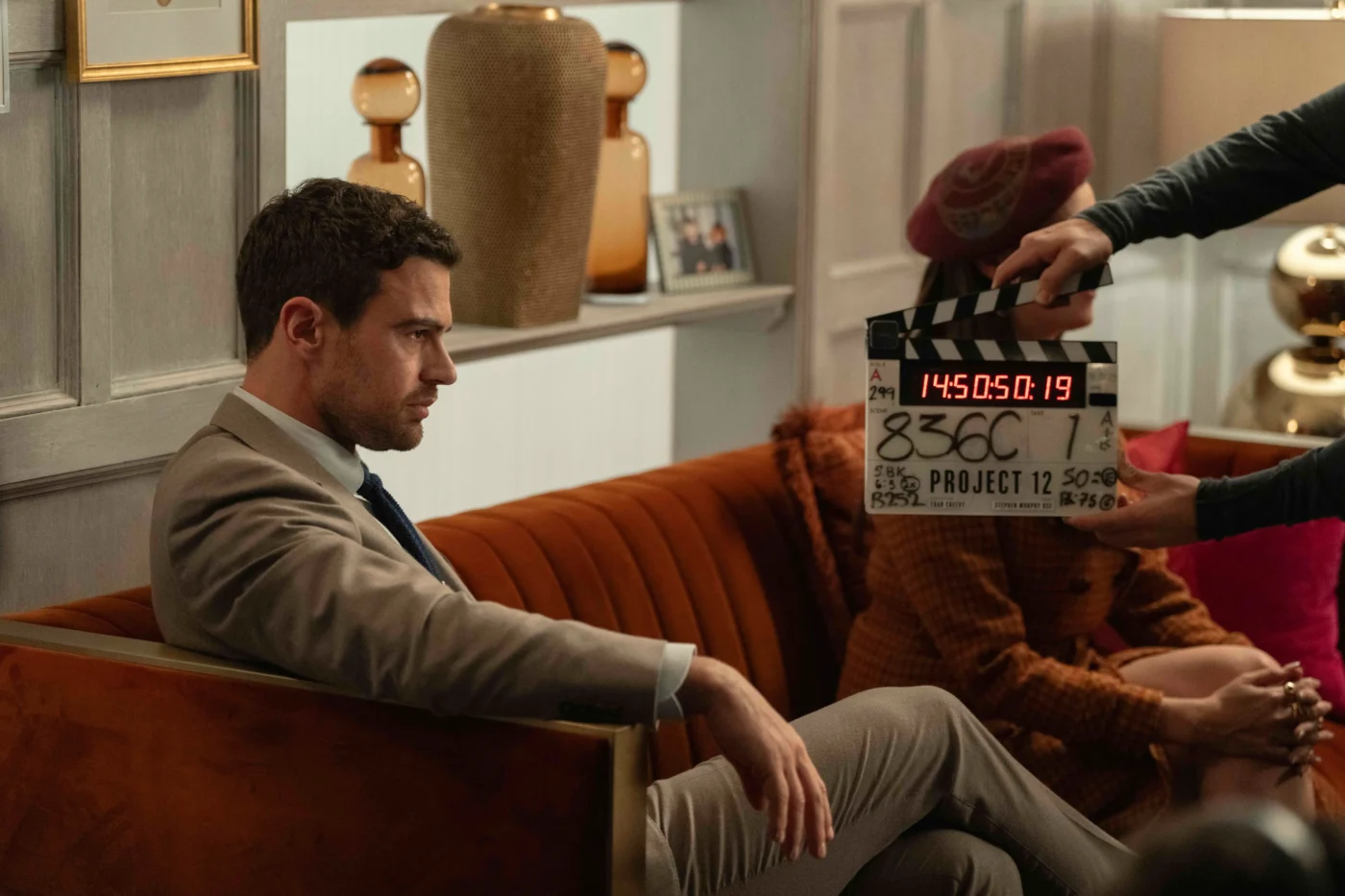
“Seeing people paying attention to the little details, which is what I particularly love, kind of completes each look and sort of does its own storytelling without it necessarily being scripted or said.”
It worked well enough that season one has come back to life off the back of season two.
Assuming everything was made to measure, the reality is much different. Eddie Horniman and Susie Glass, the two best dressed people on the show, are roughly twenty percent bespoke.
“If I could have my way, I would have it all bespoke, but we don’t have the budget all the time.”
The other eighty percent is brand loans, straight purchases, and a very large amount of vintage. Yes, vintage. And vintage isn’t a fallback for Loulou; it’s the starting point.
“I always prefer to start there with all of my cast, because you can get some really wonderful, characterful pieces.”
She knows exactly what men think when they see the results, because they tell her on Instagram. They say they couldn’t possibly buy that.
“But it’s a suit that I would have bought for maybe fifty pounds or a hundred and fifty pounds, and had it tailored.”
Her method is unglamorous and repeatable. Charity shops and vintage shops, visited constantly by her and by her buyers, whom she describes as magpies looking for the good ones.
The technical part is the bit worth writing down.
Turn the garment inside out and look at the seams, because the seams tell you whether it can be altered. If they do, your local dry cleaner can almost certainly handle the work.
That’s the whole system. Buy old, buy cheap, pay someone to make it fit. Because the fit is the actual product. The most memorable tailoring in season two came from Guy Ritchie repeatedly asking for a number to go up, on a pair of trousers, until it stopped being a normal garment.
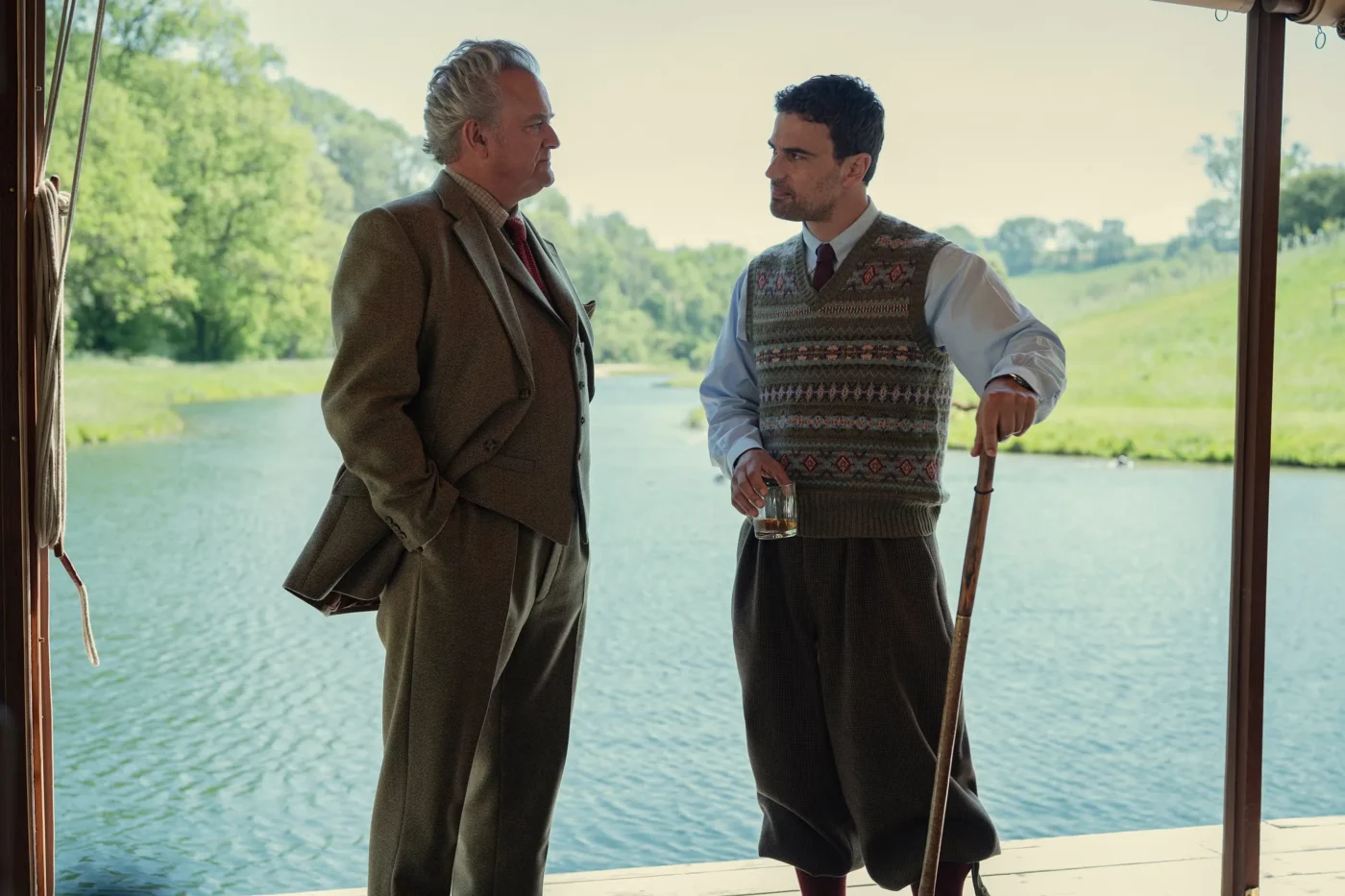
Theo James’s shooting trousers started as plus twos. Ritchie wanted bigger, then wider, then bigger again, and they landed on plus twelves. James, reasonably, asked whether he was really doing this.
He was, and he looks tremendous, and that silhouette is now the thing everyone screenshots from the opening episode. Proportion was the decision.
Which is why Bontemps has no patience for the idea that an off-the-peg suit arrives finished.
“If you buy a suit off the peg, don’t expect it to fit you properly.”
The pushing goes both ways. The chicken suit in season one, still the most screenshotted thing this show has produced, was her overruling the production.
They wanted one of the inflatable ones off Amazon. She had found a painting of a cockerel and had other ideas.
“I was like, no, no, we’re going to push this a little further.”
She could already see Freddy on the quad bike in slow motion with the feathers going everywhere. Her workroom, Blossom Sebastian and Nathaniel Mackey, built the thing from scratch.
“We want him to look like a massive cock here, not necessarily the chicken suit.”
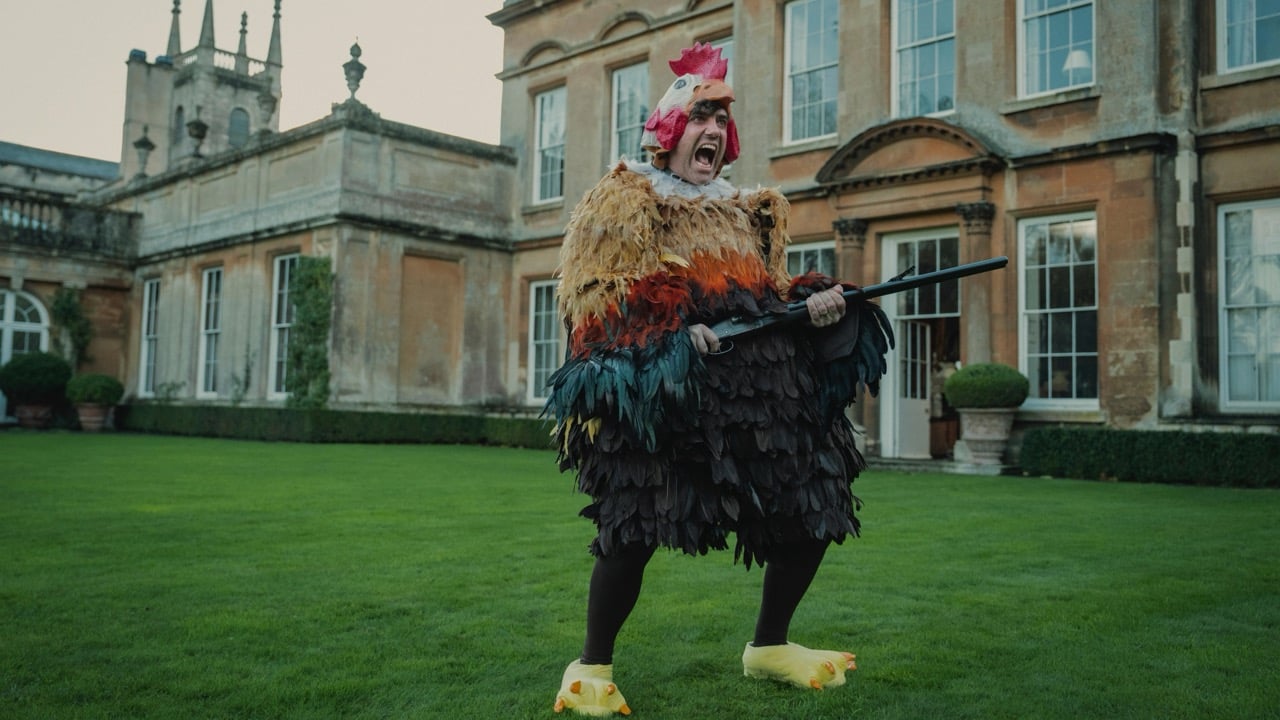
Ritchie was immediately in, which is roughly how everything on this show gets decided.
The same logic runs through the watches, except there she’s gone considerably further down the hole than most viewers realise. Her education came on The Ministry of Ungentlemanly Warfare, researching the Dirty Dozen, the twelve brands issued to the British military during the war.
She found one for Henry Cavill and hasn’t really come back.
“The more I learn about watches, the more I realise how little I know. And there is this huge watch porn industry out there that every season seems to get bigger.”
She cares about what a watch says rather than what it costs, which is why the two Jaeger-LeCoultre Reversos in season two are deliberate. One is on Eddie. One is on Susie.
“I play around a lot with links between Eddie and Susie because I like to mess around with the audience a little bit. They have links here and there that are quite often symbolic.”
She is a declared Jaeger-LeCoultre fan, and she likes that the Reverso plays with you, that it can be a fidget, that it works in two directions. Which is a fair description of both characters.
What she won’t do is take the obvious option, and she’s noticed that actors often want to.
“It’s really important in costume not to do the obvious. That’s terribly boring.”
Sunglasses are where her control runs out, and the failure is instructive. The most copied eyewear in the entire show isn’t hers.
Bobby Glass’s Jacques Marie Mage frames (who’s played by Ray Winstone) were the most read thing we published about this series last year. When I told her that, she disowned them immediately.
“That I actually have no responsibility for. I have no responsibility for Ray.”
She had beautiful sunglasses ready. She had an homage planned. Ray Winstone had his own pair and no interest in the alternatives.
“He was like, no Lou, I’m good, I’m good with these, I think these look good. I can’t take responsibility for Ray being the true gangster that he is.”
There’s a lesson buried in that: the most convincing accessory a man owns is usually the one he chose himself and has worn for years. She did point out, fairly, that Winstone spent most of season two in a towel, so he didn’t really have a time to shine with his clothes.
Everything else hanging off a character is deliberate, and often carrying more weight than the suit it sits next to. Nanny’s Sergio Tacchini tracksuits are the clearest case.
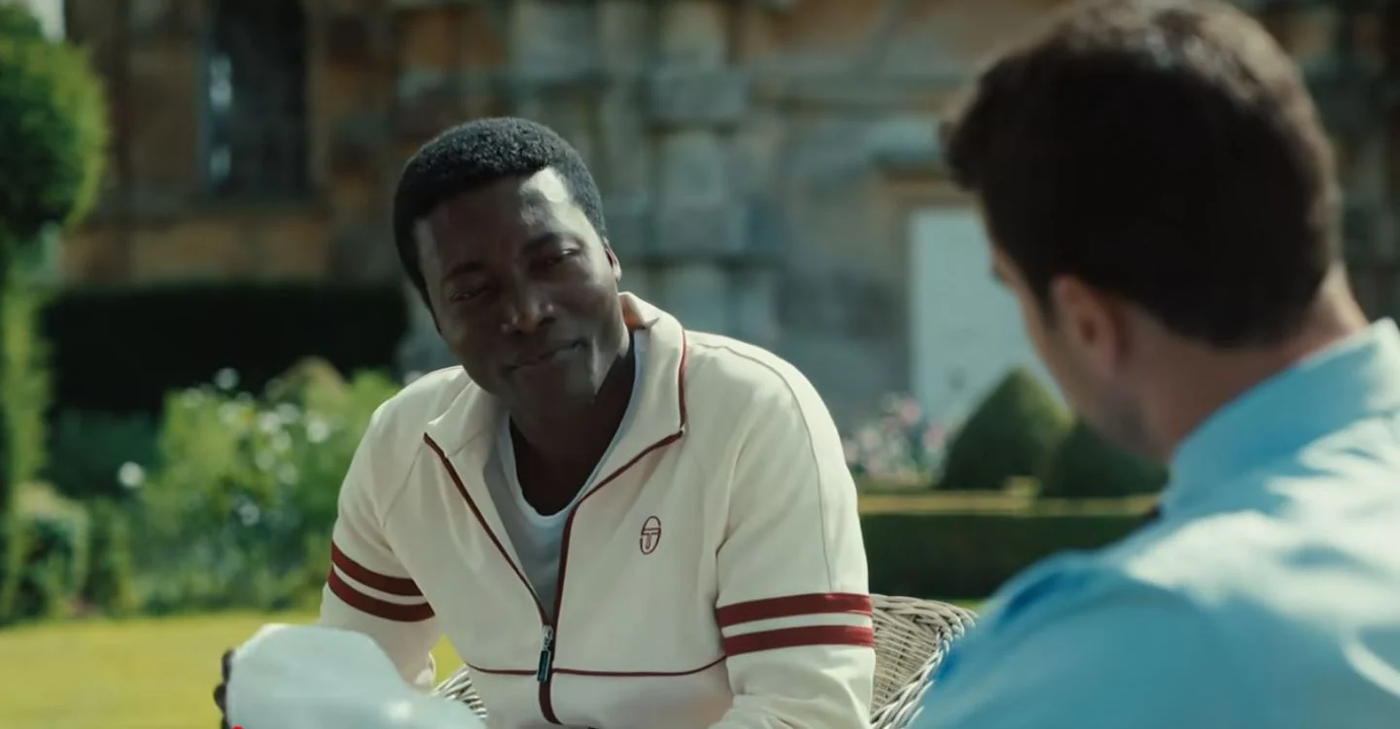
Sergio Tacchini is a tennis brand. Nanny wears it because he plays tennis, which is the correct and almost never seen use of it.
The same label turned up in season one on a northern gangster who’d saved his pennies as a kid to buy one, wearing it as terrace uniform rather than sportswear. One brand, two men, no dialogue explaining either.
Stanley Johnston gets the same trick played on him, in a more expensive register. He’s a Hollywood billionaire in sharp British tailoring, and the tailoring is an application form.
“The most important part of his look is that he really wants to be British. He really wants to somehow get in on that aristocratic world.”
In season one that extended to a smoking jacket worn to black tie in a way that breaks the rules, which is precisely what old Hollywood used to do. Coming in, doing things his way, as she put it.
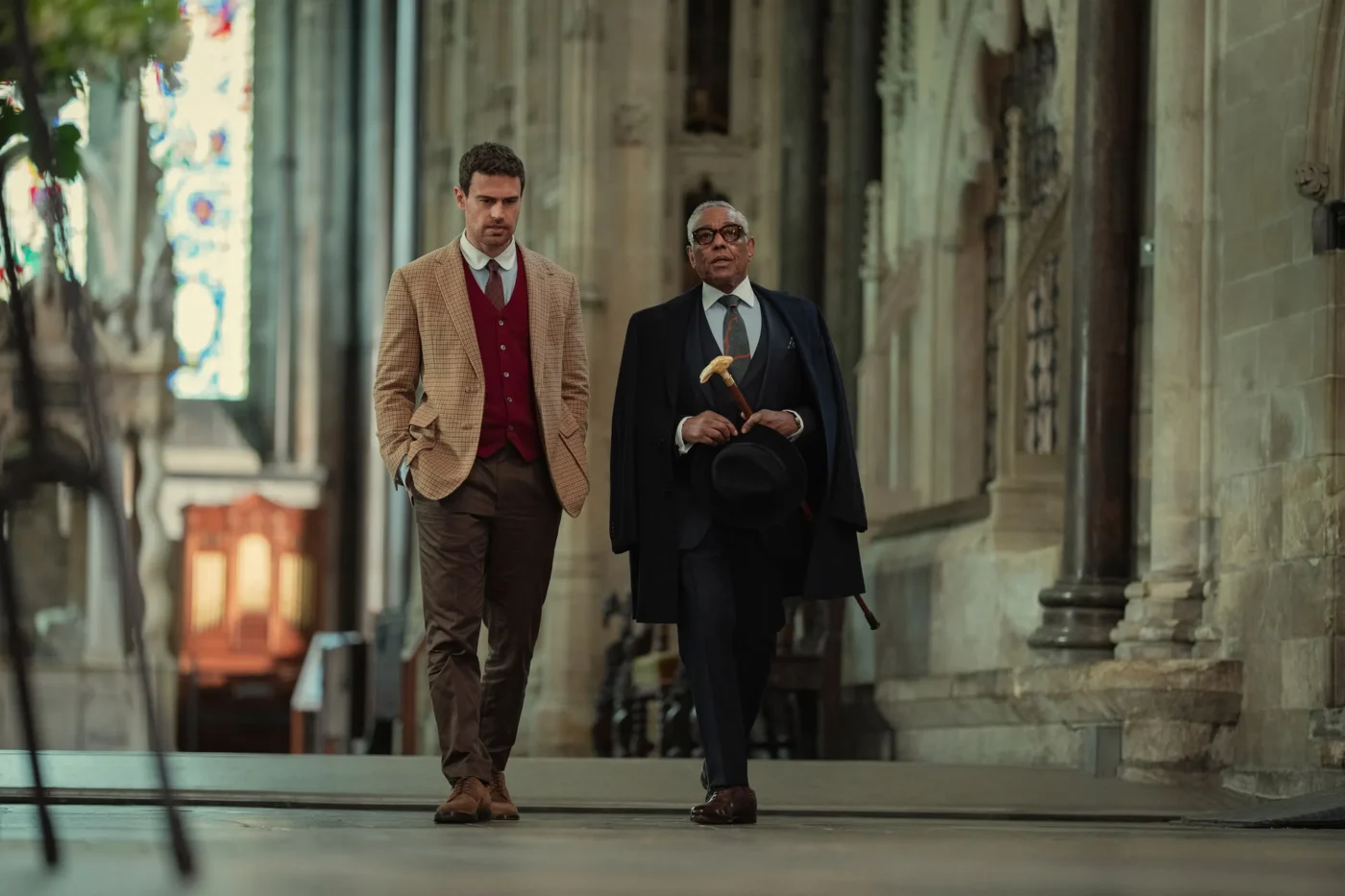
So when I asked for three essentials to dress like a gentleman, I expected a suit to be one of them. She started at the floor instead.
“Start with your feet. It’s really important to have a good pair of shoes. You can make an expensive outfit look so cheap if you’re wearing bad shoes.”
Second is tailoring, which by now was less advice than a repeated position. Third is accessories, by which she means watches and sunglasses, the two things she’s spent this entire conversation proving are load-bearing.
If you want the brands she reaches for new, it’s Ralph Lauren, who she says have been endlessly generous to her, and Brunello Cucinelli. Both sit on Eddie in season two. Both turn up secondhand online if the retail price offends you, which was rather the point of the first half of this conversation.
As for season three, currently shooting in a location she has accurately described, Ritchie has already handed her the brief for what he wants from the wardrobe.
“Just fifteen percent more.”
