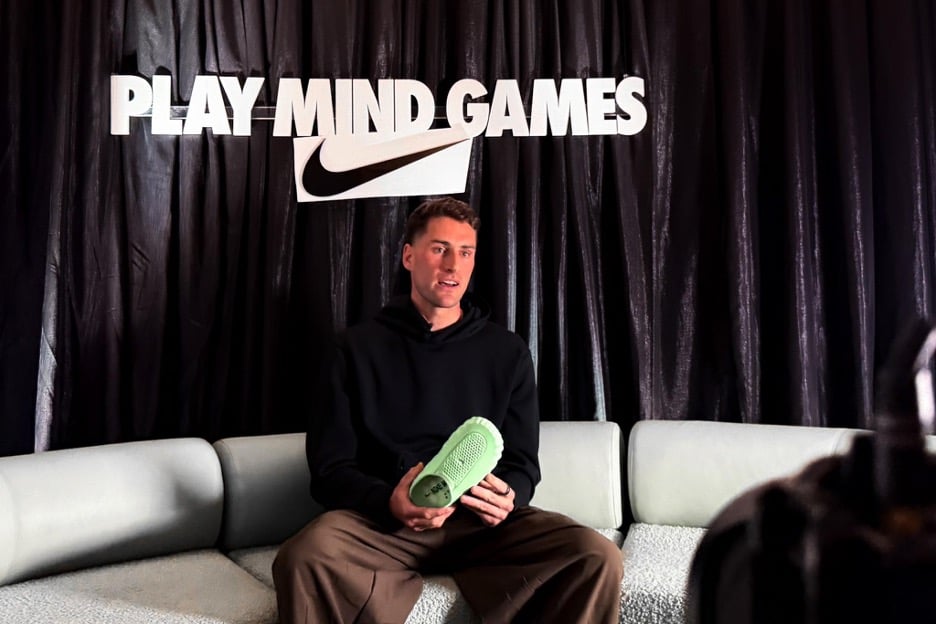
Leigh Egger works in the hour and forty minutes nobody televises. The change room, before the whistle, where the gap between a good performance and a great one has usually already been decided.
Egger is Head of Performance for the Socceroos, brought in by Tony Popovic in late 2024 and responsible for the physical side of Australia’s 2026 World Cup campaign. Before that, five years running high performance at Feyenoord Rotterdam under Arne Slot. He has also consulted to the Charlotte Hornets, the Wallabies, Fiji Rugby and AFL teams. Physiotherapist by training, Northern Beaches by origin, semi-professional footballer by history.
“What separates good from great is the small details,” he says. “Even at the top level, games are decided by the tiniest of margins. And the higher you go, the smaller these margins get.”
“Everyone assumes that it’s physical. But I realised how important the mental side is when I was a young athlete myself. Playing in front of even 50 people compared to 50,000 people, the pressure is relative.” Working across codes sharpened it. “Combat sports athletes like Mixed Martial Arts fighters say that 80% of fighting is mental and then 20% is the rest.”

The 100-minute pre-game window
The clock Egger cares about starts roughly 100 minutes out from kick-off, when the squad walks in. From there, his job is closer to ‘set design’ than coaching.
“There’s a lot going on in the change room, so we’re trying to minimise clutter, set up the environment so that everything comes very easily to them and naturally for them to flow through their rituals and routines as a kind of psychological anchor.”
He can tell when a player has crossed over.
“You have a look in their eyes that shows that they’re ready. You also see the body language trigger as kind of a call to action.” Sometimes that flips early. Sometimes not until the walkout. Every player is different.
His one non-negotiable is breathing, on the basis that everyone is doing it anyway.
“Sometimes just taking a moment and drawing attention to the breath, even if it’s two or three breaths, ten to 20 seconds. It might be box breathing or four, seven, eight holds or deep breaths. This is kind of the remote control for the nervous system. You can find yourself fire up or calm.”
The other tool is language, compressed almost to nothing. Before a big moment Egger gives a player one or two words. Not instructions. A shortcut back to weeks of work already done. An anchor to that performance moment.
Ritual versus superstition
“A ritual that makes a difference to an athlete is something that they’re in control of and that they’ve structured for themselves. Whereas a superstition is something that may have control more so over the athlete.”
A ritual looks like music on, body moving, then breathing or visualisation. It bends. Short on time, wrong room, delayed bus, it still runs.
A superstition looks like boots aligned in exactly the right direction in the locker and falls apart the moment something moves them. That is the shoe controlling the player rather than the player controlling the shoe.
“The truth is that there is no one consistent habit that all elite performers use, but all players and athletes in some way, shape or form have their own ritual and routine.” Some are forensic, some are close to nothing. Egger has adjusted accordingly. Five years ago he was telling players what their routine should be. Now he is more interested in how differently they arrive at the same state.
Where the Nike Mind comes in
The Nike Mind 001 came out of Nike’s Mind Science Department, took a decade to develop, and has 22 foam nodes set into the sole. It is designed to be worn as part of a balanced pre-game routine. In practical terms, a $150 mule you walk around in.
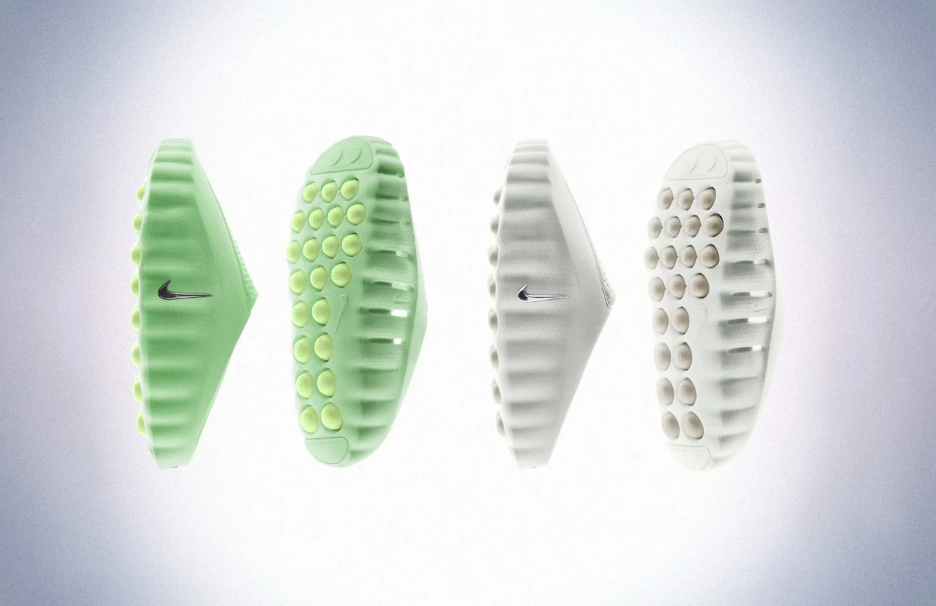
“They’re sitting in the change room available for the players to slip on, walk around the change room, move to their different stations where they might be conducting their pre-game rituals, and it gives them a feeling that they can lock in. It’s a signal that they’re ready to go.”
A signal, not a stimulant. Tools like it, he says, can spice up the routine and help make athletes feel good before they head out, which is the whole job of a ritual object.
The bit everyone skips…
Egger’s job doesn’t stop when the final whistle blows, it extends into life at camp, the extended stretch of time a squad spends together between matches during a major tournament. “One of the most important and perhaps underrated parts of recovery is winding down and mentally resetting after the big competition.” With games three days apart, that means walking, or yoga, or anything where body meets mind. It specifically does not mean opening your phone. “Instead of hopping on social media, going through a scroll and looking at photos of yourself too much, just being able to meditate whilst moving is a good way to reset.”
The camp Egger is describing is the World Cup. Australia came through Group D, beat Türkiye 2-0, and went out on penalties to Egypt in the round of 32, only the third time the Socceroos have reached the knockout stage and the first time they have managed it in consecutive tournaments.
“It’s quite intense. The pressure is always on and you need to find times and moments to decompress and relieve the pressure.”
Training, oddly, is the easy part, because you are in it. It is the transitions that get you. “When we’re at base camp or we’re in the hotel room and the transitions between the meetings, the sessions, the recovery sessions, the travel, those are the moments where you kind of need to be methodical about how you unwind and keep yourself away from that pressure until the time is right.”
Which is where he lands.
“There is no neutral. Everything that you’re doing is either pushing you up towards high performance or moving you down towards low performance.”
That is the argument for all of it. The breath, the two words, the walk instead of the scroll, the Nike Mind sitting by the locker. None of it is decisive on its own and Egger never pretends it is. It is a stack of small controllable things, built by the athlete rather than handed to him, and run in a change room 100 minutes out.
The Nike Mind 001 is one item in that stack. A $150 shoe designed to help athletes lock in. Available at Nike.com.

